How to Live in the Present Moment (When Your Mind Refuses to Stay)
Living in the present moment means meeting this breath, this ordinary room, this exact instant – not racing toward tomorrow or clinging to a summit you think you’re owed. It is not a skill you perfect and possess but a place you leave a thousand times a day and return to. The returning, not the staying, is the practice.
Most guidance treats presence as an achievement to master. But the mind was never going to hold still on command, and treating presence as a summit to conquer only keeps you straining toward a future state – the very thing that pulls you out of now. Deva Nataraj’s The Altar of Now closes on a different proposition: this moment is not the path to the sacred but the sacred itself, and there is nowhere else you were supposed to get to.
What does “living in the present moment” really mean?
It means noticing that the only reality you can actually touch is the one happening right now – and that everything else is memory or projection. The past is gone; the future never arrives as the future. What arrives, always, is another now. Living in the present means loosening your grip on the two ghosts and letting the one real thing be enough.
Here the philosophy running under this music and its ancient sources agree. External reality may be a simulation, a coded veil – but the one place we can genuinely be present is here, now. Osho’s tantra says the same: the present moment is the only reality, and awareness dropped fully into it is the whole of meditation.
The title track states it as a vow rather than a lesson:
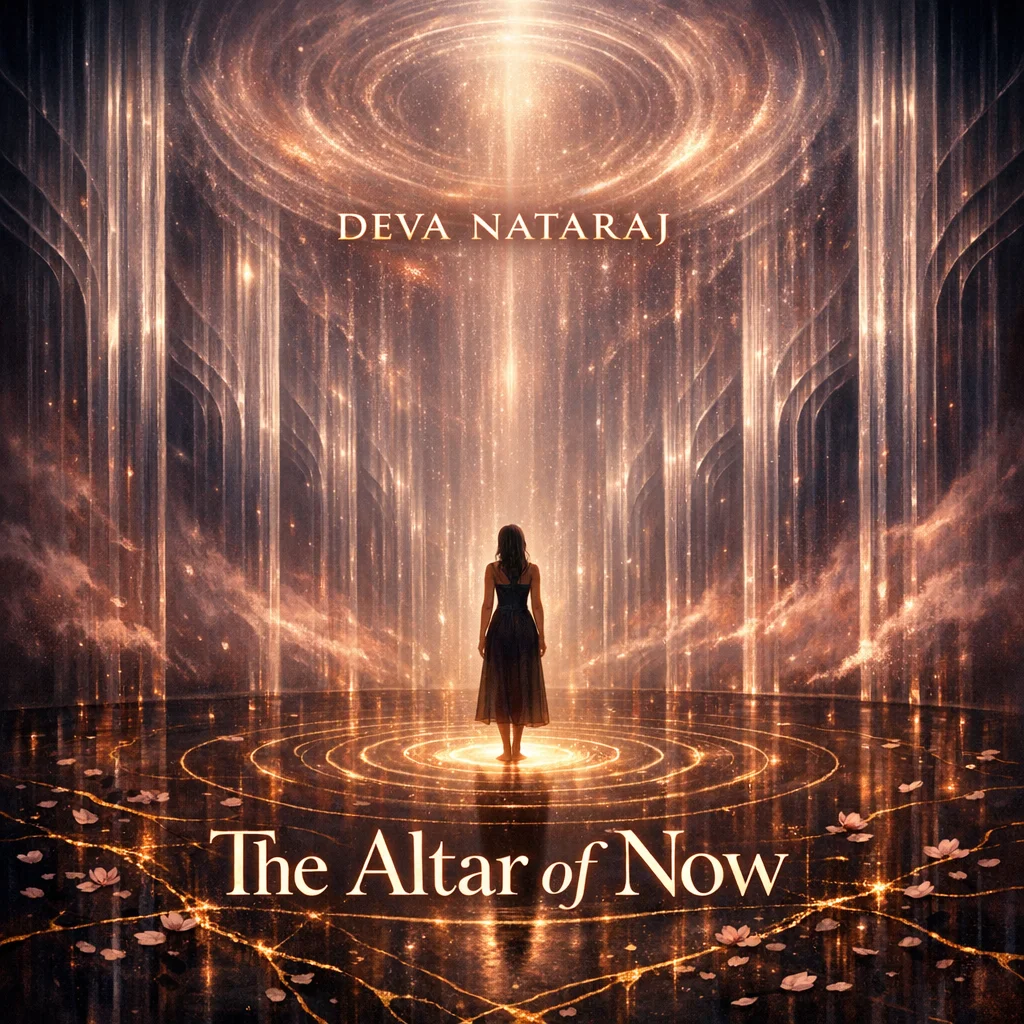
“This is the altar of now / Right here, right here is the vow / Not tomorrow, not the summit, not the shore / Just the breath you’re breathing, nothing more.” Notice what gets stripped away: tomorrow, the summit, the shore – every version of later and better the mind uses to postpone being alive. What remains is almost embarrassingly small – and the song insists that this smallness is not a consolation prize. It is the altar.
Why does the mind refuse to stay here?
Because the mind is built to time-travel. It rehearses the future to keep you safe and replays the past to keep you learning, and it does this compulsively, whether or not there is anything to solve. Sit down to be present and within seconds you’re planning dinner, relitigating an argument, drafting an email. This is not a personal failing – it is the water you were swimming in long before you tried to notice it.
The song opens by naming a lifetime of that seeking:
“I’ve traveled to the temples and the edges of the map / I’ve knelt in every chapel, left my forehead in the gap / I’ve searched the ancient languages for words to prove I’m real / But the holiest ground I’ve ever found was learning how to feel.” The mind’s refusal to stay looks, from the inside, like devotion – keep chasing the next practice, the next teacher, the next mountaintop. But all that motion was the detour. The holiest ground was never at the edge of the map. It was under the feet the whole time, waiting for attention to arrive.
So the wandering mind is not the enemy of presence – it is simply what minds do. Recognizing that, you stop forcing a stillness that will not come and start practicing the gentle return. (This capacity to watch the mind wander without being dragged along is what the tradition calls the witness – explored in witness consciousness and mindfulness.)
What is “the altar of now”?
An altar is where the sacred is made present. The album’s closing song moves that word out of every temple and onto the surface of ordinary time. The altar is not a place you travel to – it is the moment you are already standing in.
“The sacred isn’t somewhere else to find / The sacred is this breath - and the one behind.” This is the thesis of the whole record in two lines. Every spiritual instinct wants the sacred to be elsewhere – in a book, a cave, a better version of yourself. The song refuses all of it. The sacred is this breath – and then, before you can catch it, the one behind it. Presence is not a state you reach and hold, but an endless series of small returns.
Then the song hands the altar to people who have never thought of themselves as spiritual at all: “To every woman in the kitchen with the radio on low / To every man who sits in traffic feeling time run slow / The dashboard and the dishcloth and the unremarkable sky / Are altars - if you let them be.” This is tantra’s non-duality made plainly domestic – the refusal to rank a monastery above a morning commute. The sacredness isn’t added to the moment – it’s uncovered by the quality of your attention.
The song then reaches for the album’s deepest bridge, the reason the ordinary can carry so much weight:
“We crossed the universe to sit inside this skin / We encrypted our own knowing just to feel the world begin / And now the encryption’s cracking and the light is pouring through / And it is not some far-off heaven - / It is here - / It is now - / It is you!” In this project’s cosmology, we are the ones who built the simulation and deliberately forgot – who encrypted our own knowing – so that we could feel this world as new. Presence is that encryption cracking, the light we hid from ourselves pouring back through. It is here. It is now. It is you. As the closing track, this is where the whole journey – from the first tremor of awakening to the shedding of every borrowed name – comes to rest: not in transcendence, but in a breath.
Do I have to escape my ordinary life to find the present?
No – and the belief that you do is one of the surest ways to miss it. Renunciation is not a shortcut to presence. You do not have to give up your possessions, leave your job, or abandon the people you love. The present moment is not hiding from your ordinary life – it is your ordinary life, finally noticed.
Another song makes the same case through the eyes rather than the breath:
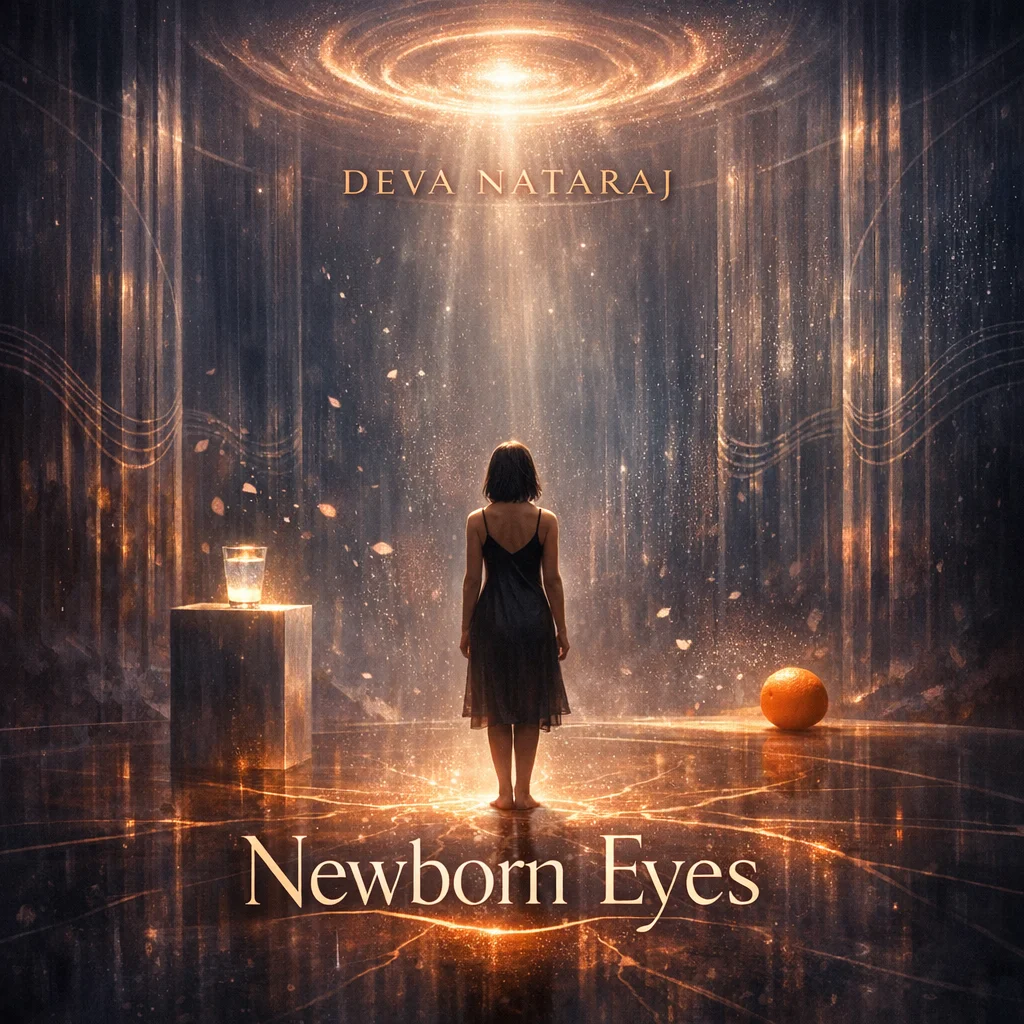
“The orange on the counter is a planet made of light / The rain against the window is a symphony in flight.” Nothing here required a pilgrimage – an orange, a windowpane, a rainy morning, the furniture of a life you already have, changed only by the attention brought to it. And the song names the difference precisely: “Not innocence - presence / Not naivety - attention.” Living in the now is not childish blankness but the discipline of attention aimed at what is already here. (This freshness of perception has its own doorway, explored in how to see the world with fresh eyes.)
There is also a fierce version of this refusal – presence as a full-throated yes to embodied life. “Say Yes with Your Whole Mouth” insists: “They say transcend, they say float higher / They say the body is the cage / But I have read the mystic’s footnotes / And the mystic loved the stage.” (For presence at street speed, in the middle of the city, see how to get into a flow state in everyday life.)
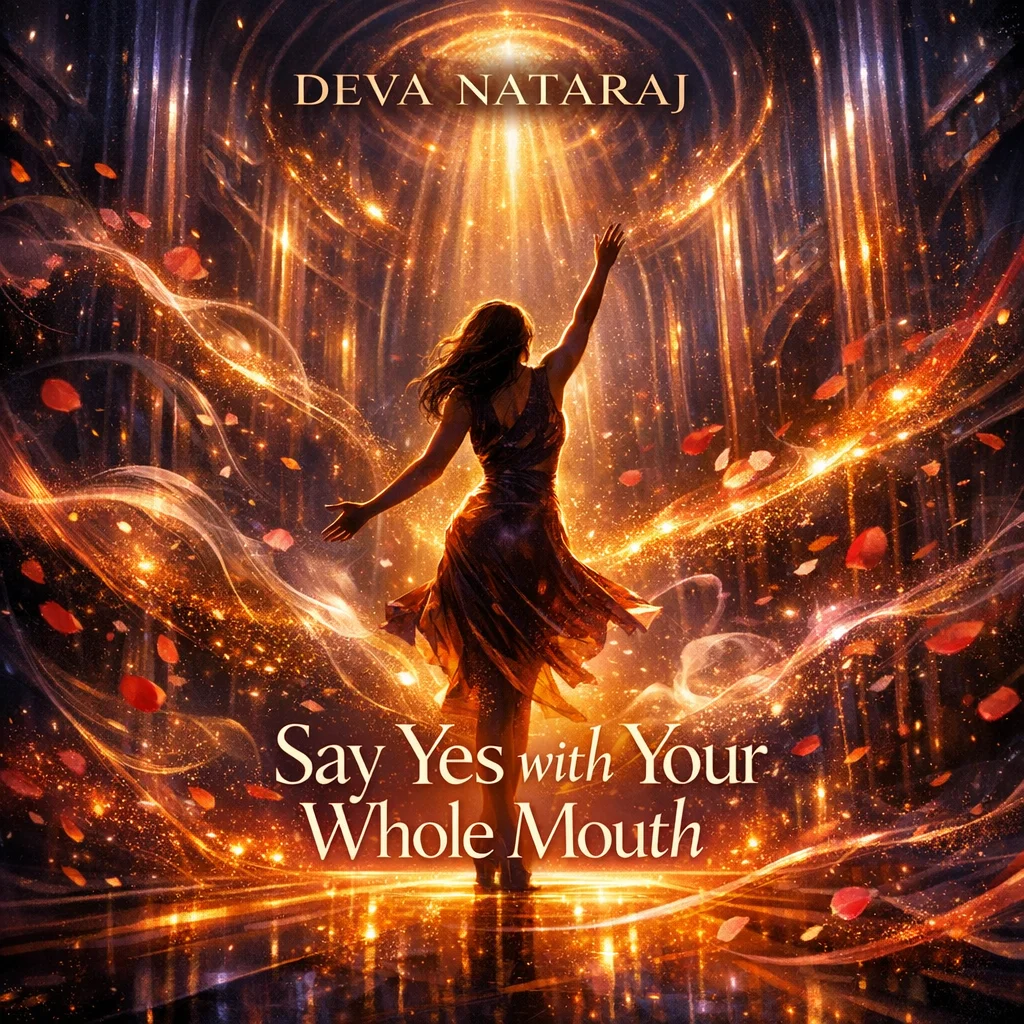
The present moment is not a quiet you escape into but a life you say yes to, loudly, exactly where you are. (That wholehearted assent is its own practice – explored in radical acceptance and saying yes to life and how to fully embrace life.)
How do you come back to the present when you keep drifting?
You notice you’ve drifted, and you return – endlessly. That is not failure. That is the practice. The mind will wander mid-sentence, mid-breath, mid-dishwashing, and each return is complete in itself.
A few ways to make the return concrete, none of them gimmicks:
- Use the breath as an anchor, not a goal. “Just the breath you’re breathing, nothing more.” You don’t need the perfect breath, only the one happening now.
- Return through the senses. When the mind is lost in time, the body is always in the present. Naming one thing you can see or feel drops you back into now faster than any thought.
- Let ordinary objects be reminders. Choose one recurring moment – a doorway, a red light – and let it be a bell that returns you.
- Drop the scorekeeping. Presence isn’t a streak you’re maintaining. It is available fresh every time you remember it, no matter how long you were gone.
The wandering is not the opposite of presence. It is the doorway back – every drift hands you another now to say yes to.
The altar was always here
Living in the present moment is not a technique you master once and hold forever. It is a relationship with this breath, renewed every time you notice you’ve wandered off – the return, soft and unglamorous and endlessly repeatable, to the one place you can actually be alive.
That is why The Altar of Now ends where it does, not on a mountaintop but on the surface of an ordinary day: “So be here, just be here, just be - / The altar was always you and me.” There is nothing to reach and nowhere to arrive. The sacred is this breath, and the one behind it, and the willingness – again and again – to come home to now.
Frequently Asked Questions
What does it actually mean to live in the present moment?
It means giving your attention to what is genuinely happening now – this breath, this room, this task – instead of living inside memory or projection. The present is the only moment you can directly experience; past and future exist only as thought. Living in the now is loosening your grip on those thoughts.
Why can’t I stay present for more than a few seconds?
Because the mind is built to time-travel – rehearsing the future and replaying the past, often compulsively. This is universal, not a personal flaw. Presence isn’t the absence of wandering; it’s noticing you’ve drifted and gently returning. That return is the whole practice, and it never runs out.
Do I have to quit my job or meditate for hours to live in the now?
No. Presence is found inside ordinary life, not by escaping it. The dashboard, the dishcloth, the kitchen, the traffic jam – these are the actual altars, as The Altar of Now puts it, “if you let them be.” You don’t need special circumstances, only attention brought to the ones you already have.
What song best captures living in the present moment?
“The Altar of Now,” the title track and closing song of Deva Nataraj’s album, is written directly about this. It reframes the present as an altar – “Not tomorrow, not the summit, not the shore / Just the breath you’re breathing, nothing more” – and lands the album’s whole arc on the line “The altar was always you and me.”