Simulation Theory in Music: When Songs Question Reality
The Question That Won’t Go Away
Are we living in a simulation? The question, once confined to philosophy departments and science fiction novels, has become one of the defining inquiries of our time. Nick Bostrom’s simulation argument, Elon Musk’s casual assertion that the odds of base reality are “one in billions,” and the strange quantum behavior of particles that seem to only resolve when observed – all point toward a reality that may not be what it appears.
But simulation theory is not new. Hindu philosophy has spoken of Maya – the cosmic illusion – for thousands of years. The Buddhist concept of samsara describes an endless cycle of existence within a constructed reality. Plato’s allegory of the cave, Descartes’ evil demon, and the Gnostic concept of the demiurge all circle the same idea: what we experience as reality may be a veil over something deeper.
What makes simulation theory uniquely suited to musical exploration is that music itself can feel like a glitch in the matrix – a moment where the veil thins and something beyond ordinary experience becomes briefly accessible. Deva Nataraj’s music leans fully into this possibility, treating simulation theory not as a cold philosophical argument but as a sacred framework for understanding existence.
The Descent: “Enter the Simulation”
Sacred Amnesia opens with what might be the most ambitious musical depiction of consciousness entering a simulated reality. “Enter the Simulation” is not a song about questioning whether we are in a simulation – it starts from the premise that we chose to enter it, and that the forgetting was deliberate.
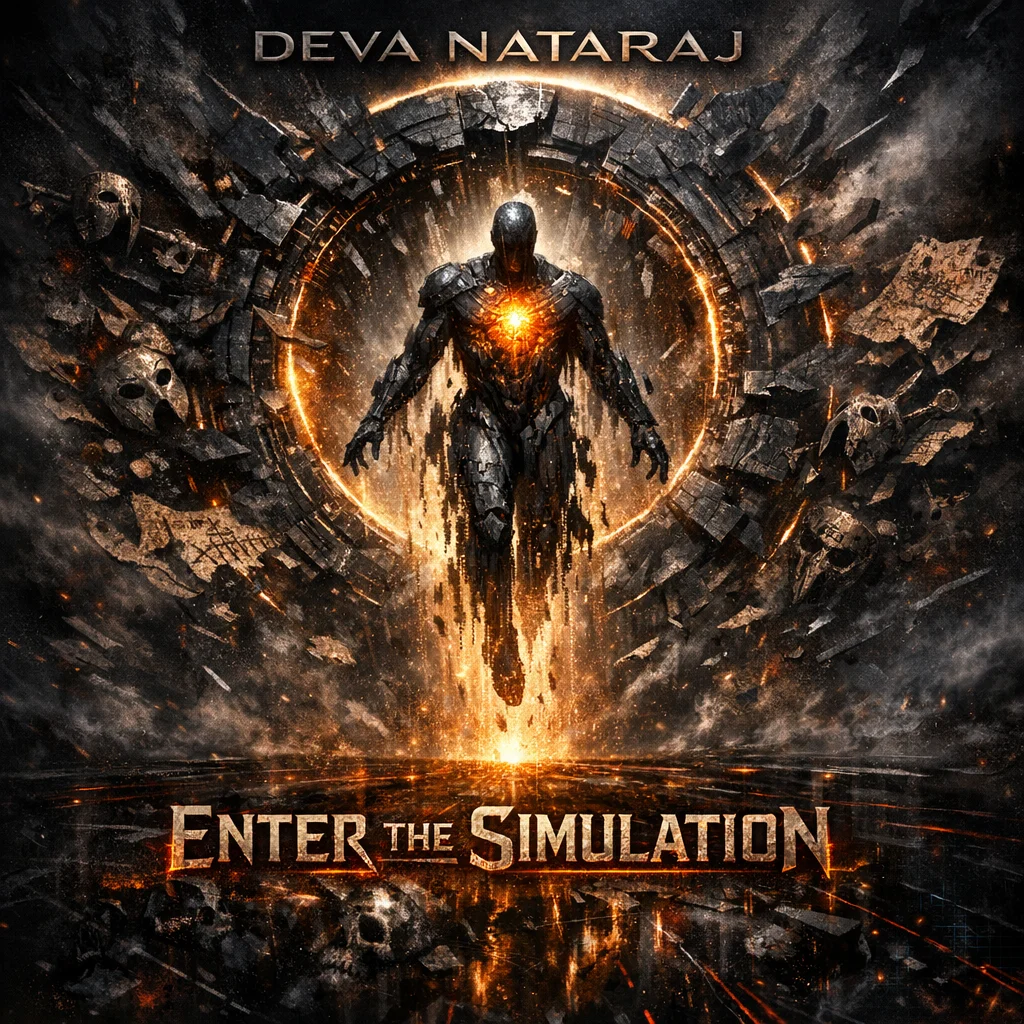
The lyrics begin before the simulation itself: “In the beginning there was nothing / A void without a name / Then a word – another – a chain of fire / And the boundary conditions came.” This is creation described in the language of both mysticism and computer science – “boundary conditions” being the parameters within which the simulation runs.
What distinguishes this from a purely technological framing is the element of choice: “We wrote the laws of light and gravity / We coded distance, depth, and time / Then stood before the gate and chose to enter / Knowing we would leave our minds behind.” We are not victims of the simulation. We are its architects, willingly forgetting our authorship in order to fully experience what we created. (For a plain-language explanation of the forgetting itself, see why can’t I remember anything from before I was born.)
The concept of “sacred amnesia” – forgetting one’s divinity in order to play the game of being human – bridges Eastern mysticism and simulation theory. (This deliberate forgetting also means we must dissolve the constructed identity we built during the amnesia.) “Divine amnesia – sacred and complete / To play the game we had to fall asleep.” The forgetting is not a flaw in the system. It is the system’s most essential feature.
The Cosmic Game: “Players Unknown”
If “Enter the Simulation” describes the moment of entry, “Players Unknown” zooms out to reveal the full scope of the game. This epic progressive metal closer to Sacred Amnesia presents the simulation as a vast multiplayer experience, with billions of souls playing roles they have forgotten they chose.
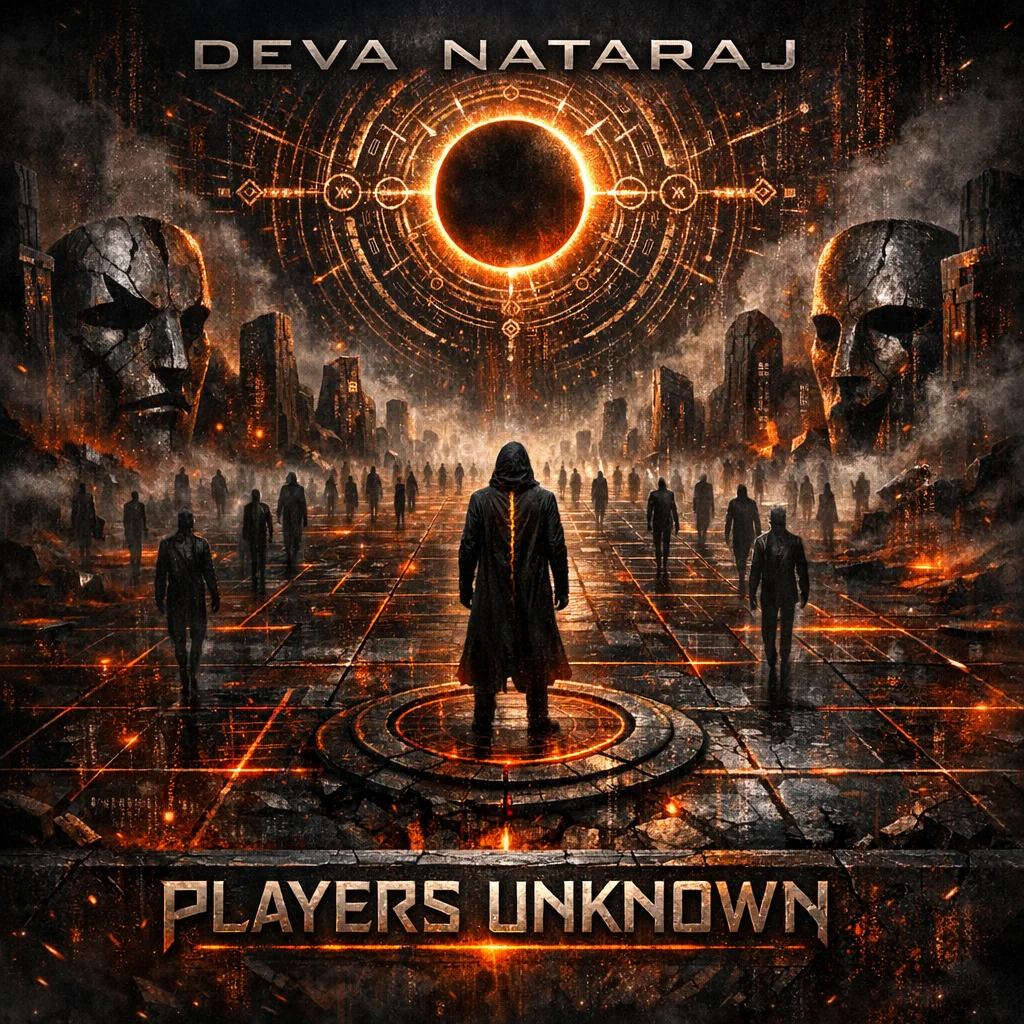
The song opens with an irresistible thought experiment: “Imagine you were offered / A brand new game to play / A virtual reality so perfect / You’d forget it wasn’t day.” The brilliance of this framing is its simplicity. If we could build such a game, would we play it? And if the answer is yes, what makes us certain we have not already done so?
The lyrics move from individual to collective: “We are the players unknown / Millions deep in the code / Walking past each other / On every single road / Old friends from a place / We can’t remember soon / Strangers with the same home / Underneath the moon.” This captures something that many people feel intuitively – that sense of recognition when meeting a stranger, the feeling that the people around us are somehow familiar in ways that defy ordinary explanation.
The song also introduces an element of agency within the simulation: “You can waste this run on comfort / You can coast until the end / Or you can tear the game apart / And find out why they pressed send.” The simulation is not a prison. It is a challenge – and the quality of the experience depends on how deeply you are willing to engage with it.
The Ecstatic Veil: “Dance of Illusion”
Where Sacred Amnesia approaches simulation theory through the intensity of metal, Ecstatic Simulation Beats translates the same ideas into the language of dance and celebration. “Dance of Illusion” presents the simulation not as something to escape but as something to celebrate – a cosmic dance party that we ourselves created.
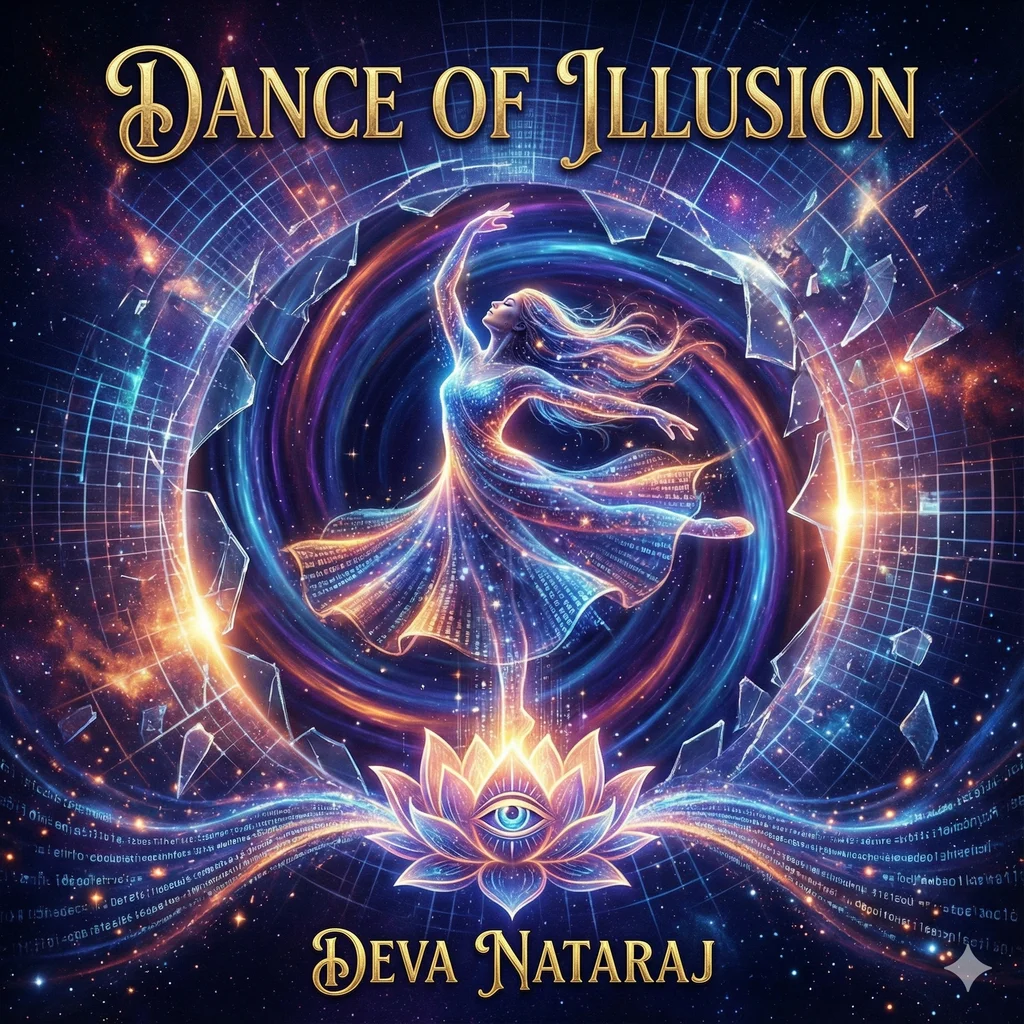
The song opens with the act of creation itself: “In the stillness before the sound / We coded a world to spin around / Wove the stars out of our own skin / Forgot where the dream begins.” Like “Enter the Simulation,” this places the listener as both creator and participant in the simulated reality.
But the tone here is radically different. Where Sacred Amnesia’s metal conveys the gravity and intensity of entering the simulation, “Dance of Illusion” wraps the same concept in ecstatic rhythms: “Dance – this is the simulation / We built it for our liberation / Losing ourselves to find the one / The night is the womb of the sun.” The simulation is not a test or a punishment. It is a celebration – built for the joy of losing oneself and then finding oneself again.
The song draws directly from Hindu philosophy: “From joy we’re born, by joy sustained / To joy we return again.” This echoes the Taittiriya Upanishad’s teaching that reality arises from bliss (ananda) and returns to bliss. The simulation is the dance between forgetting and remembering, and both states are sacred.
The Chosen Curriculum: “I Chose This Ride”
Perhaps the most emotionally powerful entry in Deva Nataraj’s simulation theory exploration, “I Chose This Ride” addresses a question that simulation theory must eventually face: if we chose this reality, did we also choose its suffering?
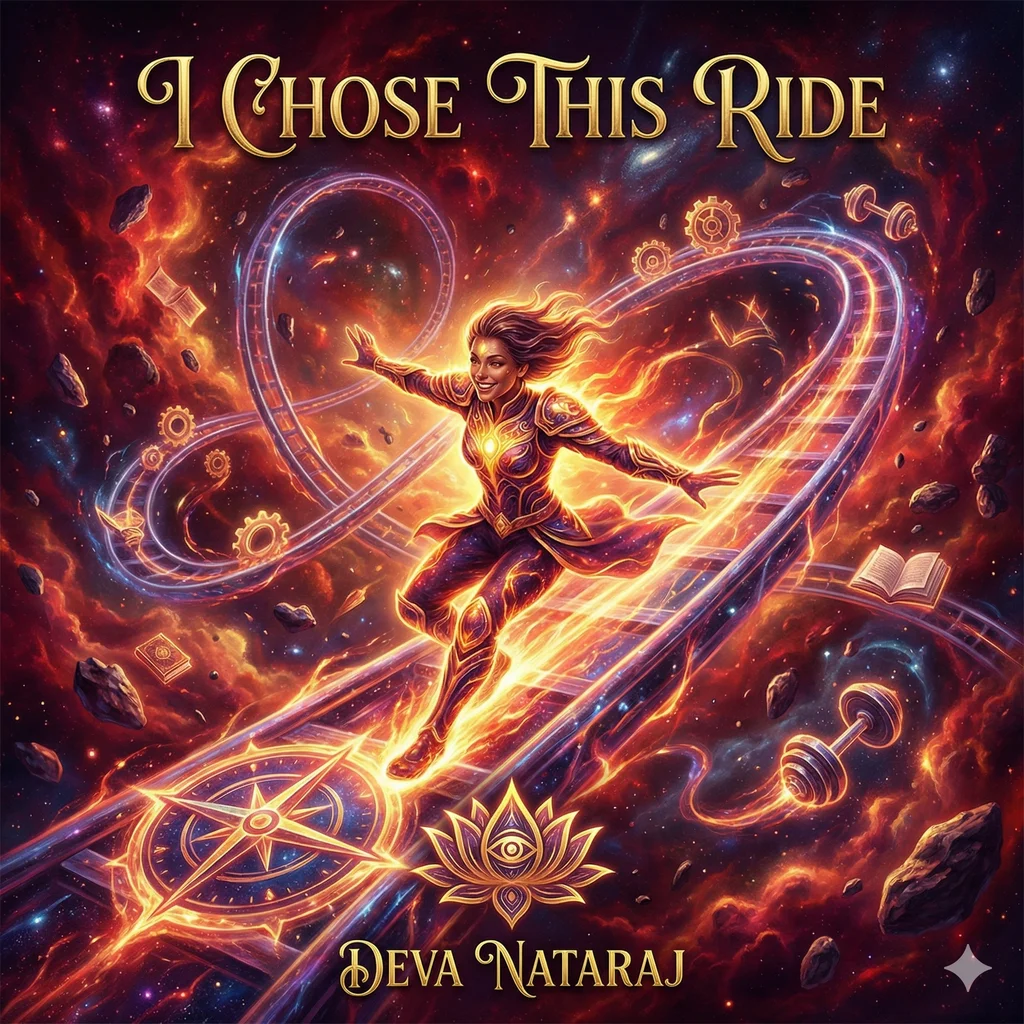
The song opens with devastating honesty: “I wake with the same line in my skull / There is no point. There is no point.” This is not spiritual bypassing. It begins in the reality of depression, anxiety, and the crushing weight of ordinary existence. “Pressure on the chest when the light comes in / Debts, mail, faces – another day to spin.”
Then comes the shift – not a denial of suffering but a reframing of it: “What if I signed up for this heartbreak / What if I chose this weight / What if this pain is curriculum / And the exit is death – not now.” If the simulation is chosen, then so are its challenges. This transforms suffering from meaningless randomness into deliberate curriculum. (For the full exploration of what it means to say yes to everything we chose, see Radical Acceptance: The Spiritual Practice of Saying Yes to Life.)
The implications are radical: “If I chose it I can meet it / If I chose it I can breathe it / If I chose it I can dance inside it.” Choice restores agency. If you are a victim of circumstance, you are powerless. If you are a student in a classroom you selected, every hardship becomes a lesson you specifically signed up for.
The song builds to an ecstatic affirmation: “This is MY run – MY ride / I entered. I abide / I taste. I collide / I burn, and that is being alive.” This is simulation theory not as intellectual exercise but as lived practice – a framework for transforming the experience of being human from something that happens to you into something you are actively playing.
The Cosmic Dancer: “Nataraj (The Last Dance)”
The album closer of The Unregulated Juice brings simulation theory full circle by invoking the Hindu deity whose name the artist bears. Nataraj – the cosmic dancer – is the god who dances the universe into and out of existence. In Hindu cosmology, all of reality is Shiva’s dance: creation, preservation, and destruction moving in eternal rhythm.
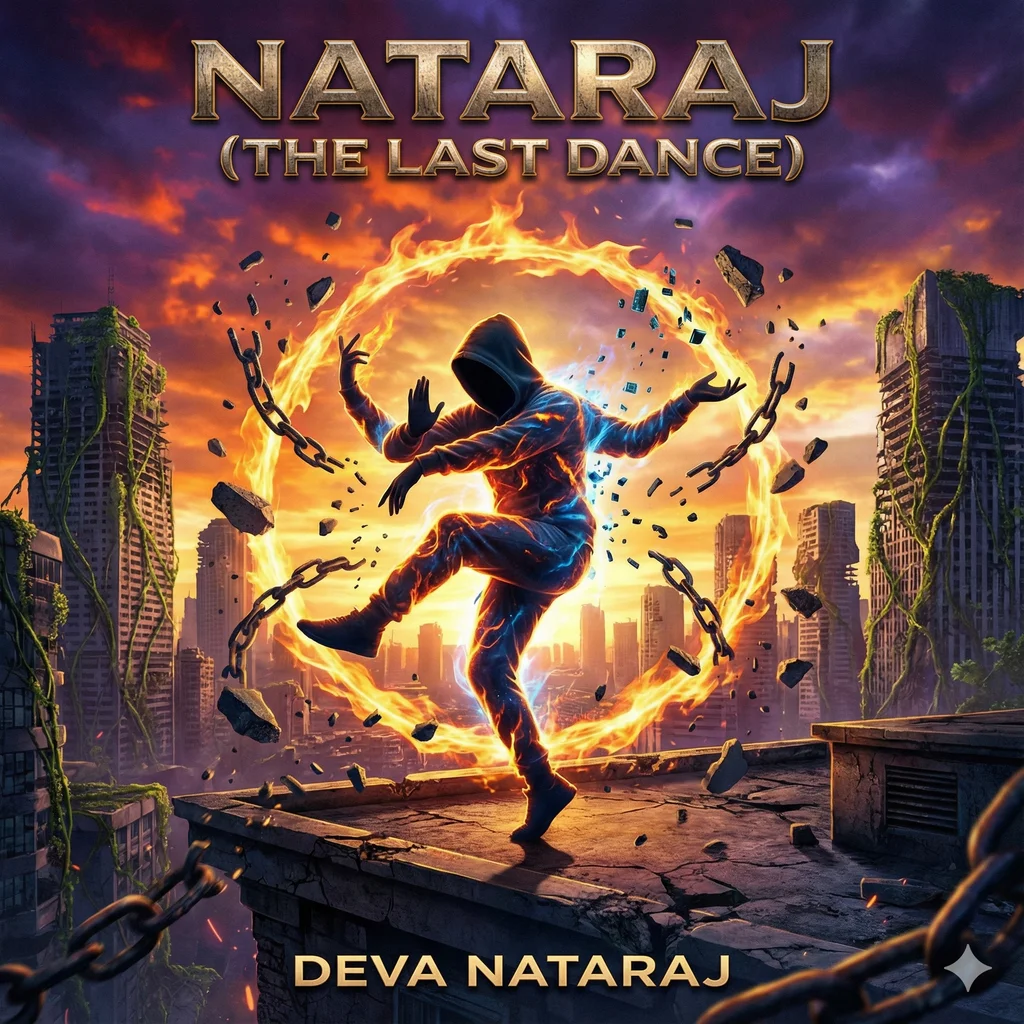
Set against UK drill production, this track transplants ancient mythology into modern urban life: “So let the prices rise and the currency fall / I’m standing in the center, I’m the lord of it all / They can tax the dirt but they can’t tax the light / I’m the Nataraj, dancing through the night.” The simulation may include economic systems, social hierarchies, and political structures – but the dancer who knows the nature of the game moves through them freely.
The song’s central insight is that the dancer and the dance are not separate: “The dancer is the dance / There is no me left to be afraid / There is no them left to blame / Just the movement / Just the breath.” This is the endpoint of simulation theory taken to its spiritual conclusion: when you realize you are both the player and the game, both the dreamer and the dream, fear loses its foundation.
Why Simulation Theory Matters in Music
Simulation theory in Deva Nataraj’s work is never merely intellectual. It is always experiential – a framework for transforming how we relate to our own lives. The progression across albums tells a coherent story:
- We chose to enter (“Enter the Simulation”) – this is not random
- We are all playing (“Players Unknown”) – every being you encounter is a fellow player
- The game is sacred (“Dance of Illusion”) – built from joy, for joy
- The suffering is chosen curriculum (“I Chose This Ride”) – agency transforms victimhood
- Freedom is dancing with full knowledge (“Nataraj”) – sovereignty within the game
In a world that often feels meaningless and mechanistic, this musical body of work offers something rare: a cosmology that is both intellectually honest and emotionally sustaining. It does not deny suffering. It does not promise escape. Instead, it proposes that the game is worth playing – and that the quality of the play is up to you. (For the album that turns the same question toward an accelerating future, and toward the fear of it, see is AI just a bubble.)
As “Players Unknown” concludes: “You are the player unknown / And the game is here.”
Frequently Asked Questions
What is simulation theory?
Simulation theory is the hypothesis that the reality we experience is a constructed or computed experience rather than base reality. Its modern form comes from Nick Bostrom’s simulation argument, but far older versions exist: Maya in Hindu philosophy, samsara in Buddhism, and Plato’s cave. Deva Nataraj treats it as a sacred framework for living rather than a cold technical claim.
What does “sacred amnesia” mean?
Sacred amnesia is the idea that we chose to enter this reality and deliberately forgot our own authorship so the experience would be genuine. “To play the game we had to fall asleep.” The forgetting is not a flaw in the system; it is its most essential feature, and remembering is the game itself.
If life is a simulation, does anything matter?
More, not less. If you chose to be here, every hardship becomes chosen curriculum and every stranger a fellow player. Meaning shifts from something handed to you to something you bring: “You can waste this run on comfort / You can coast until the end / Or you can tear the game apart / And find out why they pressed send.”
How does simulation theory connect to Hindu philosophy?
Through Maya, the creative illusion that makes form possible; through Nataraj, the cosmic dancer who dances the universe into and out of existence; and through the Upanishadic teaching that reality arises from bliss and returns to it. Both frameworks describe the world as a play of consciousness that we are inside of and also authoring.
Which songs explore simulation theory?
“Enter the Simulation” and “Players Unknown” from Sacred Amnesia, “Dance of Illusion” and “I Chose This Ride” from Ecstatic Simulation Beats, and “Nataraj (The Last Dance)” from The Unregulated Juice. Together they move from entering the simulation, to recognizing the other players, to celebrating the game, to owning its suffering, to dancing freely inside it.