Spiritual Unlearning: Who Are You Without Your Story?
The Weight of Borrowed Selves
By the time most people reach adulthood, they are carrying dozens of identities they never chose. Daughter. Employee. Good girl. Responsible one. The quiet type. The strong one. Each label was handed to them by someone else – a parent, a teacher, a culture – and each was accepted because acceptance was survival.
Jiddu Krishnamurti said: “It is no measure of health to be well-adjusted to a profoundly sick society.” The Zen tradition speaks of shoshin – beginner’s mind – the practice of meeting each moment without the weight of accumulated assumptions. Socrates built an entire philosophy around one recognition: the wisest person is the one who knows they know nothing.
But unlearning is harder than learning. The identities we carry are not merely ideas – they are woven into our nervous systems, our posture, our reflexes. When unlearning reaches its most intense point, it becomes what mystics call ego death – the complete dissolution of the constructed self. You cannot simply decide to stop being the good girl or the peacekeeper. The costume must be identified, honored, and ceremonially removed.
Deva Nataraj’s The Altar of Now traces this exact process – from the first tremor of awakening through the active work of unlearning to the freedom that waits on the other side.
The First Crack: “Tremor”
Before any unlearning can happen, something has to crack. The album opens with “Tremor” – the moment when ordinary life is interrupted by something that cannot be ignored.
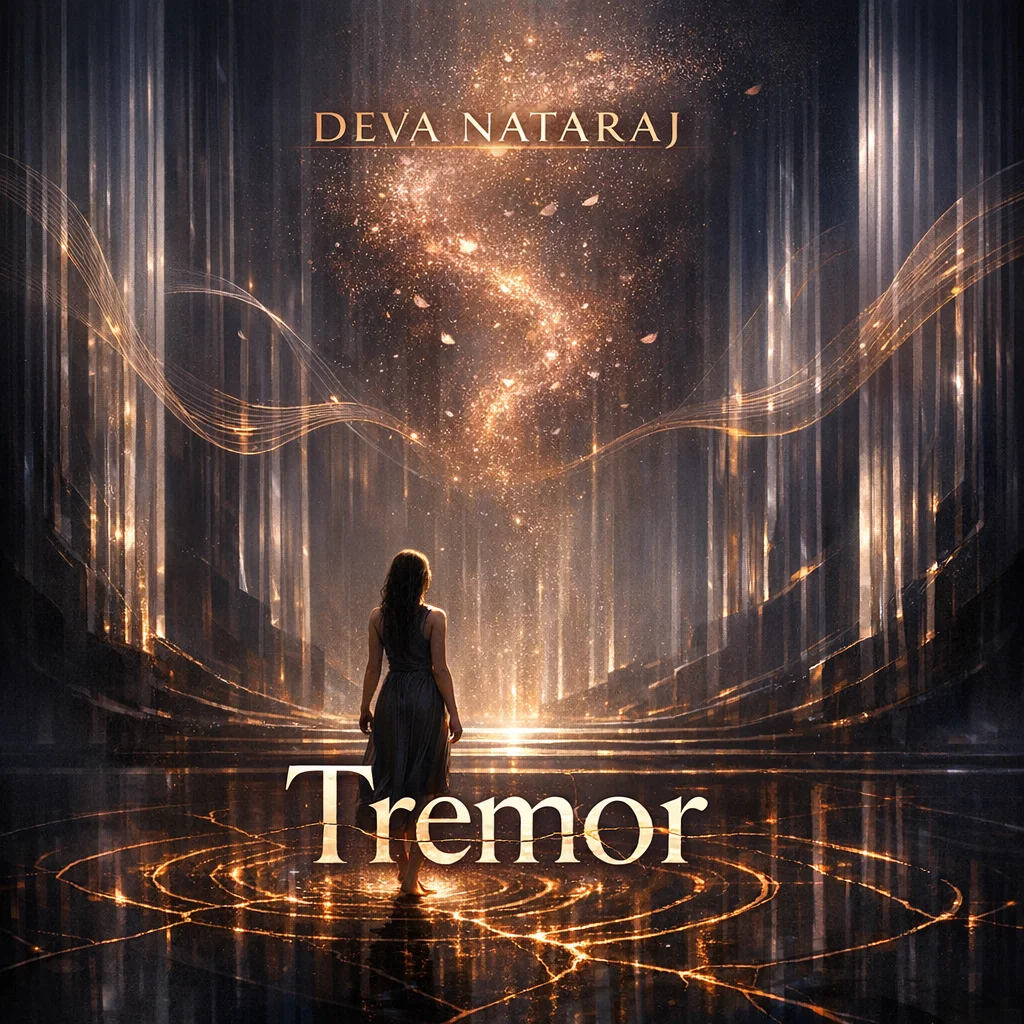
“I was folding laundry when the floor began to hum / A frequency below the noise of everything I’d done.” The setting is deliberately mundane. Awakening does not always arrive as lightning bolt or vision quest. Sometimes it arrives while folding laundry – a vibration beneath the surface of a carefully designed life.
“I’ve been faithful to the calendar, the lists, the daily grind / A good machine inside a life I carefully designed / But there’s a tremor in the architecture of my days / A hairline crack where something golden leaks through the malaise.” The identity she has built is functional, even admirable. But functionality is not aliveness. The tremor exposes the gap.
What makes this song so effective as the beginning of the unlearning journey is its honesty about the fear involved: “I don’t have a name for it / No doctrine, no design / Just a hum inside my body / Older than this life of mine.” She cannot name what is calling her. She cannot control it. She can only feel it. And the song ends with the simplest, most terrifying instruction: “The tremor says: begin.”
Stripping the Wallpaper: “Unlearn My Name”
If “Tremor” is the invitation, “Unlearn My Name” is the active process – systematically removing every borrowed identity to discover what exists beneath.

“They called me darling, called me dear / Called me capable, called me clear / Filed me under dutiful and kind / Every label fit so perfectly / I wore them all obediently / Until I felt the edges on my mind.” The labels are not cruel – that is what makes them so insidious. They fit perfectly. They are comfortable. They are approved. And they are suffocating.
The song’s central image is architectural: “I’m not the trophy on the shelf / I’m the room behind the room behind myself.” Identity is a house of rooms – and the self we present to the world is only the outermost room. Unlearning is the process of moving inward, past the certificates, past the social roles, past the smile that always fits, toward something that has no name and no resume.
“What if forgetting is the holiest art? / What if the nameless thing is where we start?” This is where the song meets the mystical traditions head-on. Zen speaks of emptying the cup. Meister Eckhart spoke of Gelassenheit – releasement, letting go. The song’s bridge reaches for the same radical stripping: “I am not my job, I am not my grief / I am not the story or the belief / I am not the wound, I am not the scar / I am the darkness between the stars / And the darkness is not empty – oh, the darkness is alive.”
The Ceremony of Letting Go: “The Costume Funeral”
Unlearning, if it remains purely intellectual, changes nothing. The identities we carry are lodged in the body, in habit, in muscle memory. They need to be ritually released. “The Costume Funeral” provides exactly this – a darkly playful ceremony for burying the costumes we have worn.

“Here lies the good girl, pressed and clean / The woman who never made a scene / The referee of everyone else’s peace / Who forgot she had a war of her own to cease.” Each costume is named with specificity and laid out with tenderness. The perfectionist. The mother who pretended she was pleased. The wife who swallowed thunder with a grin.
What distinguishes this song from bitterness or blame is its gratitude: “I loved them, but I love my freedom best.” The costumes served their purpose. They kept her in the game. But the game has changed, and holding onto them now is not loyalty but imprisonment.
Indigenous cultures have long understood the necessity of ritual in identity transitions. Rites of passage mark the death of the old self and the birth of the new – not as metaphor but as ceremonial reality. “The Costume Funeral” enacts this same principle: you cannot casually discard an identity you lived inside for decades. You must bury it with flowers and say the words and pour the dirt.
The final state is not a new costume but the absence of costume altogether: “I’m not who I was – I’m who I’ve always been, unsolved / Unsolved and open – finally, finally open.”
The Shadow: “Waste the Simulation”
Not everyone who feels the tremor acts on it. Sacred Amnesia’s furious “Waste the Simulation” confronts the shadow side of unlearning – the refusal to begin.
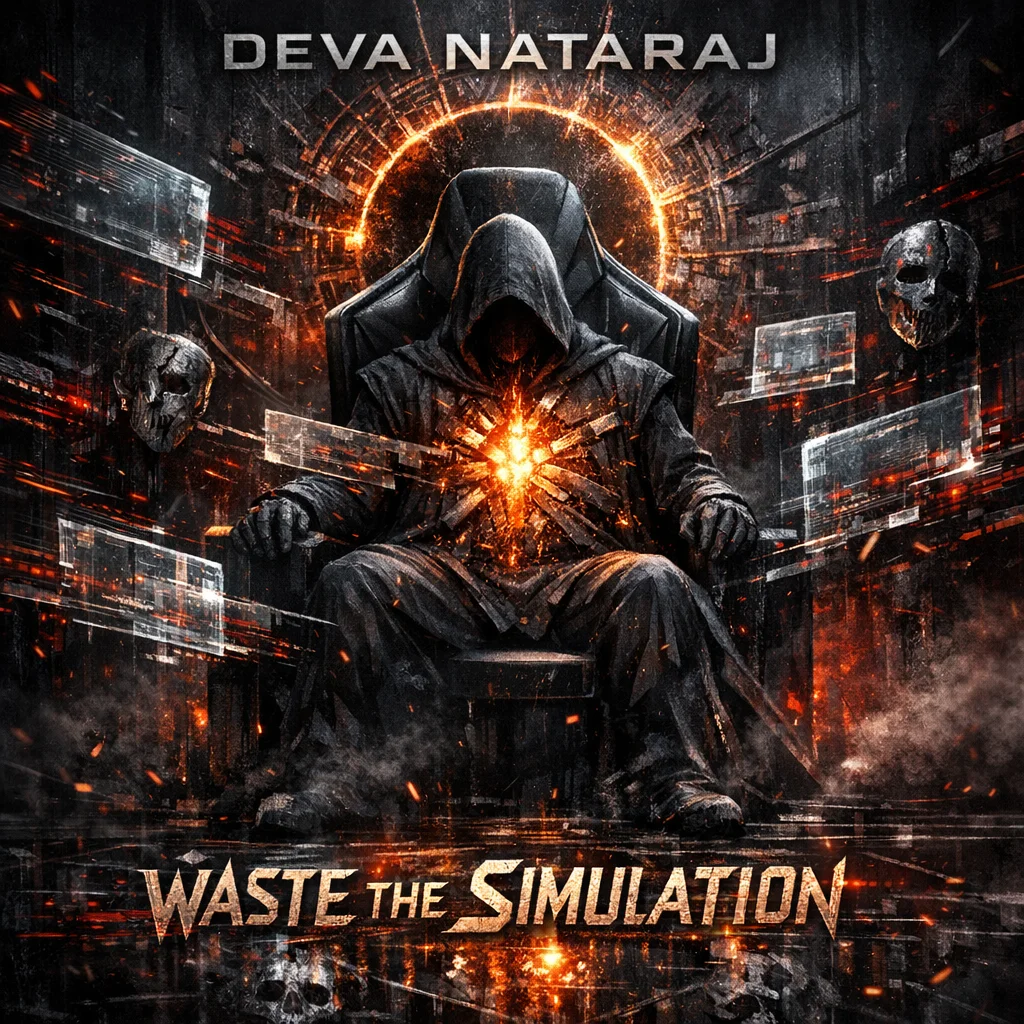
“Another night dissolves inside the screen / Scrolling through the wreckage of your dreams / You had a purpose – can you feel it bleeding? / Or did the algorithm drown the screaming?” This is what happens when the tremor is felt but suppressed – when the discomfort of awakening is numbed through distraction rather than moved through.
“You chose to come here / You fought to get in / Now you’re lying on the couch / Watching someone else’s skin.” The simulation philosophy gives this avoidance a particular weight. If incarnation was a choice – if we fought to enter this reality – then wasting it is not merely unfortunate. It is a betrayal of our own deepest intention.
The song does not comfort. It confronts: “How will you score when the simulation ends / And they’re reading back the war / Every wasted hour, every numbing hit / How will you score when they’re counting it?” This is not punishment. It is accountability. The same radical responsibility that makes the unlearning journey possible also makes avoidance impossible to hide from.
Coming Home to Choice: “Chose to Be Here”
After the costumes are buried and the numbness is confronted, what remains? Press Enter’s “Chose to Be Here” answers: what remains is not emptiness but choice – the recognition that you are here deliberately, and now you can choose it consciously.

“I spent my years behind the glass / Watching seasons burn and pass / Told myself that life was luck / A random deal, a coin, a struck match – but something broke inside my chest.” The old story – life as accident, identity as given – has cracked. And through the crack pours something unexpected: agency.
“I chose to be here / Every scar, every dawn / Every road I’ve been on / I chose to be here / I chose to love this.” This is not the naive affirmation of someone who has never questioned. This is the hard-won yes of someone who has unlearned everything borrowed and discovered, in the clearing, that what remains is a choice so fundamental it cannot be unlearned.
“Not because it’s easy, no / Because it’s real and it’s aglow / Because the pain means I can feel / Because the wound proves love is real.” The purpose of unlearning was never to arrive at nothingness. It was to arrive at what the mystics call second innocence – the raw, unmediated experience of being alive – which can only happen once the layers of conditioning have been cleared away.
The Paradox of Unlearning
The spiritual journey of unlearning is not a straight line from fullness to emptiness. It is a circle. You begin full of borrowed identities, you pass through the nakedness of not-knowing, and you arrive at a different kind of fullness – one that you chose rather than inherited.
The tremor interrupts the designed life (“Tremor”). The wallpaper is stripped from the walls (“Unlearn My Name”). The costumes are buried with ceremony (“The Costume Funeral”). The temptation to numb is confronted (“Waste the Simulation”). And what remains, standing in the clearing, is not a blank slate but a conscious being who can finally say – with full authority and zero borrowed conviction – “I chose to be here.” (For the people who unlearned the script so thoroughly they were called degenerates for it, see is it wrong to live outside the system.)
As “Unlearn My Name” whispers in its final breath: “Meet me where the naming ends / That’s where everything begins.”
Frequently Asked Questions
What is spiritual unlearning?
Spiritual unlearning is the practice of identifying and releasing the identities, beliefs, and roles you absorbed rather than chose, in order to find what was there before them. Zen calls it emptying the cup; Meister Eckhart called it Gelassenheit, releasement. It is harder than learning because the borrowed selves live in the nervous system, not just the mind.
Who am I without my story?
Not nothing. “I’m the room behind the room behind myself”: awareness prior to every label, and beneath that, a choice. “I chose to be here.” The nameless place is where you start, not where you end, and what stands in the clearing afterwards is a conscious being rather than a blank slate.
How do I know which parts of my identity are borrowed?
Look for the labels that fit perfectly and were praised: capable, dutiful, the strong one, the good girl, the one who never made a scene. If dropping a role feels like betraying someone else rather than yourself, it was probably theirs to begin with.
Why is unlearning so hard?
Because identities are woven into posture, reflex, and habit, not only into thought. Deciding to stop being the peacekeeper changes nothing on its own. The costume has to be named, honored for the protection it gave, and ceremonially buried, which is why “The Costume Funeral” is staged as a ritual rather than a resolution.
What are the signs that unlearning has begun?
A tremor: a hum underneath the carefully designed life, a restlessness that has no doctrine or name. The old roles start to feel like edges pressing on the mind. Distraction is offered as comfort and stops working. “The tremor says: begin.”