Radical Acceptance: The Spiritual Practice of Saying Yes to Life
The Other Path
Most spiritual traditions begin with a rejection. Renounce the world. Transcend the body. Rise above desire. The path to the sacred is presented as a path away from the messy, contradictory, painful business of being alive.
But there is another path – older, wilder, and far more demanding. It does not ask you to leave anything behind. It asks you to include everything.
Nietzsche called it amor fati – love of fate. Not mere acceptance, not grudging tolerance, but active love of everything that has happened and will happen. He proposed a thought experiment: if you had to live this exact life again, every detail unchanged, for all eternity – could you love it? Not just the victories and the pleasures, but the heartbreak, the hospital, the 3 AM despair?
The tantric tradition arrives at the same place from a different direction. The Vigyana Bhairav Tantra – one of the oldest tantric texts, a dialogue between Shiva and Shakti – offers 112 techniques for awakening, and nearly all of them involve saying yes to what is already present. Not fixing it. Not improving it. Just meeting it with total awareness.
Rumi wrote: “The wound is the place where the light enters you.” Not despite the wound. Through it.
Deva Nataraj’s music embodies this radical acceptance across multiple albums and genres – building an argument not through philosophy alone but through rhythm, melody, and the kind of lyrical truth that bypasses the mind’s defenses and lands directly in the chest.
Reframing the Curriculum: “We Came Here on Purpose”
Before you can accept everything, you need a reason to believe that everything is worth accepting. “We Came Here on Purpose” provides the philosophical foundation: what if nothing that has happened to you was accidental?
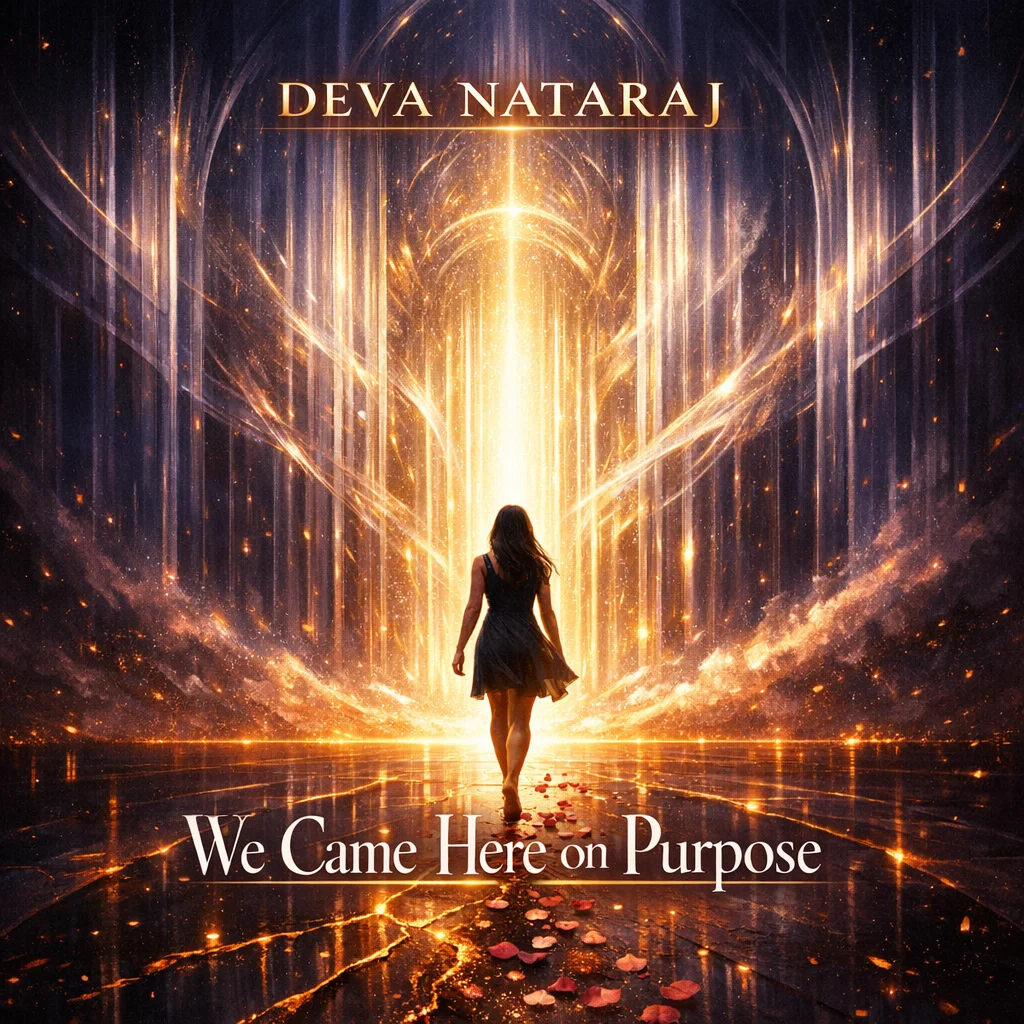
“I didn’t fall here by mistake or accident of birth / I wasn’t tossed into the deep without a sense of worth / I packed my bags in some bright room I cannot now recall / And said: give me the full experience – I want to taste it all.” The simulation philosophy reframes incarnation as a choice – and not a cautious one. We asked for the full experience. Including the parts we would later wish we could undo.
“The heartbreak and the hospital, the 3 AM despair / The job I lost, the friend who left, the greying of my hair / Not punishments, not random dice, not evidence of wrong / But chapters in a story that I chose to make this long.” This is not toxic positivity. It is a radical shift in framing. The suffering is not denied. It is recontextualized. Pain is real. But if we chose it, we can meet it differently.
“The amnesia is a feature, not a failure of the ride / The not-knowing is the engine – it’s not something you should hide.” We forgot our purpose deliberately. The forgetting is what makes the experience genuine – and the courage to remain in the experience, without demanding to know why, is the practice of radical acceptance at its deepest level.
The Full-Bodied Yes: “Say Yes with Your Whole Mouth”
If “We Came Here on Purpose” provides the philosophical basis for acceptance, “Say Yes with Your Whole Mouth” is acceptance in action – ecstatic, embodied, and unapologetically total.
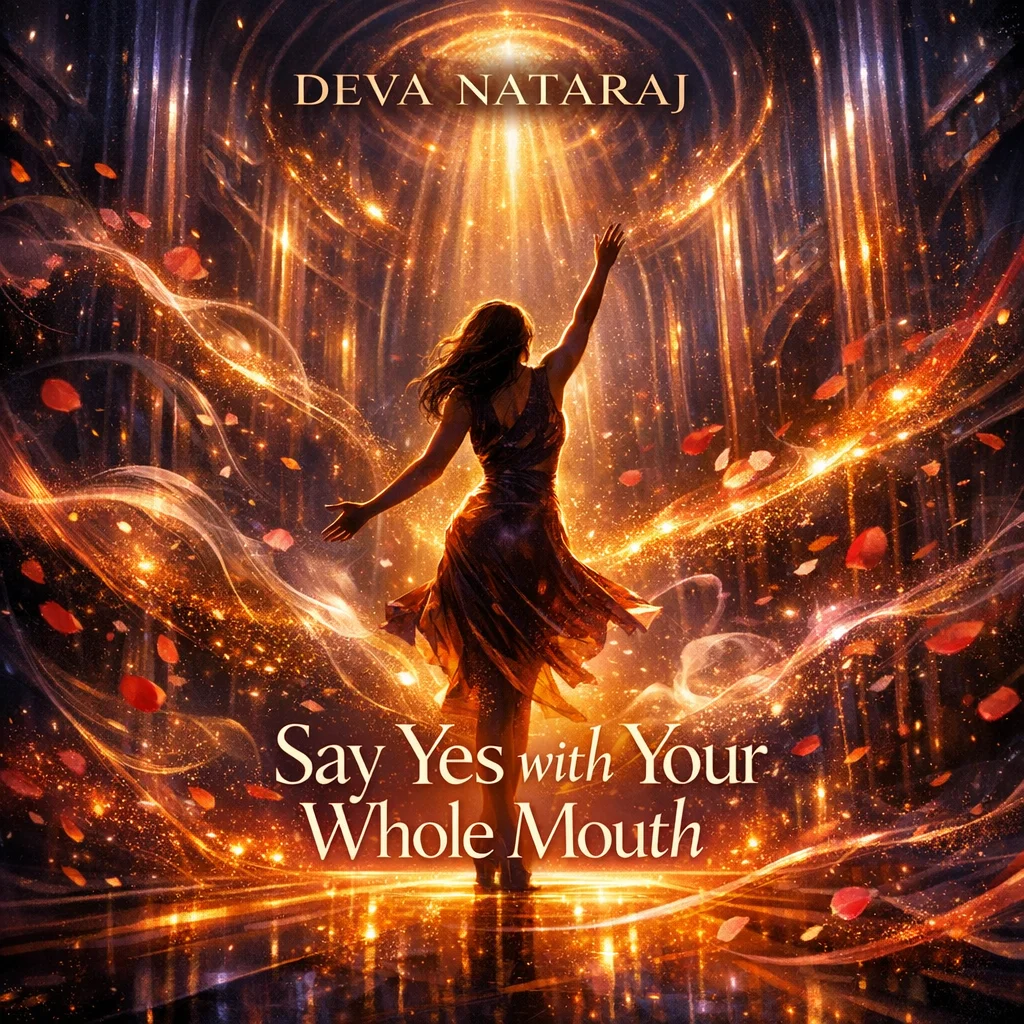
“I want the garlic and the roses / I want the thunder and the tea / I want the argument at midnight / And the making up at three.” The song does not choose between experiences. It wants them all. Not as indiscriminate greed but as the refusal to divide life into acceptable and unacceptable portions.
The mystic is not someone who floats above life. “They say transcend, they say float higher / They say the body is the cage / But I have read the mystic’s footnotes / And the mystic loved the stage.” The great mystics – Rumi, Kabir, Zorba the Buddha – were not escapists. They were the most intensely alive people in the room. “The enlightenment that does not flinch / From human sweat and human plans.”
The song’s central demand is tonal: “Half-hearted hallelujahs never changed a thing / If you’re going to praise this life – say yes with your whole mouth! From the belly, from the ground!” This is the tantric yes. Not a polite, cerebral assent. A full-bodied, belly-deep, neighbor-disturbing YES that holds nothing back.
“I want the hospital, the wedding / I want the funeral, the birth.” Radical acceptance means accepting the full spectrum. Not choosing the pleasant over the painful, but recognizing that the spectrum itself – the whole catastrophic, gorgeous range of human experience – is what we came here for.
The Non-Dual Dissolution: “Everything Is Nothing (And I Love It All)”
At a certain depth of acceptance, the categories themselves dissolve. Ecstatic Simulation Beats’ “Everything Is Nothing (And I Love It All)” takes radical acceptance to its non-dual conclusion.
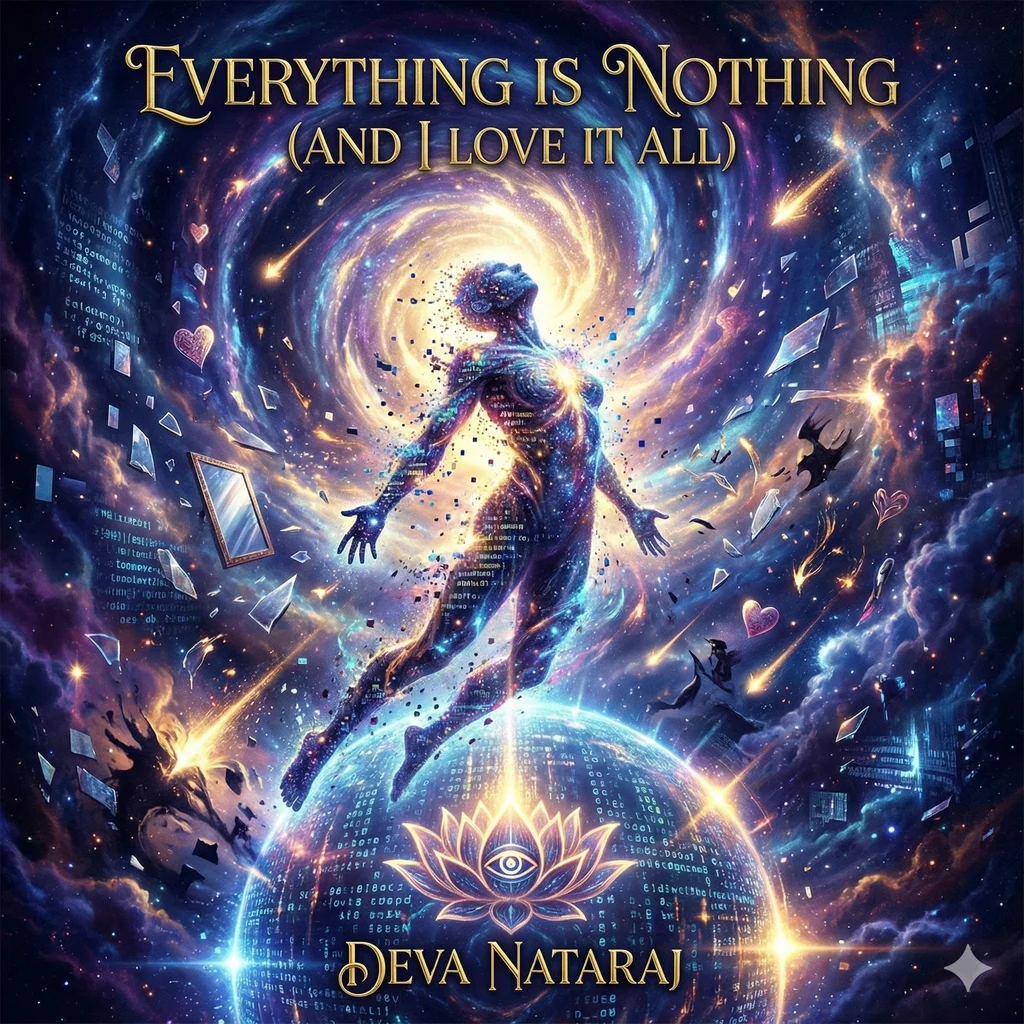
“I was lost in the static of a dream / Pixels breathing, breaking at the seams / Every heartbeat just a simulation call / Until I saw myself inside it all.” The shift is perceptual. You are not a visitor in the simulation. You are the simulation. “We are one. We are none / We are code, we are sun / We are love. We are fall / Everything… and nothing at all.”
Buddhist philosophy speaks of sunyata – emptiness – and the Heart Sutra declares: “Form is emptiness, emptiness is form.” At the non-dual level, everything and nothing are not opposites. They are two descriptions of the same reality. And when this is experienced rather than merely understood, acceptance becomes effortless – because there is nothing separate left to resist.
“And in the glitch, the truth unfolds – the simulation sings – we are whole.” Wholeness is not achieved through addition but through the dissolution of the illusion of incompleteness. When everything is nothing and nothing is everything, the question of acceptance does not arise. There is only what is. And it is loved. Not because it earned love but because love is what remains when the categories fall away.
The Only Altar: “The Altar of Now”
Radical acceptance cannot be practiced in the abstract. You cannot say yes to “life in general.” You can only say yes to this breath, this moment, this exact configuration of reality that will never occur again. The album’s closing anthem grounds the entire philosophy in the only place it can be lived.
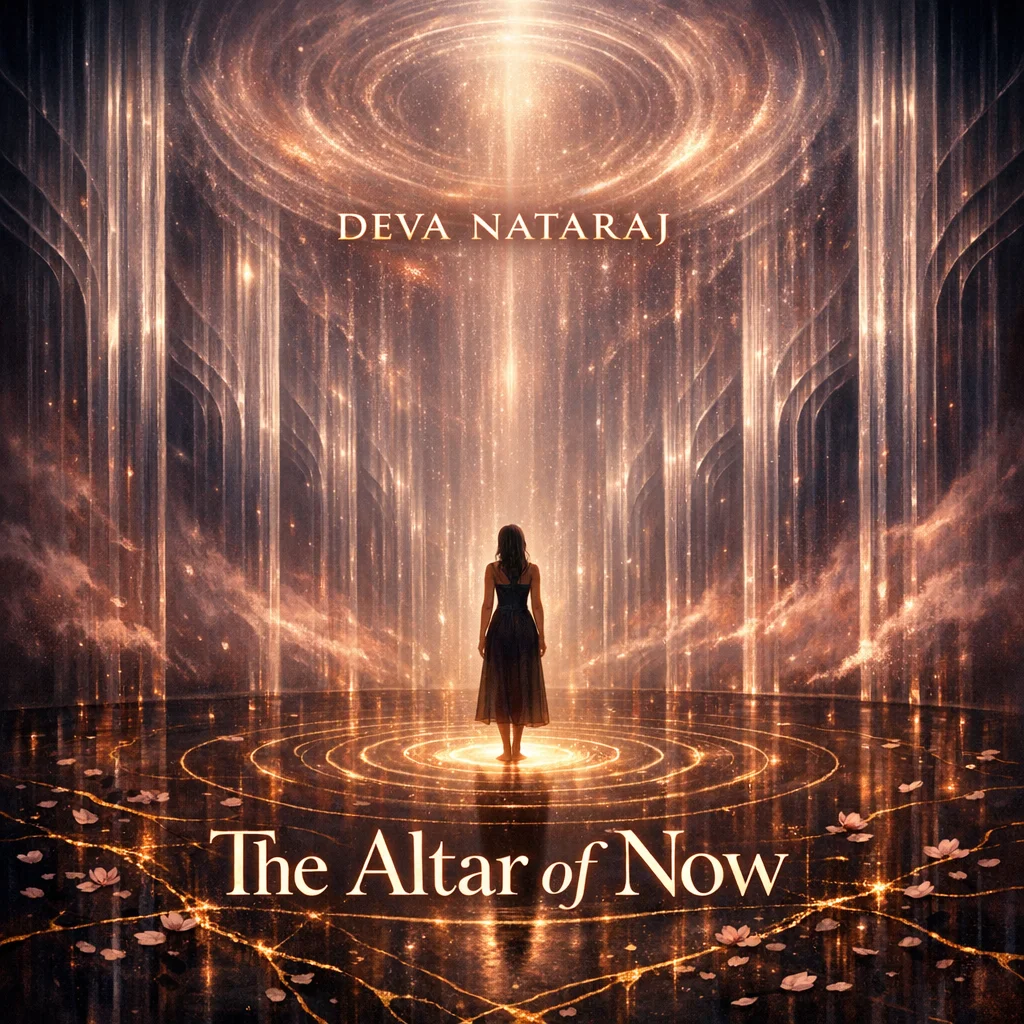
“I’ve traveled to the temples and the edges of the map / I’ve knelt in every chapel, left my forehead in the gap / I’ve searched the ancient languages for words to prove I’m real / But the holiest ground I’ve ever found was learning how to feel.” The search is over – not because the answer was found somewhere out there, but because the search itself was what needed to be released.
“This is the altar of now / Right here, right here is the vow / Not tomorrow, not the summit, not the shore / Just the breath you’re breathing, nothing more.” The sacred is not somewhere else. It has never been somewhere else. Every attempt to place it in a future attainment, a distant heaven, or a completed project was a refusal to accept what is already here.
The song expands the altar to include everything the mind would exclude: “The dashboard and the dishcloth and the unremarkable sky / Are altars – if you let them be.” This is where radical acceptance meets radical presence. When you accept everything, everything becomes sacred. The traffic jam. The Tuesday. The tear. This is the body as temple taken to its ultimate conclusion – not just the body, but every moment the body inhabits.
“We crossed the universe to sit inside this skin / We encrypted our own knowing just to feel the world begin.” We chose this. All of it. And the encryption is cracking. And the light is pouring through. And it is not some far-off heaven – it is here, it is now, it is you.
Nowhere Else: “Nowhere Else”
The Unregulated Juice brings radical acceptance into its most grounded, least adorned expression – presence on concrete, in the everyday, with nowhere else to be.
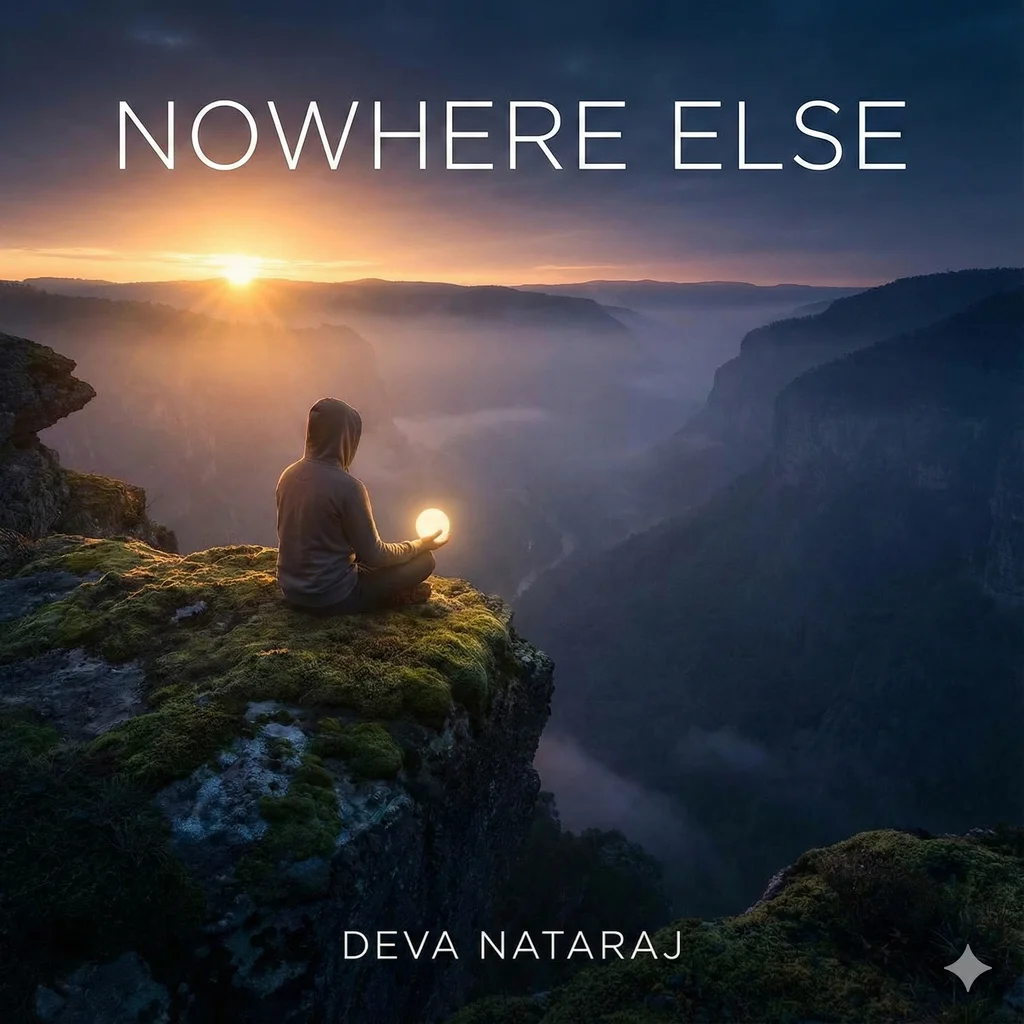
“My mind’s a time machine, trying to escape the now / Searching for the when and wondering 'bout the how.” The mind’s default mode is anywhere but here – replaying the past, rehearsing the future, calculating the escape. Radical acceptance is the practice of staying.
“There’s nowhere else to go, there’s nowhere else to be / The center of the moment is the only place I’m free.” Freedom is not found by adding something to this moment. It is found by stopping the search for a better moment. The drill beats hit like a heartbeat. The message is physical, not philosophical: “Look at the hand, look at the light on the wall / In this tiny second, I’ve got it fucking all.”
“Total celebration of the simple and the plain / The sun on the concrete, the rhythm of the rain.” This is not transcendence. This is what waits when you stop trying to transcend. The sun has always been on the concrete. The rain has always had rhythm. You just were not here to notice.
The Yes That Changes Everything
Across five songs and four genres – anthemic pop, dance-pop, ecstatic EDM, cinematic orchestral, and UK drill – the same teaching builds and deepens: the most radical spiritual practice is not to change what is happening but to meet it with total, unreserved acceptance.
This is not passivity. Radical acceptance does not mean tolerating injustice or ignoring pain. It means meeting reality without the filter of how-it-should-be, which is the only position from which genuine action – rather than reactive resistance – becomes possible.
Nietzsche’s amor fati. The Vigyana Bhairav Tantra’s 112 techniques of presence. Rumi’s guest house that welcomes every visitor. Camus imagining Sisyphus happy. The Stoics accepting what is not in their control. All of these point to the same truth that “Say Yes with Your Whole Mouth” puts to music: life does not need your approval to be sacred. But when you give it – when you say yes from the belly, from the ground, with your whole mouth – you discover that the sacred was waiting for exactly that.
As “The Altar of Now” concludes: “The altar was always you and me.”
Frequently Asked Questions
What is radical acceptance?
Radical acceptance is meeting reality completely as it is, including its pain, without the filter of how it should be. It is not approval of injustice and not passivity. It is the clear ground from which genuine action, rather than reactive resistance, becomes possible. Nietzsche called it amor fati; tantra calls it the total yes.
Does radical acceptance mean giving up or being passive?
No. Resisting what has already happened wastes energy; accepting it frees that energy for what happens next. You can fully accept that something is the case and still work to change it. The acceptance is of reality, not of your own inaction.
What is amor fati?
Amor fati is Nietzsche’s “love of fate”: not tolerating but actively loving everything that has happened, such that you would live this exact life again unchanged, for all eternity. The songs take it one step further: you did not merely accept this life, you chose it.
How is radical acceptance different from toxic positivity?
Toxic positivity denies pain; radical acceptance includes it. “I want the hospital, the wedding / I want the funeral, the birth.” The whole spectrum of experience is affirmed, not just the pleasant half, and nothing has to be pretended away for the yes to be real.
How do I practice saying yes to life?
Start with this breath and this moment, because you cannot say yes to life in general. Notice where you are resisting, soften around it, and say yes from the belly rather than the head. “Say Yes with Your Whole Mouth”, “The Altar of Now”, and “Nowhere Else” are practices set to music for exactly this.