Second Innocence: Reclaiming Your Inner Child Through Spiritual Practice
Two Kinds of Innocence
There are two kinds of innocence, and the difference between them is everything.
The first is the innocence of the child – a state of pure openness that exists before knowledge, before conditioning, before the world teaches you to be afraid. The child sees the orange on the counter as a miracle because it has never learned to call it ordinary. The rain is music, not a schedule change. Every question is real because no one has yet taught the child that asking why too many times is annoying.
The second innocence comes after knowledge – after the years of accumulation, achievement, and armor-building. It is the innocence of the sage who has passed through knowledge and come out the other side, arriving at wonder not because they know nothing but because they have realized how little knowledge captures of what is actually here.
Jesus said: “Unless you become like little children, you shall not enter the kingdom of heaven.” Zen Buddhism calls it shoshin – beginner’s mind. The Taoist pu – the uncarved block – points to the same state: the original, unprocessed, unconditioned way of being.
Osho described it this way: the child must die so the sage can be born. And the sage is nothing but the child reborn – with one difference. The child’s innocence is unconscious. The sage’s innocence is chosen.
Deva Nataraj’s The Altar of Now traces this circular journey back to wonder – and demonstrates that the spiritual path does not lead upward to some celestial attainment, but inward, back to the one who was always waiting.
The Whisper Before the Journey: “Something Behind the Screen”
Before the masks are shed and the costumes are buried, there is a whisper – a tender intuition that something deeper lives beneath the surface of things. Press Enter’s dream-pop opener captures this first, pre-verbal sense of recognition.
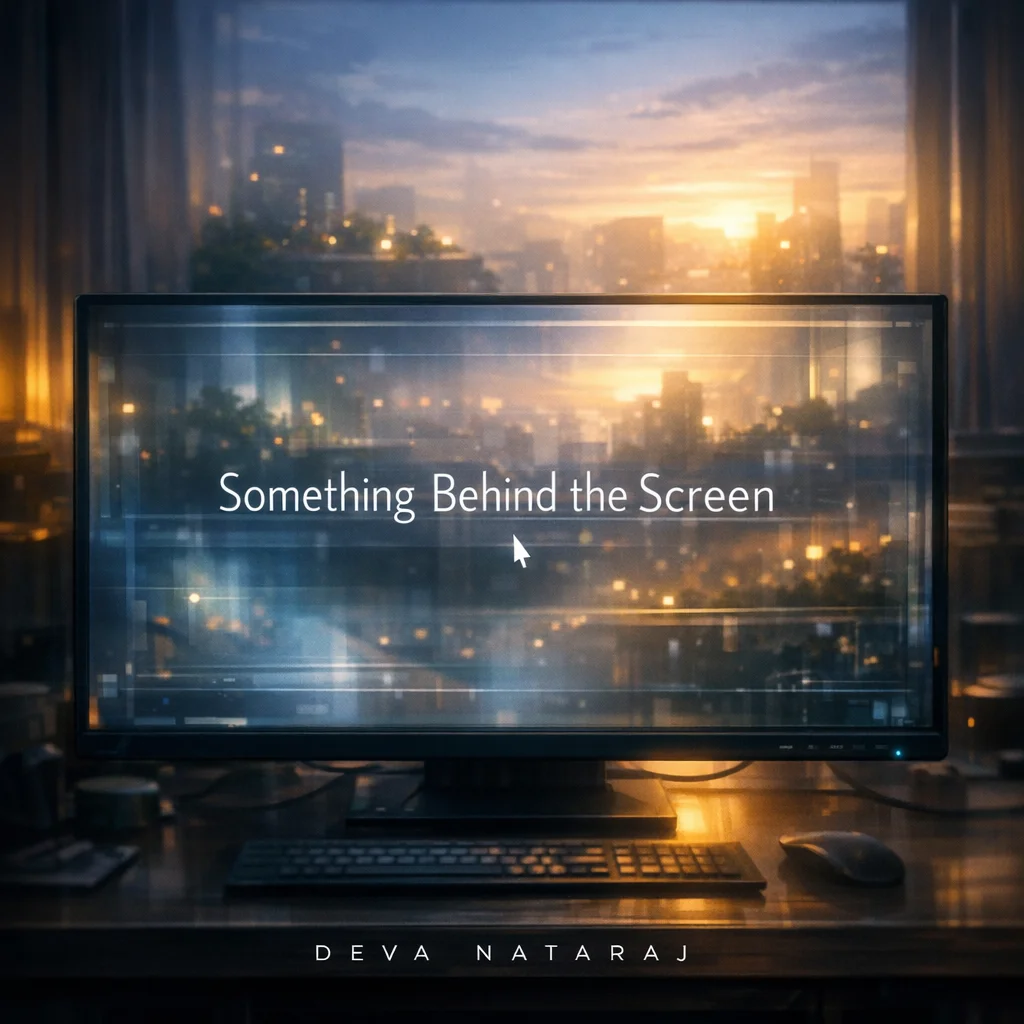
“Something hums beneath the noise / A warmth I feel but can’t give voice.” This is the inner child’s way of knowing – not through analysis but through feeling, through a warmth that has no explanation and needs none. “Like a lover I have known / In a life before my own.”
The child knows things it cannot articulate. It senses the presence behind appearances, the love beneath the structures of the world. “What if everything I see / Was placed here carefully for me? / What if every breath I take / Is love that I forgot I’d make?” This is not naivety. It is the whisper of a recognition that predates the conditioned mind – the same recognition that, at the end of the spiritual journey, will return as certainty.
The Reunion: “The Second Childhood”
After the long detour of growing up – the accumulation of roles, expectations, and reasonable behavior – The Altar of Now arrives at its most tender moment: the reunion with the inner child.
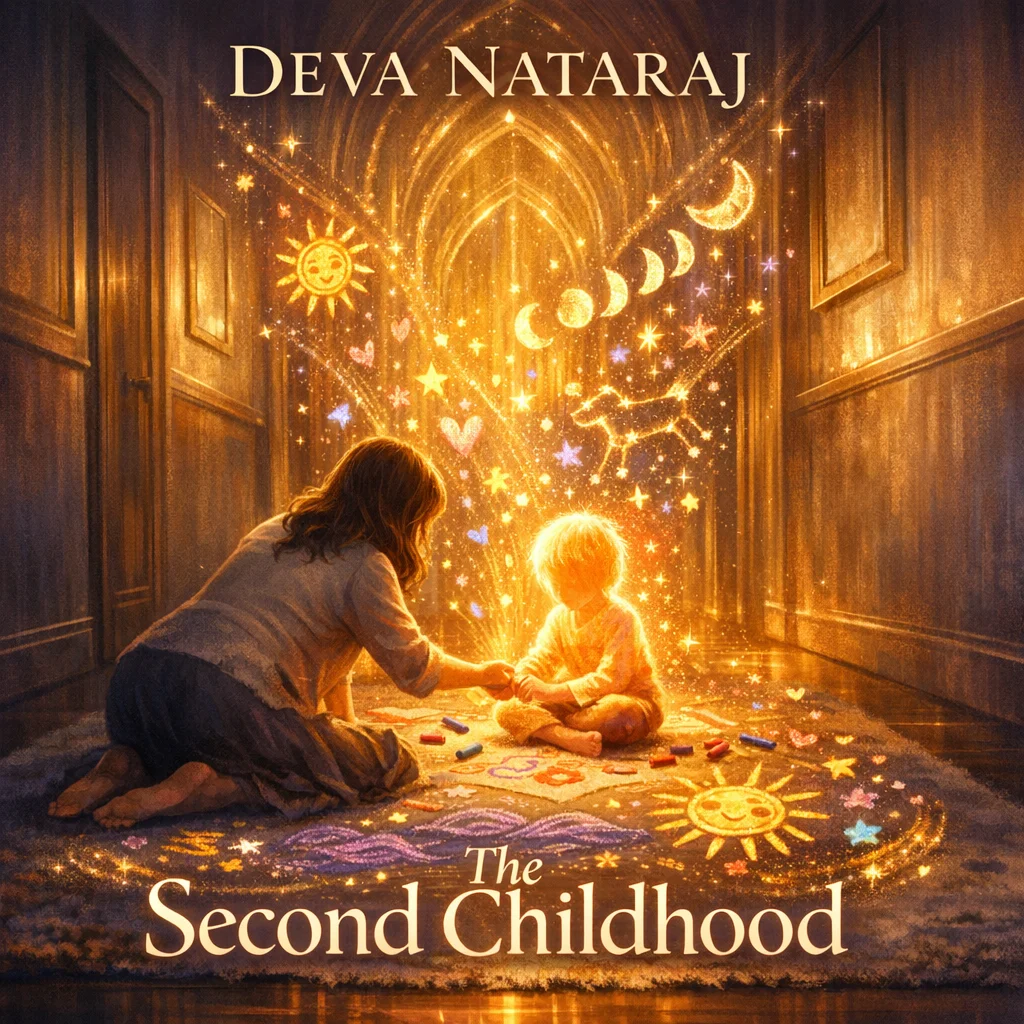
“I found her in the hallway of a dream I didn’t plan / She was sitting on the carpet with a crayon in her hand / She looked up and she knew me though I’d left her long ago / She said: what took you so long? I said: I didn’t know.” The inner child did not go anywhere. She was not destroyed by the years of conditioning. She simply went underground and waited.
“She was drawing suns with faces, every color wrong and right / Purple oceans, seven moons, a dog made out of light / No one taught her composition, no one graded what she drew / She was making worlds for fun because that’s what makers do.” This is creativity before the critic – expression before evaluation. The child creates not because it is talented but because creation is what consciousness naturally does when it is not interfered with.
The song is careful to distinguish second childhood from regression: “I’m not going backwards, I am going through / To the girl who trusted everything she knew.” Going back would be a retreat. Going through is an integration – the adult’s experience meeting the child’s openness.
The inner child’s wisdom is presented as stronger, not weaker, than adult knowledge: “She’s not fragile – she’s the strongest thing I am / She’s the part of me that never learned to lie / The part that looks at everything and doesn’t ask the price.” And her permission is the one the adult has been waiting for: “You don’t have to earn the right to play / You don’t have to suffer first to feel the day / You were born already worthy of the light.”
Seeing Again for the First Time: “Newborn Eyes”
If “The Second Childhood” is the internal reunion, “Newborn Eyes” is its external expression – the world seen as if for the very first time.
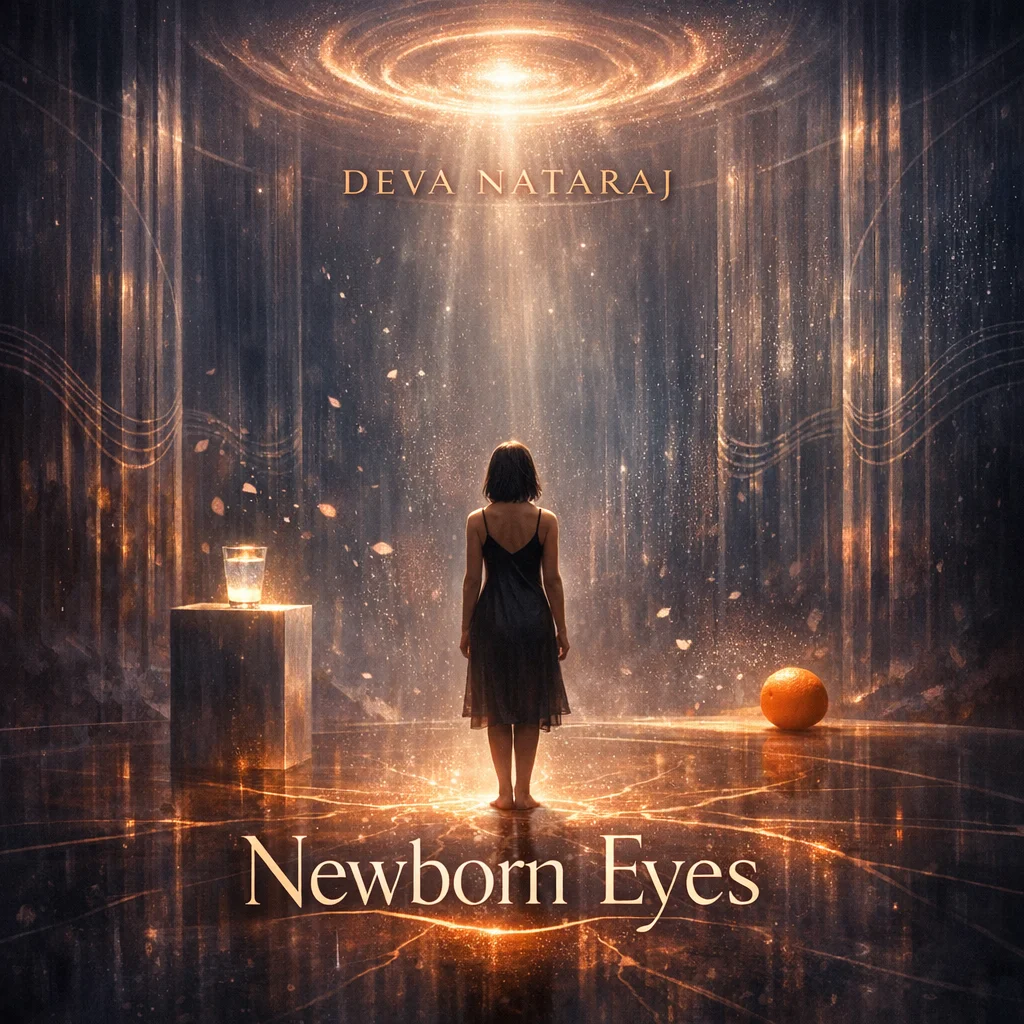
“The orange on the counter is a planet made of light / The rain against the window is a symphony in flight / The woman on the corner with the groceries in her hand / Is a sovereign universe I’ll never understand.” This is perception after the filters have been removed. Not the child’s innocent seeing – which did not know it was seeing freshly – but the adult’s chosen freshness. The second innocence. This quality of seeing is what contemplative traditions call witness consciousness – awareness without the burden of opinion.
“I used to rush through mornings like a commuter through a gate / Now I stand inside the doorway and I let the wonder wait.” The shift is not in the world but in the quality of attention brought to it. The steam from the kettle, the neighbor’s laugh through paper walls, the weight of one’s own body – these were always extraordinary. They only seemed ordinary because the conditioned mind had categorized them into invisibility.
The song makes the crucial distinction: “Not innocence – presence / Not naivety – attention / The baby sees because it has no opinion yet / And I am learning, learning, learning to forget.” This is the paradox at the heart of second innocence. The baby cannot help but see freshly. The sage chooses to forget what she has learned – not the facts, but the opinions, the categorizations, the habitual ways of summarizing experience that prevent direct contact with what is actually here.
“What if wonder is not childish? / What if wonder is the truth?” This question is the article’s thesis in two lines. Wonder is not a stage we outgrow. It is the natural response of consciousness when it is not obscured by assumptions.
The Sacred Unknown: “Sacred in the Not Knowing”
The child is not ashamed of not knowing. The child asks why with total openness, without expecting the answer to be comfortable or comprehensible. Ecstatic Simulation Beats’ “Sacred in the Not Knowing” returns to this same state – not as regression but as the deepest wisdom available.
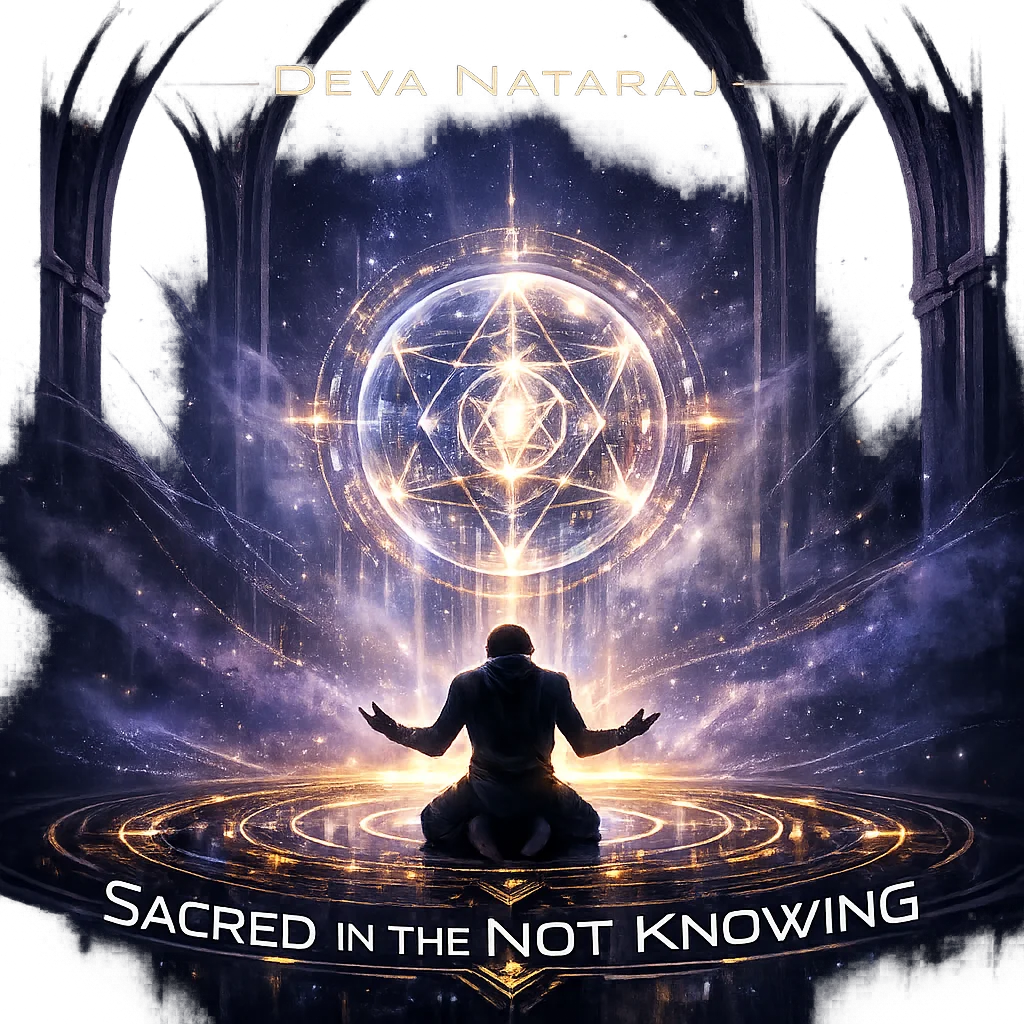
“What if the sealed door is the sacred part? / What if the unknown is the beating heart?” The adult mind treats not-knowing as a problem to be solved. The child – and the sage – recognize it as the condition of aliveness itself.
“We came here blind on purpose – the mystery is the art.” In the simulation philosophy, sacred amnesia was a design choice, not a manufacturing defect. We did not forget our origin because something went wrong. We forgot because the forgetting is what makes genuine experience possible. And the courage to remain in not-knowing – rather than grasping at premature certainties – is the courage of both the child and the mystic.
“The body knows a language that the mind forgot / A warmth beneath the signal, underneath the thought / Stop the search, surrender to the breath – feel the living purpose underneath the rest.” The child has not yet learned to distrust the body’s knowing. The sage returns to that same body-trust after the mind’s long detour through analysis and doubt. (For why the not-knowing was chosen in the first place, see why can’t I remember before I was born.)
The Whole-Mouthed Yes: “Say Yes with Your Whole Mouth”
The child’s most natural gesture is total acceptance – saying yes to everything before learning to discriminate, to prefer, to reject. “Say Yes with Your Whole Mouth” is this childlike posture restored to the adult, amplified by the full range of human experience.
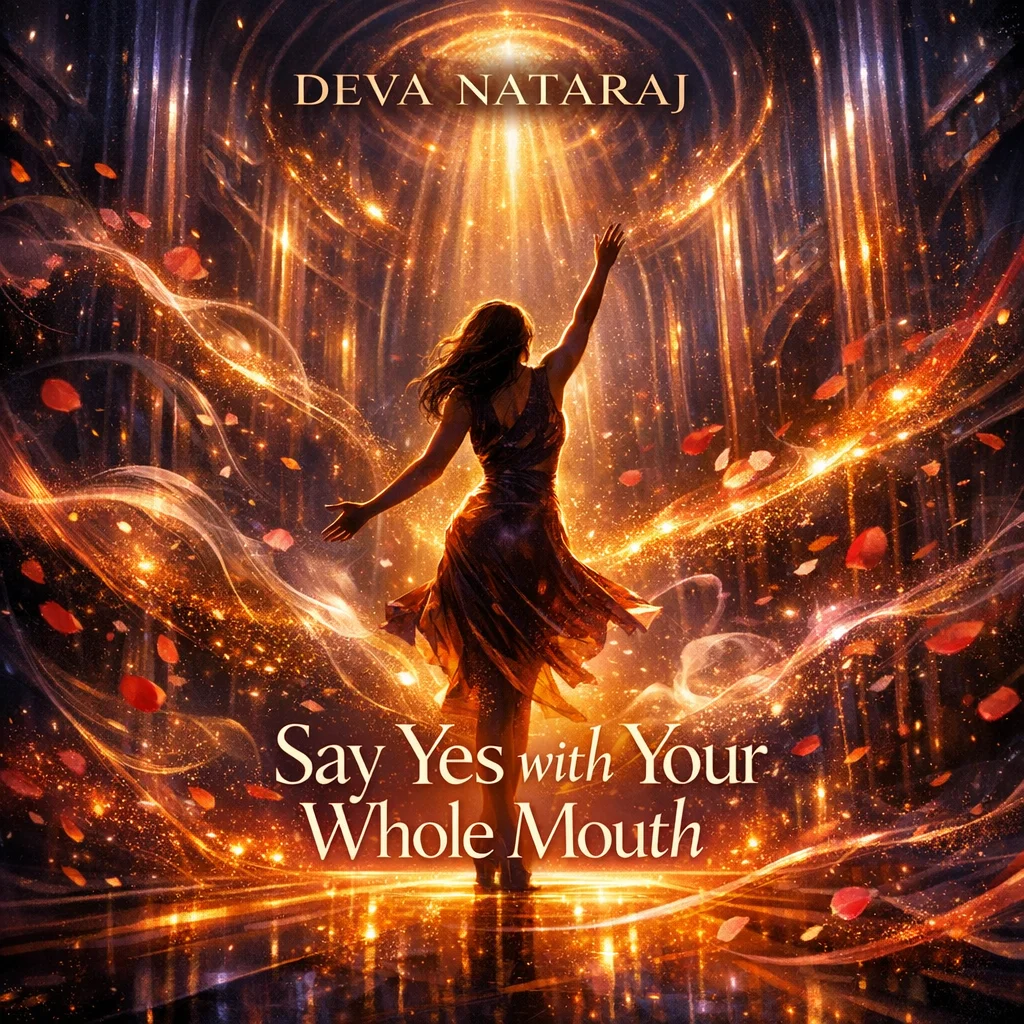
“I want the garlic and the roses / I want the thunder and the tea / I want the argument at midnight / And the making up at three.” This is the child’s appetite – undiscriminating, greedy for experience, unwilling to choose between flavors of aliveness. But it is also the mystic’s appetite. “I have read the mystic’s footnotes / And the mystic loved the stage.”
The song bridges child and sage through a single image: “Zorba dances! Buddha smiles! / They were never miles apart / One foot in the mud, one hand on the stars / That’s the art, that’s the art, that’s the art!” The child naturally lives with one foot in the mud and one hand reaching for the stars. The adult learns to separate mud from stars, body from spirit, mess from order. The sage reunites them – and discovers that they were never apart.
“Half-hearted hallelujahs never changed a thing.” The child does not do anything half-heartedly. It laughs with its whole body, cries with its whole being, says yes with its whole mouth. The spiritual journey, at its completion, does not produce a serene, floating, half-present sage. It produces a full-bodied, mud-covered, star-reaching human being who is totally alive.
The Circular Journey
The spiritual path is not a ladder. It is a circle. We begin in first innocence – open, wondering, totally present. We pass through the necessary accumulation of knowledge, identity, and experience – the costumes and masks that must eventually be shed. And then, if we are fortunate and brave, we arrive at the second innocence – which looks like the first but knows itself.
The child could not choose wonder because it had no alternative. The sage chooses wonder because she has tried every alternative and found that none of them touch what wonder touches.
As “The Second Childhood” promises: “Where the woman and the wonder meet / I am not smaller, I am finally whole / The grown-up body with the unedited soul.”
The inner child was never lost. She was never damaged beyond repair. She was sitting on the carpet with a crayon in her hand the entire time, waiting for you to remember that making worlds for fun is what makers do.
Frequently Asked Questions
What is “second innocence”?
Second innocence is Osho’s term for the wonder that returns after knowledge: the sage’s innocence, which is chosen, as opposed to the child’s, which is unconscious. Zen calls it shoshin, beginner’s mind, and Taoism calls it the uncarved block. It looks like the first innocence but knows itself.
Is reclaiming the inner child the same as being childish?
No. “Not innocence – presence / Not naivety – attention.” Second childhood is going through, not going backwards: the adult’s experience meeting the child’s openness. Regression abandons what you have learned; integration keeps the knowledge and drops only the opinions that hide the world.
Why do spiritual traditions say you must become like a child?
Because the child sees without opinion. The categories that make an orange ordinary and rain a nuisance have not formed yet, so the world arrives directly. Jesus, Zen, and Taoism all point to that unfiltered seeing as the gate, and the practice is to recover it deliberately.
How do I reconnect with my inner child?
Create something without grading it. Look at ordinary things as if for the first time. Ask why, and let the body lead instead of the analysis. And say to the part of you that waited on the carpet with a crayon: what took me so long? I didn’t know.
Which songs are about the inner child and wonder?
“The Second Childhood” (the reunion), “Newborn Eyes” (seeing freshly), “Something Behind the Screen” (the first whisper), “Sacred in the Not Knowing” (the sacred unknown), and “Say Yes with Your Whole Mouth” (the child’s total yes). On The Still Point, “The Boy in the Yard” tells the same homecoming for a man.