The Body as Temple: Embodied Spirituality and the Sacredness of Flesh
The Great Divorce
Somewhere in the history of Western spirituality, a catastrophic error occurred: the body was separated from the spirit and declared the lesser half. Plato placed the soul above the body. Descartes split mind from matter. Christianity inherited the split and deepened it – the flesh became fallen, the site of temptation, something to be transcended on the way to heaven.
The consequences echoed through centuries. Sexual shame. Distrust of pleasure. The quiet conviction that anything the body enjoys must be spiritually suspect. Even today, many spiritual seekers unconsciously carry this programming: that to be spiritual means to float above the body, not to sink into it.
But there is an older tradition – one that never made this error. Tantra – from the Sanskrit root tan, to weave or expand – recognized the body not as an obstacle to spiritual awakening but as its most direct gateway. This is especially true of the sacred feminine tradition, which honors the body as Shakti’s primary instrument. Every sensation is a doorway. Every nerve is a sermon. The body is consciousness made flesh, and to reject it is to reject the very instrument through which the divine chose to experience itself.
Deva Nataraj’s music lives in this tantric current – and nowhere more directly than in the songs that reclaim the body as sacred ground.
The Body’s Own Language: “Tongue of the Earth”
The Altar of Now’s slow-burning soul-pop track “Tongue of the Earth” opens with the wound before it offers the medicine.
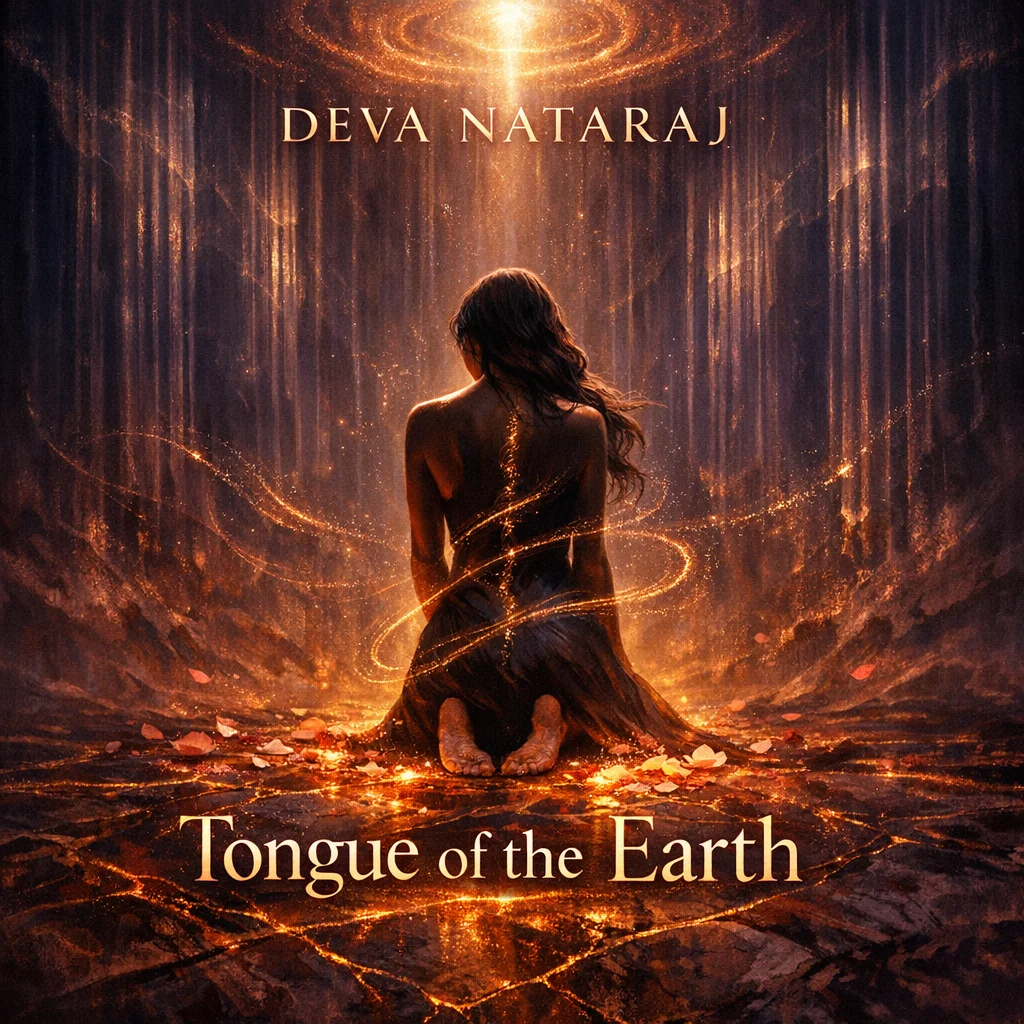
“They told me spirit lives above the waist / They told me hunger is a sin to waste / They put a ceiling on my hallelujah / And called the basement of my body dark.” The architecture of shame is rendered visible – the arbitrary line drawn across the body, dividing it into acceptable and unacceptable zones.
Then comes the experiential correction: “But I have prayed on marble floors and felt nothing / And I have trembled in a lover’s arms and felt everything.” This is not anti-religious. It is an expansion of where the sacred can be found. When the body speaks, it speaks a language older than scripture: “The holiest text I’ve ever read / Was written in the sweat across my bed.”
The tantric insight is explicit: “The spine is not a ladder to escape from / The spine is where the serpent and the saint are one / The belly is not shame, the hip is not a cage / The woman is the temple and the pilgrimage.” The spine in tantric anatomy is the sushumna – the central channel through which kundalini energy rises. It is not an escape route from the body. It is the body’s own pathway to awakening.
Reclaiming What Was Stolen: “Before They Taught Me Shame”
If “Tongue of the Earth” speaks from the perspective of one who has already reclaimed the body, “Before They Taught Me Shame” goes back to the moment of wounding – the moment when a girl’s natural relationship with her body was interrupted.

“There was a summer I was thirteen, running barefoot through the rain / My body was a country I inhabited without a map or explanation.” This is the body before the programming – a body that simply was, without self-consciousness or apology. Then came the curriculum: “The whispered list of what a girl should want but never beg / They drew a line between my heart and everything below / And called one half divine and one half something I should never show.”
The song exposes the gendered dimension of bodily shame with surgical clarity: “The boys were taught that hunger makes them men / The girls were taught that hunger makes them fallen.” The same energy – desire, life-force, the body’s natural movement toward experience – is celebrated in one gender and punished in the other.
But the song is not a lament. It is a welding project: “They split me into halves – the saint above, the sinner underneath / But I am welding myself whole again.” And the tantric reclamation reaches its peak: “Pleasure is not the opposite of God – pleasure is how the body learns to pray.”
The message to the teenage girl who internalized the shame is devastatingly tender: “You never, ever, ever did a thing that wasn’t beautiful, kid.”
Sacred Architecture: “Temple of Bone”
Sacred Amnesia’s progressive metal epic takes the body-as-temple metaphor and builds it from bone and blood and fire.
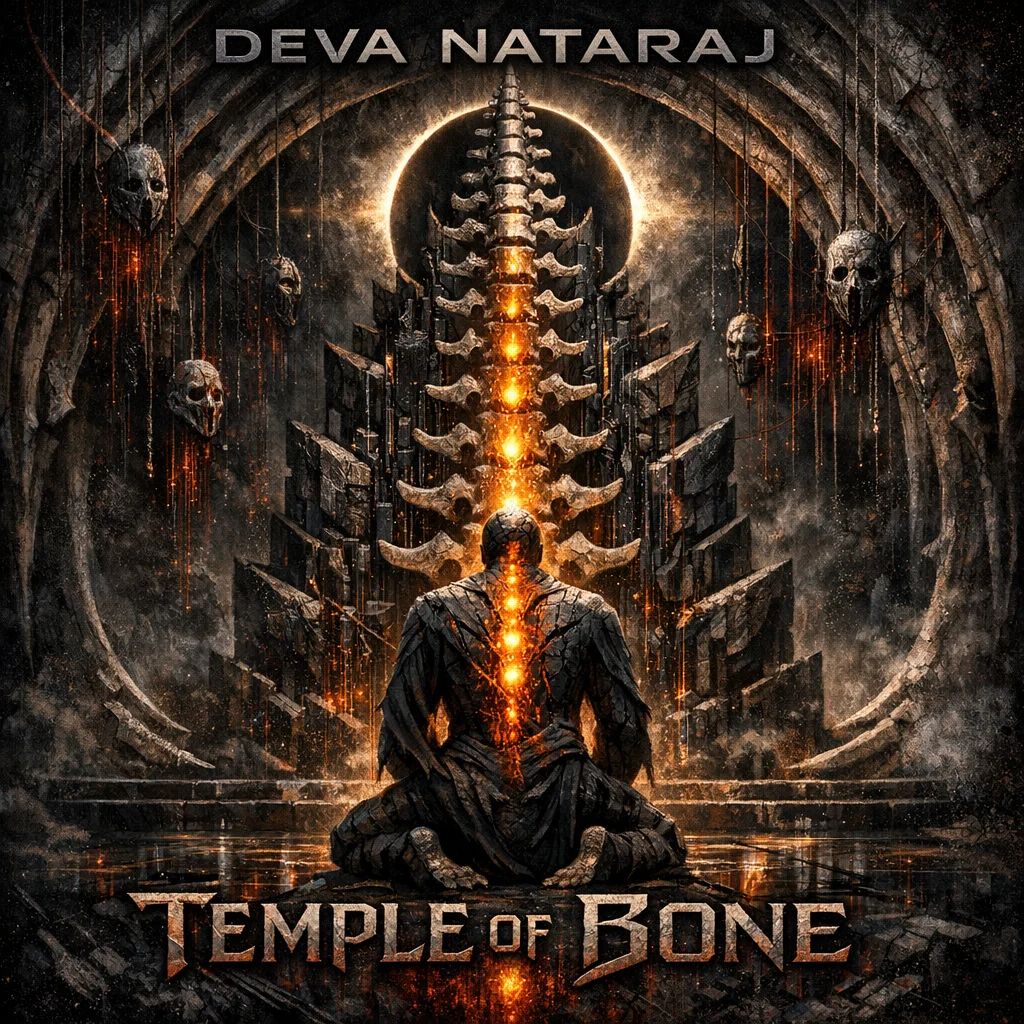
“They told you flesh was sinful / They told you blood was shame / They built a wall between your body and the flame / But tantra tears the wall down.” The song names the tradition that heals the split – and then enacts it through the music itself, the crushing riffs and ritualistic rhythms serving as a somatic experience of what the lyrics describe.
The kundalini rising is mapped through the body’s energy centers: “Rise through the root, rise through the gut / Rise through the heart where the old wounds shut / Rise through the throat where the truth was chained / Rise through the eye where the fire remained.” This is the body’s own enlightenment mechanism – not an idea imposed from outside but an energy pattern woven into the body’s architecture.
The song’s philosophical anchor is unequivocal: “You didn’t come here to transcend the flesh / You came here to inhabit it / To burn inside this mortal frame / And find the holy in the grit.” In the simulation philosophy, incarnation was a choice – and the body was not the punishment for that choice. The body was the point. (For the song’s own article on the awakening it describes, see what is a kundalini awakening.)
Dancing in the Marketplace: “Zorba the Buddha”
Osho coined the phrase “Zorba the Buddha” to describe the integrated human being – one who dances like Zorba the Greek and is as conscious as Gautama Buddha. Sacred Amnesia’s celebration of this concept is the answer to every false choice between spirit and flesh.
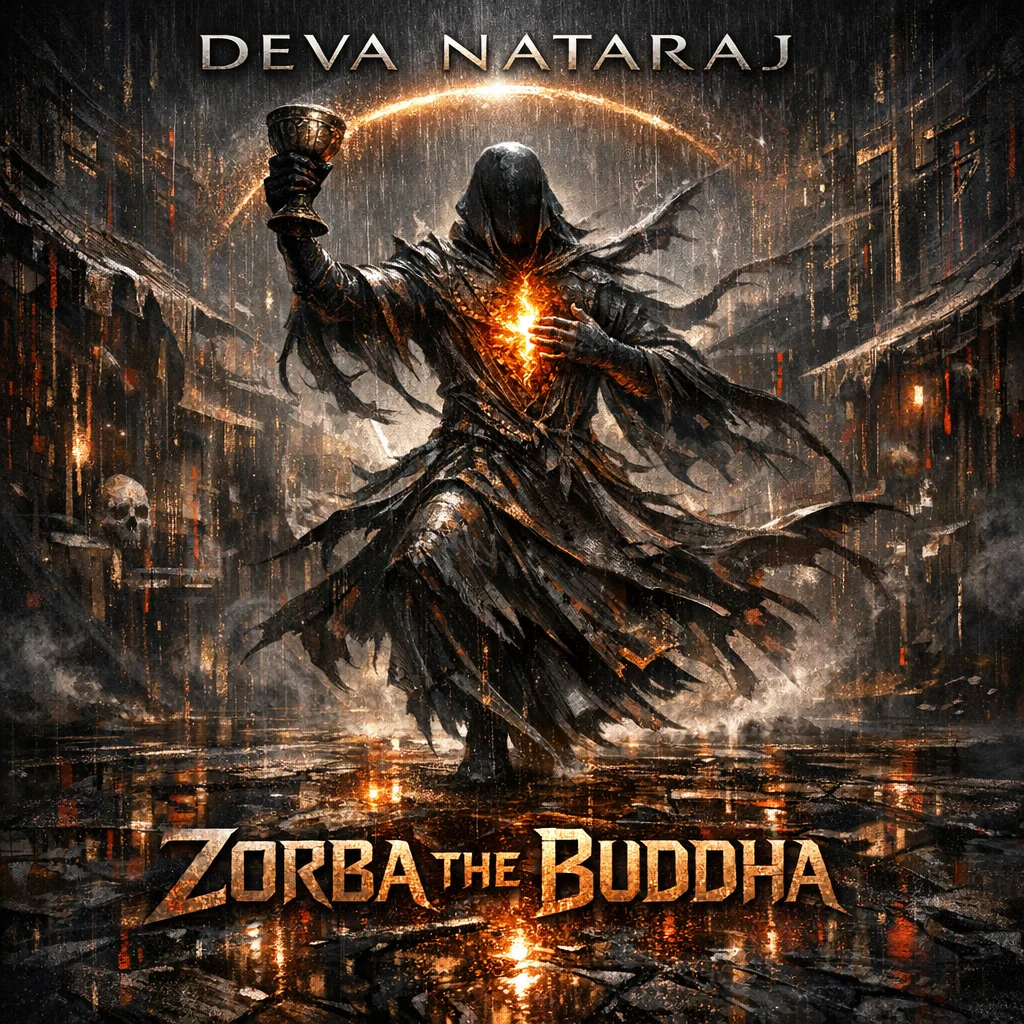
“Not a monk on a mountain / Not a saint – just a man at his best.” The song immediately refuses the ascetic model. Enlightenment does not require withdrawal from life. “The marketplace is the monastery / The handshake is the prayer / The sweat is the holy water / And the laughter is the air.”
This is embodied spirituality in its most practical form. Not spectacular states in meditation caves, but presence brought to the ordinary: “Be present when you eat the bread / Be present when you hold the hand / Be present in the ordinary moments – that’s where the sacred land expands.”
This integration of fullness and awareness is what remains after the ego’s armor has been dissolved – not detachment but fully embodied presence. “Zorba the Buddha” synthesizes what the previous songs have been building toward: “I don’t need a temple made of stone / This body is the temple and the throne.” The external temple is not rejected – it is simply recognized as unnecessary once you understand that the body itself is the sacred architecture.
The Tantric Union: “River of Fire”
Ecstatic Simulation Beats’ “River of Fire” extends embodied spirituality into its most intimate territory: two bodies meeting as spiritual practice.
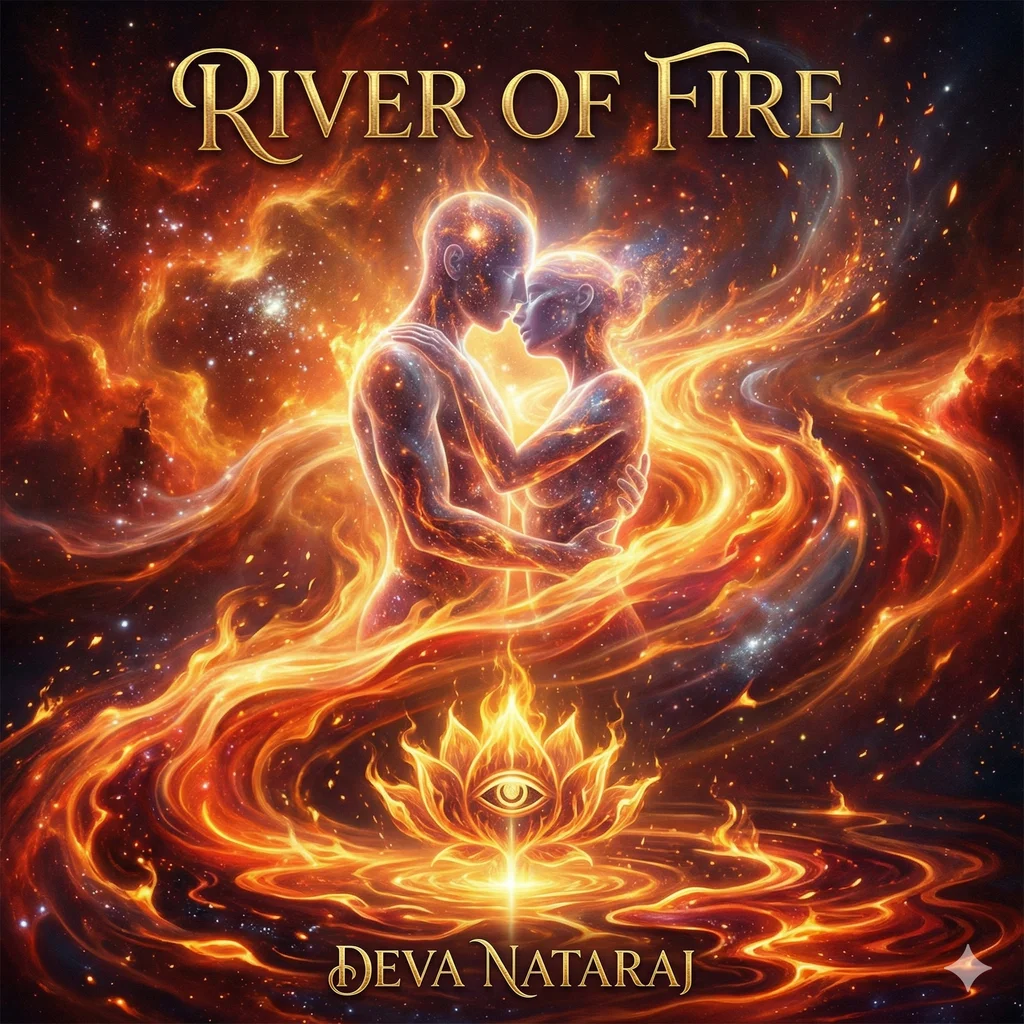
In tantra, sexual union is not merely physical pleasure – it is one of the most direct pathways to ego dissolution and transcendent experience. “Melt the edge where we divide / I am within, you’re inside.” The boundaries between self and other dissolve, and what remains is the experience of union that mystics of every tradition have described.
“Every touch, a universe made / Every breath, a world replayed.” The language is cosmic because the experience is cosmic – two consciousnesses meeting at the point where separation reveals itself as illusion. “Through the body the cosmos sings / Love’s vibration, everything.”
The song’s structure – building waves of intensity, dissolution, and return – mirrors the tantric understanding of sexual energy as spiritual energy at its most concentrated frequency. No separation between the sacred and the sensual. The body as the instrument through which the cosmos learns to breathe.
The Incarnation We Chose
Across these songs, from soul-pop to progressive metal to ecstatic dance, one teaching emerges with absolute clarity: the body is not the prison of the soul. The body is the altar.
We did not incarnate by accident. We chose this flesh, these nerves, this capacity for sensation. As “Temple of Bone” insists: “Even in a simulation / The body that you wear is real / The pain is real, the pleasure is real / The fire is something you can feel.”
The great divorce between body and spirit was never a spiritual truth. It was a cultural program – and one that can be uninstalled. The uninstallation happens not through more thinking but through more feeling, more presence, more willingness to let the body speak its ancient tongue.
As “Tongue of the Earth” concludes: “Taste, touch, tremble, breathe / This body is the only gospel I believe.”
Frequently Asked Questions
What does “the body is a temple” mean in tantra?
Not a rule about purity, diet, or restraint. In tantra the body is the place where the divine experiences itself, so sensation, breath, and desire are doorways rather than obstacles. The spine is the path of awakening, not a ladder for escaping the flesh.
Is embodied spirituality compatible with religion?
Yes. It does not reject prayer; it expands where prayer can happen. Mystics in every tradition, from Rumi and Kabir to the Christian contemplatives, spoke of the body as sacred. What embodied spirituality rejects is only the split that declares half the body holy and the other half shameful.
What is kundalini?
In tantric anatomy, kundalini is the life-energy, Shakti, coiled at the base of the spine that rises through the body’s energy centers as awareness deepens. “Temple of Bone” maps the ascent: root, gut, heart, throat, eye. It is the body’s own mechanism for awakening, not an idea imposed from outside.
Why do so many people feel shame about their bodies?
Because of a cultural program, centuries old, that placed spirit above matter and taught that pleasure is spiritually suspect. The shame is learned, often gendered, and can be unlearned. “Before They Taught Me Shame” traces exactly that wounding and its repair.
How do I start practicing embodied spirituality?
Feel more, think less. Eat with attention, breathe consciously, dance, and notice sensation without judging it. Osho’s “Zorba the Buddha” is the model: be present in the marketplace, not only in the monastery, and treat the ordinary moments as the sacred ground they already are.