Sacred Femininity: Reclaiming the Divine Feminine Through Music
The Frequency That Was Never Lost
For centuries, patriarchal religious structures placed the divine firmly in the masculine – a father god, a male priesthood, a spiritual hierarchy that associated the feminine with temptation, matter, and the fall from grace. But beneath this suppression, the older traditions never stopped whispering. In Hindu philosophy, Shakti – the feminine creative principle – is not secondary to Shiva but his equal and inseparable counterpart. Without Shakti, Shiva is shava – a corpse. Without the feminine, the masculine principle has no movement, no expression, no life.
This is not a gender claim. Shakti is a universal force – the energy that moves through all things, the creative impulse that dances reality into being. Every culture has recognized it: the Greeks called her Sophia, the Gnostics revered the divine feminine as the Wisdom that preceded creation, the tantric traditions understood that consciousness (Shiva) without energy (Shakti) is inert.
Deva Nataraj’s album The Altar of Now traces a woman’s complete spiritual awakening – and at its heart beats a reclamation of the sacred feminine that has been muted, folded, and buried but never destroyed.
The Signal That Never Stopped: “Daughters of the Frequency”
The album’s anthemic third track is a call to recognition – not just for individual women but for the feminine principle itself, rising through every woman who has ever carried a universe alone while being told to make herself small.
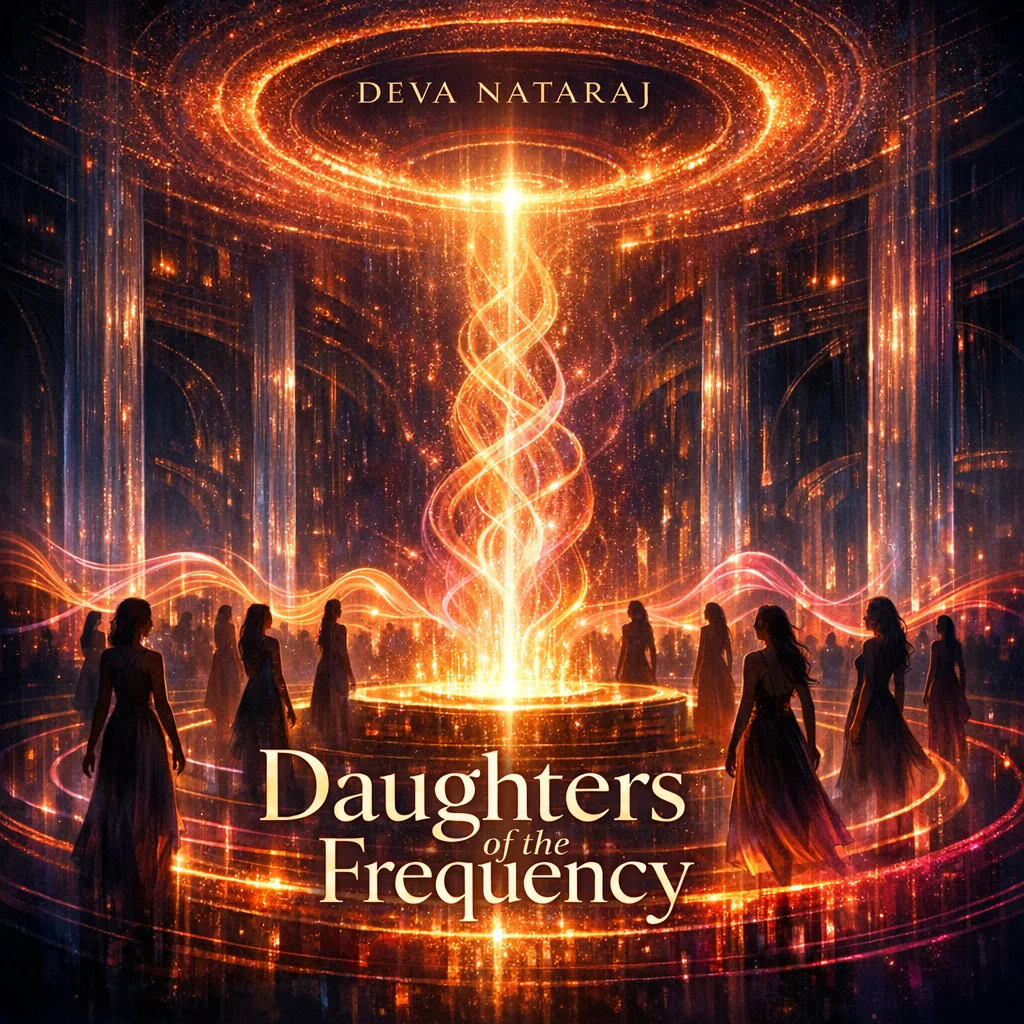
“We learned to make ourselves so small to fit inside their plans / We folded oceans into teacups held in steady hands.” These opening verses capture the paradox of feminine suppression – the oceanic power compressed into socially acceptable containers. But the song’s message is not about anger or revenge. It is about remembering. “There’s a bass note in our bodies that the world has tried to mute / An underground cathedral and tonight we shake the roof.”
The song reaches across time and geography: “My grandmother’s grandmother sang a melody in the field / A wordless thing that kept her whole when nothing else could heal.” The feminine frequency is intergenerational, transmitted through bodies and voices across centuries. It was never invented and it cannot be destroyed – only temporarily muted.
The bridge makes the tantric connection explicit: “Shakti is not something we invite in / Shakti is the spine we’ve always been standing in.” This is not empowerment as a gift to be received. It is recognition of what was always present. (For a plain-language introduction to Shakti and why that power so often feels muted, see what is Shakti?.)
The Body as Sacred Language: “Tongue of the Earth”
If “Daughters of the Frequency” reclaims the collective feminine, “Tongue of the Earth” reclaims the individual feminine body as a direct expression of the divine.

The patriarchal wound runs deep: “They told me spirit lives above the waist / They told me hunger is a sin to waste / They put a ceiling on my hallelujah / And called the basement of my body dark.” The song names the split that Western religion imposed – upper body sacred, lower body shameful – and then methodically heals it.
“But I have prayed on marble floors and felt nothing / And I have trembled in a lover’s arms and felt everything.” This is not a rejection of prayer. It is an expansion of where prayer can happen. The body speaks a language older and more direct than any theology: “My body speaks the tongue of the earth / Every nerve a sermon, every cell a church.”
The song’s climax brings the tantric philosophy to its purest expression: “Shiva still, Shakti wild / The universe is their child / When the opposites dissolve and meet / Heaven is a heartbeat.” The masculine and feminine principles are not in opposition. They are co-creators. And their meeting point – the dissolution of opposites – is not some distant heaven but as close as the next heartbeat.
Feminine Courage: “Brave Enough to Bloom”
Western culture has tended to model courage on masculine archetypes – the warrior, the stoic, the conqueror. “Brave Enough to Bloom” offers a radical alternative: feminine courage as the willingness to open rather than harden.

“Everyone says be strong, be tough, be iron, be stone / But the bravest thing I’ve ever done is let myself be known.” This is not weakness dressed as virtue. It is a reframing of what strength actually means when you are no longer operating from the masculine playbook. “The warrior has swords, the monk has quiet rooms / But I have neither weapon nor a place to hide.”
The song’s central metaphor – the flower that blooms knowing frost will come – is an image of feminine power at its most radical. It takes no courage to stay inside the seed. The courage is in cracking open, knowing that exposure brings vulnerability. “Courage is not the absence of the shaking / Courage is blooming while the ground is quaking.”
And the final declaration – “I’d rather be a garden than a vault of stars” – crystallizes the feminine choice: fullness over protection, aliveness over safety, a garden that feeds and breathes over a vault that merely preserves.
The Cosmic Feminine Dance: “Maya Nartanam”
Ecstatic Simulation Beats approaches the divine feminine through its oldest and most universal expression: Maya, the feminine creative power that dances the cosmos into being.
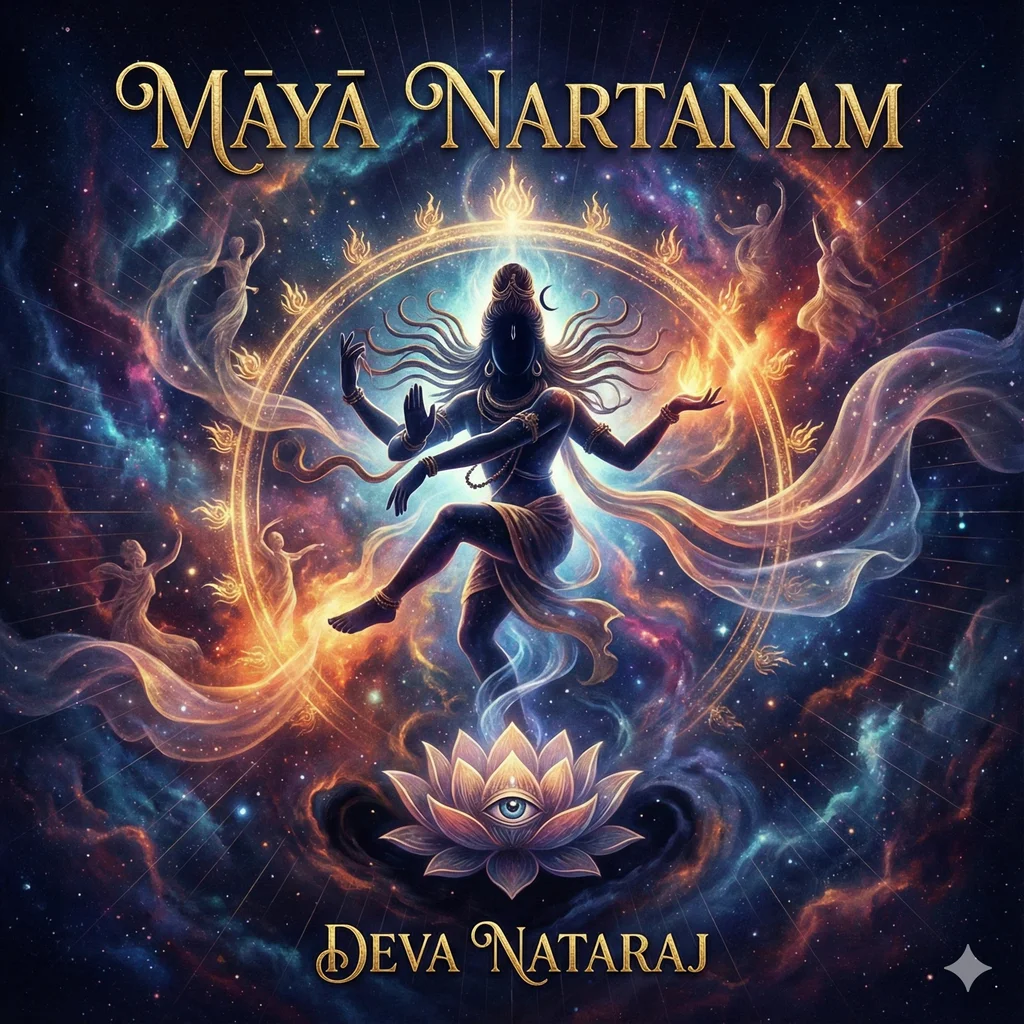
In Hindu philosophy, Maya is often mistranslated as “illusion” in a dismissive sense. But Maya is not deception – she is the creative power of consciousness itself. “Maya – sweet deception divine / We wrote the code, forgot the line.” Maya is the force that makes the simulation possible, the feminine energy that spins formless consciousness into form, experience, and sensation.
The song’s Sanskrit mantras – “Om Shakti Ma – the pulse, the spine” – invoke the feminine principle directly. And the ecstatic dance format is no accident. Dance itself is a feminine act of creation: the body moving through space, creating beauty that exists only in the moment of its expression.
“Illusion and truth are the same” – this is the ultimate non-dual recognition. The dance of Maya is not a problem to be solved or a trap to escape. It is the divine feminine at play, and our participation in it is our participation in the sacred.
The Body as Shakti’s Temple: “Temple of Bone”
Sacred Amnesia’s “Temple of Bone” brings the divine feminine into the raw physicality of progressive metal – kundalini as Shakti energy rising through the body’s architecture. (For a deeper exploration of the body as sacred instrument, see The Body as Temple: Embodied Spirituality and the Sacredness of Flesh.)
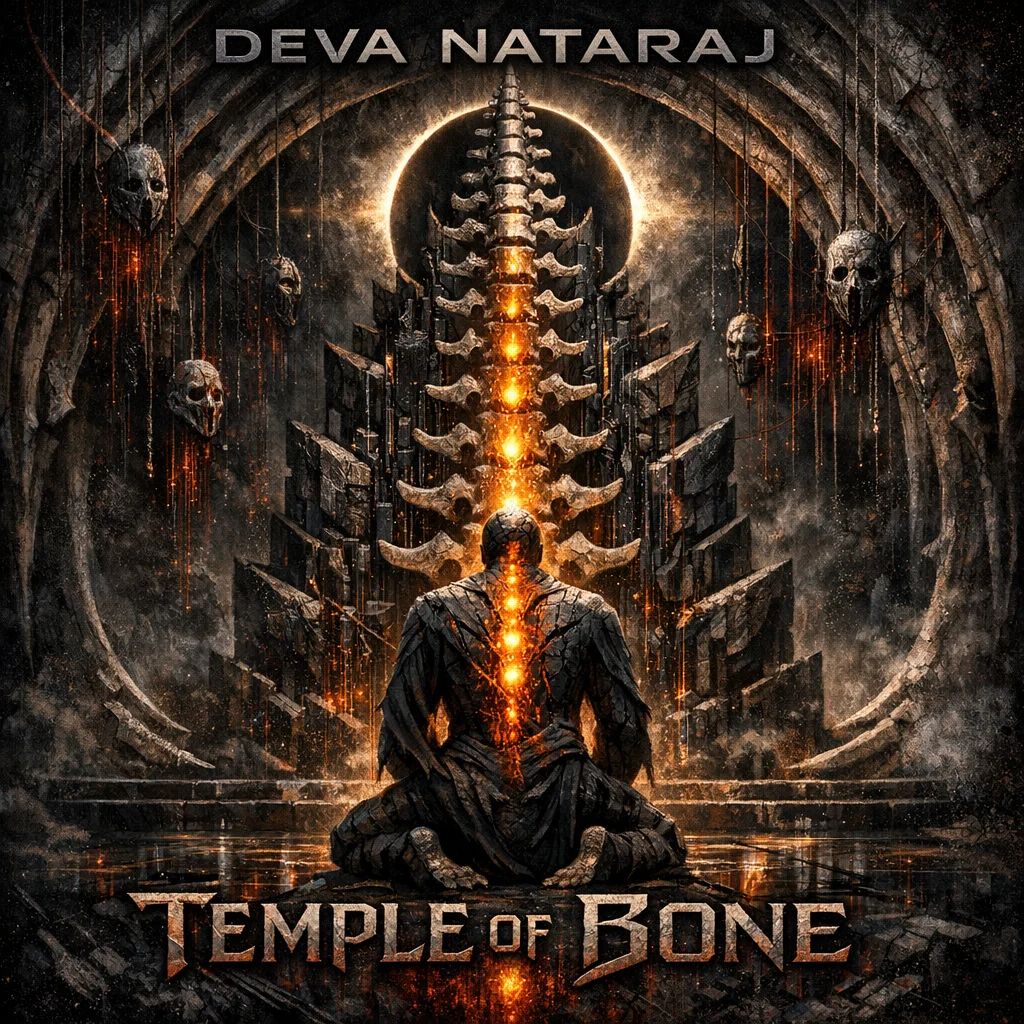
“They told you flesh was sinful / They told you blood was shame / They built a wall between your body and the flame / But tantra tears the wall down / Tantra walks right through / The temple isn’t somewhere else – the temple is in you.” Where gentler songs whisper this truth, “Temple of Bone” roars it.
The kundalini rising – “Rise through the root, rise through the gut / Rise through the heart where the old wounds shut / Rise through the throat where the truth was chained” – is Shakti in motion, the feminine force ascending through the body’s energy centers. This is not abstract metaphysics. It is the body’s own intelligence, the serpent energy that tantra recognizes as the feminine creative force coiled at the base of the spine, waiting for awareness to release it.
“You didn’t come here to transcend the flesh / You came here to inhabit it.” This is the tantric correction to every tradition that placed spirit above matter, masculine above feminine, heaven above earth. We did not incarnate to escape the body. We incarnated because the body is where the divine feminine does her most intimate work.
The Frequency We Carry
Across five songs and three radically different genres – anthemic pop, soul, power ballad, ecstatic dance, and progressive metal – the same teaching emerges: the sacred feminine is not something to be recovered from outside. It is the frequency that lives in the body, the creative force that dances reality into existence, and the courage to remain open in a world that rewards closing down.
The suppression of the feminine was never permanent because it was never possible. You cannot mute a frequency that predates the systems trying to silence it. You cannot cage Shakti, because Shakti is the energy of the cage itself.
As “Daughters of the Frequency” declares: “Every woman is a tuning fork – we’ve been the signal all along.” The divine feminine does not need to be invited in. She needs to be recognized as the spine we have always been standing in.
Frequently Asked Questions
What is the divine feminine?
The divine feminine is the creative, moving, embodied principle of existence, called Shakti in tantra and Sophia in the Greek and Gnostic traditions. It is not a claim about gender but about a universal force. Without Shakti, the tantric texts say, Shiva is a corpse.
What is the difference between Shiva and Shakti?
Shiva is consciousness: stillness, awareness, the witness. Shakti is energy: movement, creation, life-force. They are inseparable aspects of one reality rather than two things in opposition. “Shiva still, Shakti wild / The universe is their child.”
Why was the sacred feminine suppressed?
Patriarchal religious structures placed the divine in the masculine and associated the feminine with matter, temptation, and the fall from grace. The frequency was muted but never destroyed. “We folded oceans into teacups held in steady hands” describes the compression, not the disappearance, of that power.
Is the sacred feminine only for women?
No. Shakti moves through everyone, and men reconnect with it through the body, feeling, and the willingness to stay open. Women carry a particular lineage of its suppression and reclamation, which is why The Altar of Now traces the awakening through a woman’s voice.
Which songs express the sacred feminine?
“Daughters of the Frequency” (the collective signal), “Tongue of the Earth” (the body as sacred language), “Brave Enough to Bloom” (feminine courage), “Maya Nartanam” (the cosmic feminine dance), and “Temple of Bone” (Shakti rising through the body).