Ego Death in Music: Dissolving the Self Through Sound
What Is Ego Death?
Ego death is one of the most misunderstood concepts in spiritual and psychological discourse. It does not mean the destruction of the personality or the annihilation of the self. Rather, it refers to the dissolution of the false self – the constructed identity made of accumulated beliefs, fears, social roles, and defensive patterns that we mistake for who we truly are.
Mystics across traditions have pointed to this experience. The Sufis call it fana, the Buddhists speak of anatta, and the tantric tradition describes it as the burning away of conditioning to reveal pure awareness. In modern psychology, Abraham Maslow called these “peak experiences,” and contemporary research into psychedelics has brought ego death back into scientific conversation.
But there is another path to this dissolution – one that requires no substances, no monastery, and no guru. Music. The right combination of rhythm, intensity, and lyrical truth can crack open the armor of the ego as effectively as any meditation retreat.
Deva Nataraj’s discography is, in many ways, a sustained meditation on ego death – approached from multiple angles, through multiple genres, each offering a different doorway into the same transformative fire. (For the active process of dismantling identity before the fire, see Spiritual Unlearning: Who Are You Without Your Story?)
The Armor We Build: “Iron Masks”
Before we can understand ego death, we must understand what the ego is – and why we cling to it so fiercely. Sacred Amnesia’s “Iron Masks” provides perhaps the most visceral depiction of ego construction in contemporary music.
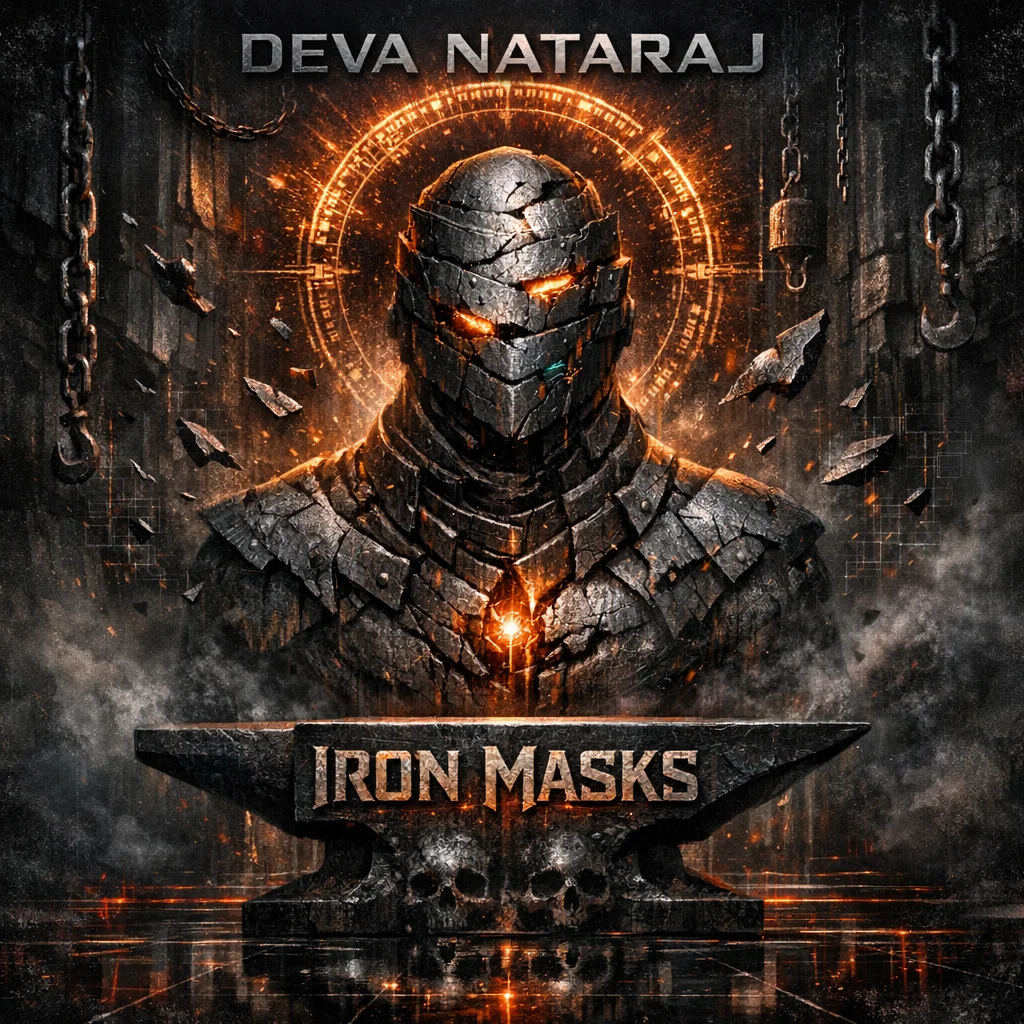
The song portrays identity as literal armor – forged not from self-knowledge but from fear and external expectations. “I built this face from what they told me / Forged it hot from fear and praise,” the lyrics declare over crushing groove metal riffs. Every social role becomes another bolt, every judgment another weld, until the original face is completely hidden beneath layers of protective metal.
What makes “Iron Masks” so powerful is its recognition that the ego was originally built for protection. The masks were not malicious – they were survival strategies. “They said be strong, they said don’t break / They said the world will eat you if you shake.” But protection became prison. The armor that once kept the world out now keeps the self trapped within.
The song’s climax reveals what lies beneath: “It’s just a face / Bare and unafraid / And it’s been waiting since the day I made / This cage.” The true self is not something to be achieved or constructed. It is already there, waiting to be uncovered.
The Accessible Doorway: “Die Before You Die”
For listeners new to the concept of ego death, Press Enter’s “Die Before You Die” offers the most accessible entry point. Set to dark industrial hip-hop rather than metal, it frames ego death not as an esoteric spiritual concept but as a practical necessity for anyone who wants to truly live.
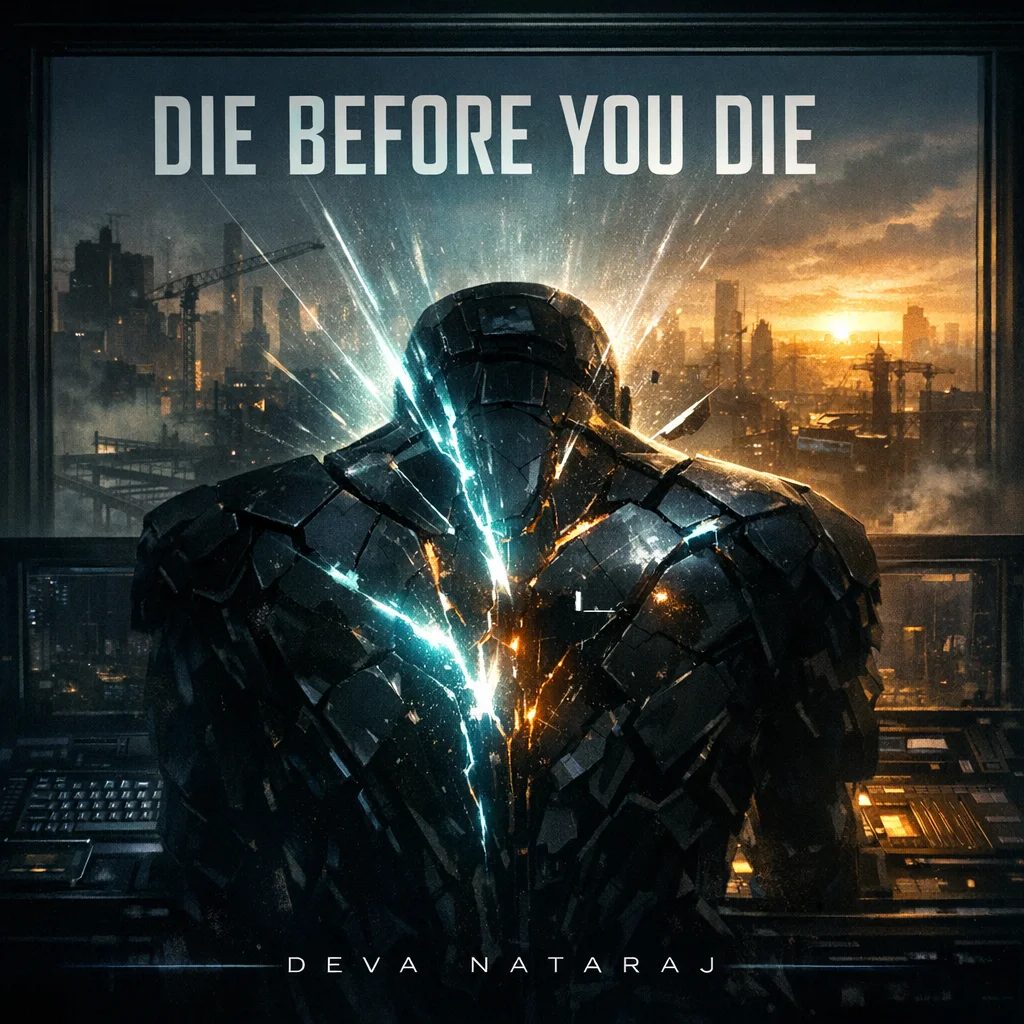
The title itself comes from a saying attributed to various spiritual traditions – the idea that one must experience a psychological death before physical death in order to live authentically. The lyrics make this concrete: “Built a fortress, stone by stone / Called it safety, called it home / But the walls kept love outside / And the armor learned to hide / Every version I could be.”
What distinguishes this track is its emphasis on courage rather than destruction. “Courage isn’t blind or cruel / Courage is a love affair / With everything you’ve never known.” Ego death is reframed as an act of love – not violence against the self, but an opening toward everything the ego’s defenses have kept at bay.
The repeated mantra “Crack the armor, let the light flood in” echoes the message of “Iron Masks” but with a warmer, more inviting tone. Where Sacred Amnesia depicts the weight of the armor, Press Enter shows the relief of removing it.
The Furnace: “Remember to Die”
If “Die Before You Die” is the invitation, then Sacred Amnesia’s “Remember to Die” is the actual experience. This is ego death at its most intense – the melodic death metal onslaught serving as the sonic equivalent of the transformation it describes.
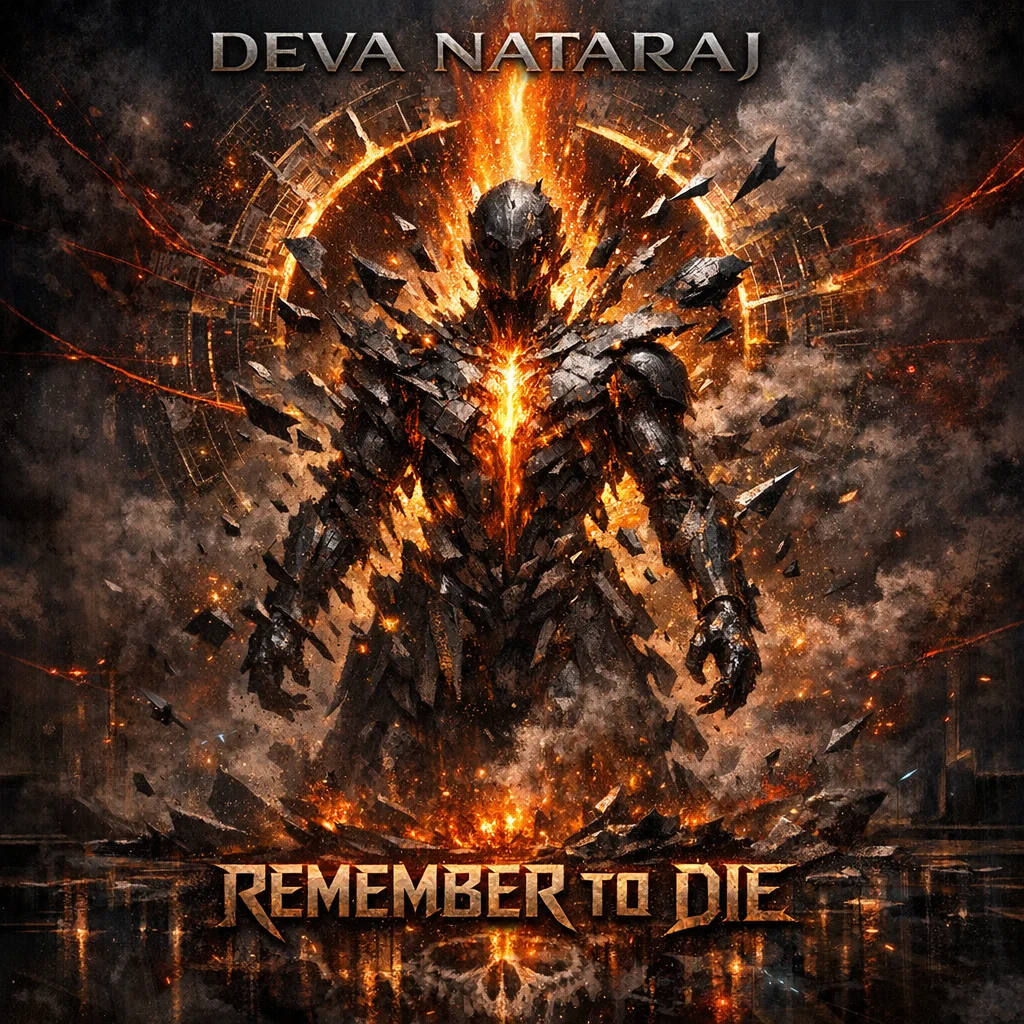
The song opens with devastating specificity: “Everything I called myself is fuel / Every story I believed is tinder / The identity I built for forty years / Burns in ninety seconds to a cinder.” There is no gentle easing in. The fire does not negotiate.
What makes these lyrics profound rather than nihilistic is the distinction they draw between destruction and transformation. “This is not destruction / This is not the end / This is the most violent form / Of learning how to bend.” The ego is not being killed – it is being forged. The fire is not cruel; it is a doorway.
The song’s most striking image compares surrender to a blade: “Surrender is not weakness / Surrender is the blade / That cuts through every version / Of the self that fear has made.” In spiritual traditions from Zen to Sufism, the sharp edge of surrender is what separates genuine transformation from mere intellectual understanding.
The final verses reveal what remains after the fire has done its work: “Something else is breathing / Something else is here / And for the first time / It knows no fear.” This is the promise of ego death – not emptiness, but a presence that is no longer defined by fear. (The title’s instruction – remember to die – is also the key to facing the literal end without dread; see how to face the end without regret.)
Rebirth on the Dance Floor: “Born Again Inside the Fire”
While Sacred Amnesia approaches ego death through the intensity of metal, Ecstatic Simulation Beats translates the same experience into the language of ecstatic dance. “Born Again Inside the Fire” depicts ego death not in a dark night of the soul but on a dance floor – proving that dissolution can happen through joy as readily as through suffering.
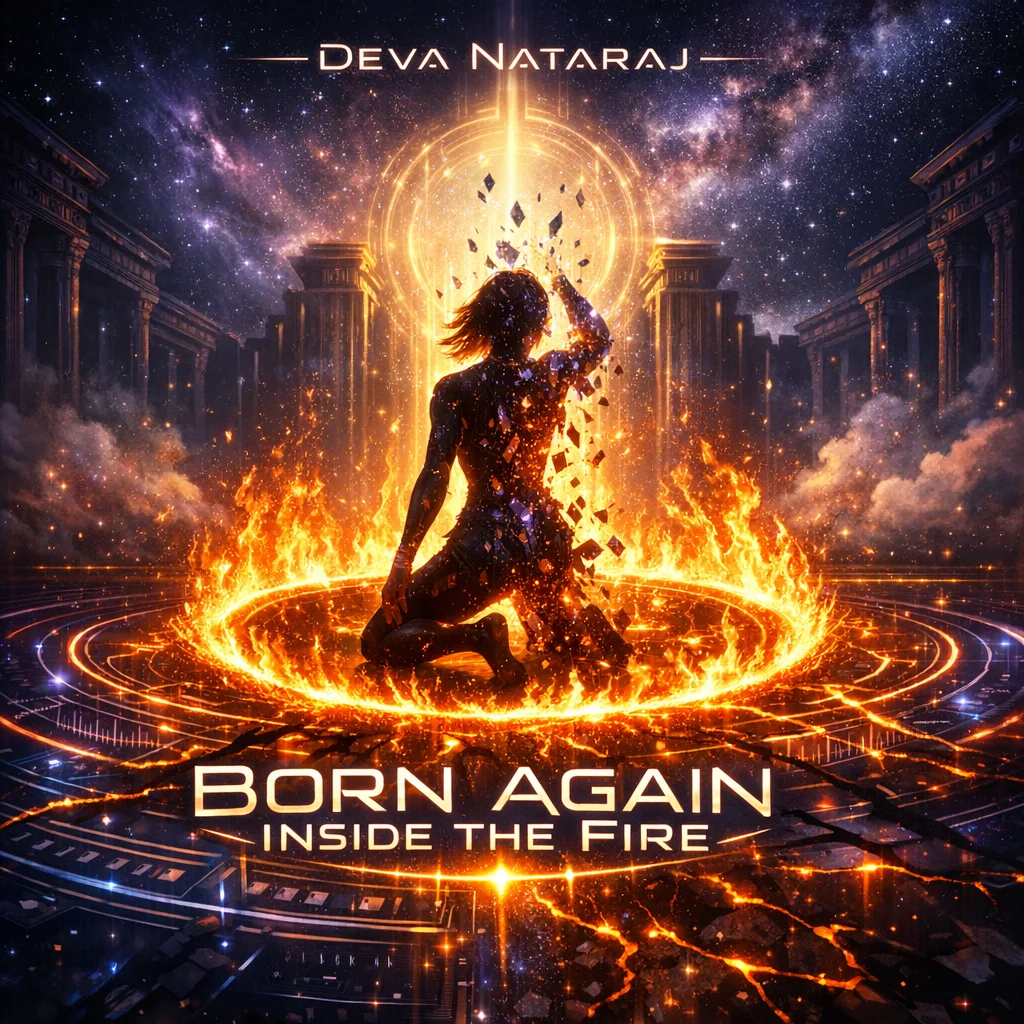
The song begins with the same recognition as “Iron Masks” – “I held my name like armor, I held my past like proof” – but quickly moves to the body as the agent of transformation. “The rhythm in the floor is cracking through the walls / And the body doesn’t care what the mind recalls.” Where the mind clings to identity, the body in motion naturally releases it.
The chorus captures the moment of breakthrough: “Born again inside the fire, seeing everything / No name, no past, no story left to hold / Just these eyes, this breath, this moment made of gold.” This is ego death as ecstasy rather than agony – the same destination reached through surrender to rhythm rather than surrender to suffering.
Perhaps most importantly, the song offers a gentle reframe for anyone who fears ego death: “You don’t have to lose anything to be present / You don’t have to leave to arrive / Just let the one who was afraid dissolve / And meet this moment… alive.” Ego death is not loss. It is arrival.
The Common Thread
Across four songs and four radically different genres – groove metal, industrial hip-hop, melodic death metal, and ecstatic EDM – Deva Nataraj returns to the same essential teaching: the self you are afraid to lose is not the self you truly are.
The journey these songs map is not linear but cyclical. We build our armor (“Iron Masks”), we are invited to release it (“Die Before You Die”), we pass through the fire of dissolution (“Remember to Die”), and we are reborn into presence (“Born Again Inside the Fire”). And then, inevitably, we begin building again – because that is the nature of the ego. The practice is not to destroy it once and for all, but to become familiar with the fire, to learn that what survives the burning is always enough.
In a culture that constantly reinforces the ego through social media metrics, career achievements, and identity politics, music that speaks honestly about ego death serves a vital function. It reminds us that beneath every mask, beneath every carefully constructed persona, there is something that has been waiting patiently since before we learned to be afraid.
And what is that presence that survives the fire? It is the witness – the awareness that was never created and therefore cannot be destroyed. (Explore this further in Witness Consciousness: The Observer Within the Music.)
As “Remember to Die” concludes: “And for the first time / It knows no fear.”
Frequently Asked Questions
What is ego death?
Ego death is the dissolution of the false self: the constructed identity made of beliefs, fears, social roles, and defensive patterns that we mistake for who we are. It is not the destruction of the personality. The Sufis call it fana and the Buddhists anatta; what survives the burning is the awareness that was never built and therefore cannot be destroyed.
Can music really trigger ego death?
For many listeners, yes. Sustained rhythm, physical intensity, and lyrics that name the armor honestly can loosen identification with the self in the same way meditation, breathwork, or ritual can. Heavy music and ecstatic dance work through the body, where the mind’s grip on identity is weakest, which is why “Born Again Inside the Fire” reaches the same place on a dance floor that “Remember to Die” reaches through metal.
Is ego death dangerous?
The experience can be frightening because it feels like dying, but what dies is a story, not you. The songs are careful to frame it as courage rather than destruction: “This is not destruction / This is not the end / This is the most violent form / Of learning how to bend.” Go gently, stay in the body, and treat it as a doorway you pass through rather than a goal to force.
Which Deva Nataraj songs are about ego death?
Four songs map the full cycle: “Iron Masks” (building the armor), “Die Before You Die” (the invitation to remove it), “Remember to Die” (the fire of dissolution), and “Born Again Inside the Fire” (rebirth into presence). They span groove metal, industrial hip-hop, melodic death metal, and ecstatic EDM.
What is left after ego death?
Presence without fear. Not emptiness, but awareness that is no longer defined by the defenses it used to hide behind, what the contemplative traditions call the witness. And because the ego always begins rebuilding, the practice is not one final burning but a growing familiarity with the fire.