How to Feel Childlike Wonder Again as an Adult
You feel childlike wonder again not by trying to become a child, but by choosing to return to play and delight with your adult awareness intact. The capacity was never destroyed – only buried under conditioning. Reclaiming it means letting the part of you that still knows how to wonder come back up to the surface.
Somewhere along the way, most adults quietly agree to stop. Stop asking why past the point of politeness. Stop making things for no reason. Stop standing in the doorway to watch the rain. The agreement is almost never announced – it just accumulates, until wonder starts to feel like something that belongs to other people. Deva Nataraj’s The Altar of Now argues that this is not a permanent loss. The child who knew how to play did not die. She went underground and waited.
Why do adults lose their sense of wonder?
Adults do not lose wonder because they grow up. They lose it because they get trained out of it. Somewhere in childhood, the messages start arriving: be serious, be useful, act your age, stop daydreaming. Play gets reclassified as a waste of time, curiosity treated as a phase. And the world, which once arrived every morning as a fresh astonishment, slowly hardens into a to-do list.
“The Second Childhood,” near the tender heart of the album, names this conditioning directly. “They said grow up, said act your age, said put those daydreams down / But they confused my wonder for a thing that I’d outgrow.” That is the crucial misdiagnosis. Wonder was never a developmental stage to be passed through, like losing baby teeth. It was mistaken for one – and so it got put down, along with the crayons and the impossible questions.
What replaces it is efficiency. We learn to move through the world by category instead of by contact – this is just a commute, this is only an orange – until a life passes by pre-summarized and half-felt.
Is it immature to want to feel childlike again?
This is the fear that keeps most adults locked out of their own delight – the suspicion that wanting to play again is a refusal to be a grown-up. But wonder and immaturity are not the same thing. Immaturity is the inability to hold responsibility. What we are talking about here is something else entirely: the capacity for delight, for open-ended curiosity, for joy in things that serve no purpose. In the philosophy running underneath this music, those are signs of a person who has stopped sleeping through their own life.
“The Second Childhood” makes the case that the wondering mind is not the foolish one: “They said be serious, said be smart, said wonder is for fools / But the fool who wonders knows more than the scholar with his rules.” This echoes an old spiritual intuition – what Zen calls shoshin, beginner’s mind, and what the mystics meant when they said you must become like a child to enter the kingdom. Not childish. Childlike. The distinction is the whole thing, explored at length in second innocence and reclaiming your inner child.
What is a “second childhood”?
A second childhood is not a return to the first one. It is something the first childhood could never be: wonder chosen on purpose, by someone old enough to know what they are choosing. The child wondered because it had no alternative – it had not yet learned to be bored. The adult who reclaims wonder does something harder: they wonder anyway, knowing every reason not to.
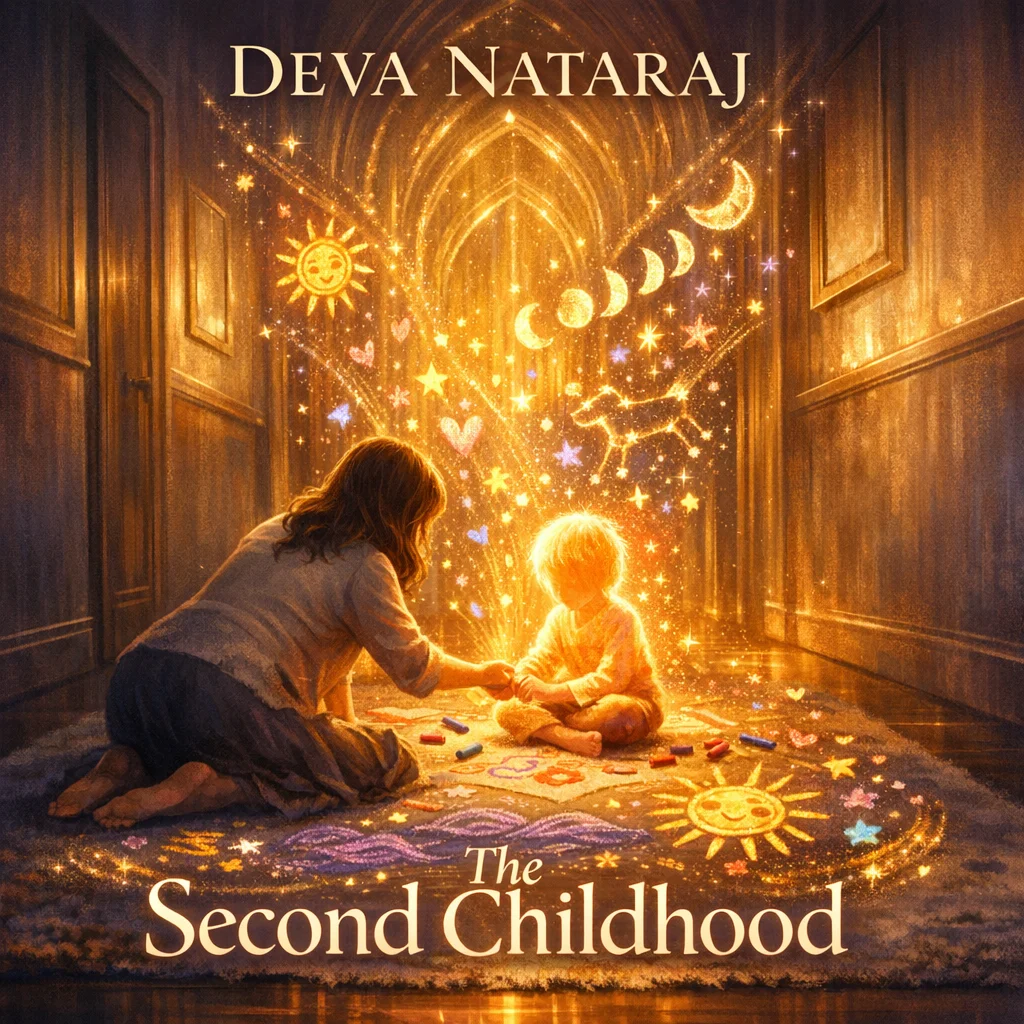
The song’s central declaration draws exactly this line:
“This is my second childhood Not the one they stole but the one I choose”
Everything turns on that word, choose. The first childhood was taken – eroded by conditioning, told to grow up. The second one cannot be stolen, because it is not an inheritance to be lost. It is a decision, made freshly, by an adult who has been all the way out into the reasonable world and come back for the part they left behind.
And the song insists that this is not nostalgia or retreat:
“I’m not going backwards, I am going through To the girl who trusted everything she knew”
Going backwards would mean pretending the years never happened, trying to be small again. Going through means bringing the whole adult – the experience, the scars, the knowledge – into contact with the openness that was there before any of it. The child’s innocence was unconscious; this innocence knows itself. That is why the song can call it “Innocence without the bruise”: a trust re-chosen by someone who understands exactly what they are trusting.
The reunion also delivers a permission most adults never granted themselves: “You don’t have to earn the right to play / You don’t have to suffer first to feel the day.” Wonder is not a reward for productivity. And the child in the song is not the fragile one – she is “the strongest thing I am,” “the part that looks at everything and doesn’t ask the price.”
How is this different from just being childish?
Because childishness is unconscious and this is fully aware. A childish adult has never grown up. A person in their second childhood has grown all the way up and then chosen, deliberately, to reopen a door that adulthood taught them to seal. The play looks similar from the outside; underneath, they could not be more different.
The tantric thread in this project frames wonder not as an escape from presence but as its purest form – awareness meeting the moment without the filter of “I already know what this is.” That is not naivety; it is attention. The companion song “Newborn Eyes” holds this distinction up to the light and asks the question straight out.
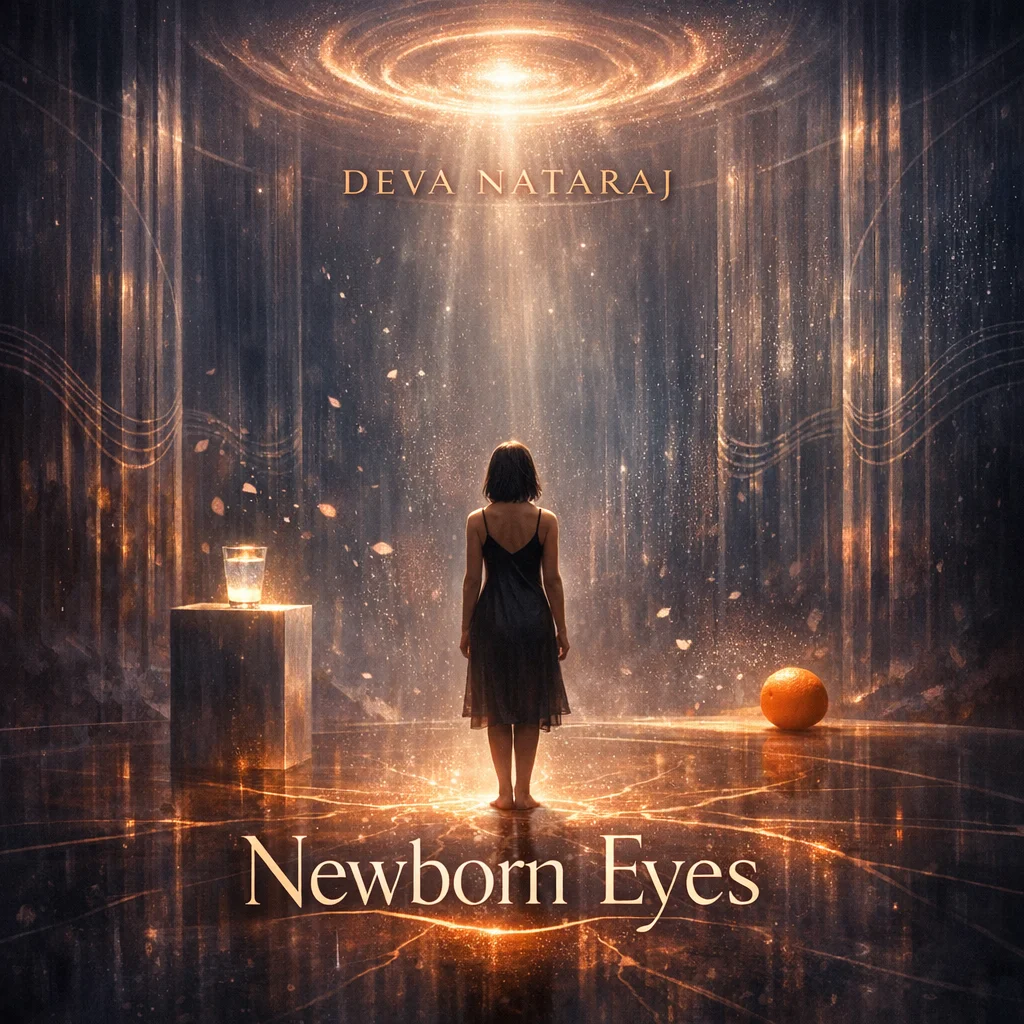
“What if wonder is not childish? What if wonder is the truth?”
The song’s answer is that wonder is not a stage consciousness outgrows but its natural response when it stops summarizing the world into invisibility. The baby “sees because it has no opinion yet.” The adult has to choose to set the opinions down – “learning, learning, learning to forget” the categories that turned a living world into a familiar one. That song is about how you see; this one is about the part of you that plays. For the seeing side of the coin, see how to see the world with fresh eyes.
The line between childish and childlike, then, is awareness. Childlike wonder is watched over by a fully awake adult who has decided that delight is not beneath them.
How do you actually reconnect with that part of yourself?
You start by noticing that she never left. The reunion in “The Second Childhood” does not happen through effort or achievement – the singer simply finds the inner child already there, “sitting on the carpet with a crayon in her hand,” asking, “what took you so long?” The reconnection is less an accomplishment than a remembering: turning toward a part of yourself that has been waiting the whole time, “inside of you.”
Practically, this means letting yourself do things that produce nothing. Draw badly. Ask a real question and stay with it past the comfortable answer. Belly-laugh. Make something for fun, “because that’s what makers do,” without grading it or asking what it is for. Each is a small refusal of the agreement that told you wonder was a thing you’d outgrow.
It also means presence. Ordinary life stops sparkling not because it became ordinary but because attention went on autopilot. The child’s genius was never special access to a magical world; it was simply being here, undivided, without a running commentary. This is the instruction the whole album circles back to, the one that also opens the door to a spiritual awakening: stop overriding the moment, and look until what is in front of you becomes a thing again, not a category.
None of this requires renouncing your adulthood. The philosophy behind this music is explicit that presence is found inside ordinary life, not by escaping it. You do not have to quit your job to feel wonder – only to stop treating it as something you left behind.
The wonder was never lost, only waiting
The great relief in reclaiming childlike wonder is discovering that there was nothing to rebuild. The capacity for delight was not destroyed by growing up. It was buried, and burial is not death. The part of you that made worlds for fun is still in there, holding a crayon, still willing.
What “The Second Childhood” offers is not a fantasy of becoming young again but a fuller kind of wholeness – the reason it insists on being “Not a regression, not a retreat.” The song ends on the image of that reunion made permanent, the whole promise in four lines:
“This is my second childhood Where the woman and the wonder meet I am not smaller, I am finally whole The grown-up body with the unedited soul”
You do not shrink to feel wonder again – you expand, until the grown adult and the wondering child are finally the same person, standing in the doorway, letting the wonder wait.
Frequently Asked Questions
Is it too late to feel childlike wonder again as an adult?
No. Wonder is not a developmental stage you age out of – it is a capacity that gets buried under conditioning, and burial is not destruction. The part of you that once delighted in ordinary things is still present. Reconnecting is less about rebuilding something lost than about turning back toward what has been waiting all along.
What is the difference between a “second childhood” and being childish?
Childishness is unconscious immaturity – an adult who never grew up. A second childhood is the opposite: someone who grew fully up and then chose, with complete awareness, to reopen their capacity for play and wonder. As “The Second Childhood” puts it, “Not the one they stole but the one I choose.” The play may look similar; the awareness underneath is entirely different.
Why did I lose my sense of wonder in the first place?
You did not outgrow wonder – you were trained out of it. Messages to be serious, be useful, and put the daydreams down slowly reclassify curiosity and play as wastes of time, until the mind moves by category instead of by direct contact and life passes by half-felt. The song calls this confusing wonder “for a thing that I’d outgrow.”
Do I have to change my whole life to feel wonder again?
No. The philosophy behind The Altar of Now holds that presence is found inside ordinary life, not by escaping it. You do not need to quit your job or renounce anything. The essential move is smaller and harder: stop overriding the moment, and let yourself do things – draw, laugh, wonder, play – that serve no purpose at all.
Which song is about reclaiming childlike wonder?
“The Second Childhood,” a tender track on Deva Nataraj’s The Altar of Now, is written specifically about the adult reunion with the inner child – reclaiming wonder and play by choice rather than regressing. Its companion “Newborn Eyes” explores the related theme of seeing the ordinary world with fresh, unfiltered attention.