Does Suffering Have a Purpose? A Different Way to Hold the Hard Parts
Maybe it means nothing – or maybe your suffering is not punishment and not random chance, but part of an experience you chose before you arrived. Simulation philosophy offers this reframe: not to deny that pain is real, but to hold the hard parts as chapters in a story you signed up to live.
That is a lens, not a verdict. It does not tell you your pain was deserved, and it does not ask you to be grateful for what hurt you – only to hold the hardest parts of a life differently. Deva Nataraj’s The Altar of Now returns to this reframe again and again, most directly in a song that plants a flag: we came here on purpose.
Does suffering actually mean anything?
The honest answer is that no one can prove it does. The oldest human question – why do we suffer? – has never yielded a clean reply. Religions answer with sin and karma; philosophy, at its coldest, answers that the universe is indifferent and suffering simply happens by chance, meaning nothing.
The trouble with the cold answer is not that it is false but that it is unlivable. When suffering means nothing, it becomes doubly heavy: you carry the pain and the conviction that it is pointless. Purpose, as the philosophy underneath this album insists, is not a luxury for conscious beings – without it, life becomes miserable. So the real question is less “can we prove suffering has meaning?” and more “which frame lets us live?” Simulation philosophy does not claim certainty. It offers a story you can choose to inhabit, then asks whether inhabiting it makes you more alive or less.
What if we chose to come here?
The album’s boldest answer: suffering is not inflicted on us but is part of an experience we volunteered for – and then deliberately forgot. “We Came Here on Purpose” states it without flinching.
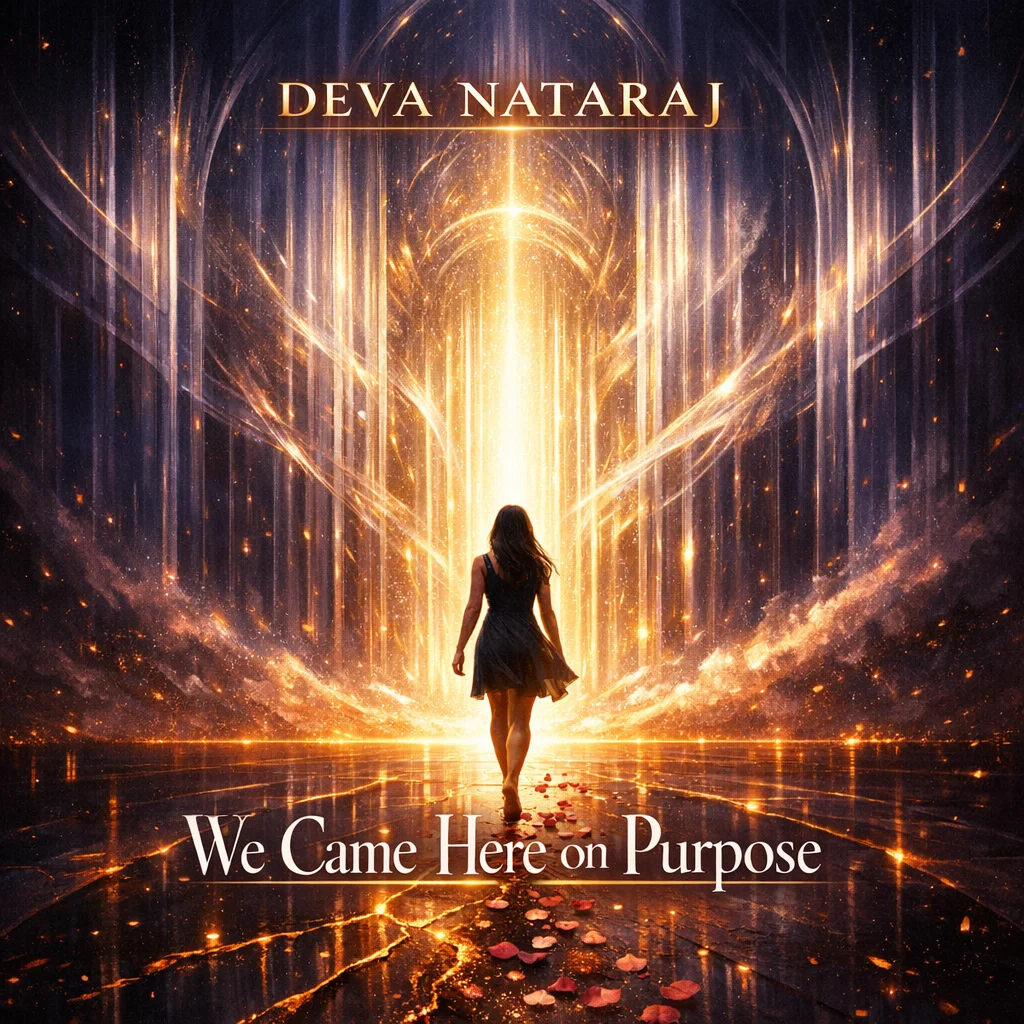
The song opens by refusing the story of victimhood at its root: “I didn’t fall here by mistake or accident of birth / I wasn’t tossed into the deep without a sense of worth.” Then it does something braver – it names the specific wreckage of a real life and refuses to file it under randomness: “The heartbreak and the hospital, the 3 AM despair / The job I lost, the friend who left, the greying of my hair.” These are the concrete disasters that drive people to ask why.
The turn is the whole argument of the album, delivered in a single breath: “Not punishments, not random dice, not evidence of wrong / But chapters in a story that I chose to make this long.” Suffering is neither cosmic penalty nor meaningless static – it is narrative, and, the song claims, self-authored. This is the simulation we entered on purpose: we placed our own minds inside a reality we built, blocking the memory of why, because the knowing would spoil the experience.
The song reframes even the confusion itself as intended: “The amnesia is a feature, not a failure of the ride / The not-knowing is the engine – it’s not something you should hide.” The forgetting – what the project calls sacred amnesia – is not a bug in your life but the mechanism that makes the experience real.
Crucially, the song does not pretend the weight is light. It sits inside the worst nights instead of skipping past them: “And when the weight is just too much / And the night is just too long / Remember: you are not abandoned / You are playing the bravest song.” It grants that the weight is heavy and reframes the sufferer not as a broken thing but as someone doing something brave. The final chorus lands the reframe as identity: “Not as strangers to ourselves / But as gods who chose to forget.” (For the wider cosmology behind this “we chose to enter” claim, see the simulation philosophy running through this music.)
Isn’t “you chose this” just blaming the victim?
Told carelessly, “you chose this” becomes a weapon – a way to tell abuse survivors they attracted it. That is not what this philosophy says, and the distinction matters more than anything else here.
There are two guardrails. The first is that this reframe is offered by the sufferer, to herself, from the inside – never handed to another person as a diagnosis of their pain. “We Came Here on Purpose” is sung in the first person about the singer’s own heartbreak and lost jobs. The moment “I chose this” becomes “you chose that,” spoken to someone else’s grief, it curdles into cruelty. Meaning is something you may reach for in your own suffering, never something you impose on another’s. (For the same move applied to money and inequality, bitterness versus sovereignty, see is the economy rigged against me.)
The second guardrail is that choosing an experience is not the same as deserving harm. The philosophy behind this music holds the sanctity of life as non-negotiable: harming others is wrong precisely because it interrupts the purpose they came to fulfill. So a frame that says “your pain has meaning” can never be twisted into “so your abuser was justified.” Real pain deserves real compassion and real support – therapy, medicine, safety, other people – and the reframe is meant to sit alongside that help, not replace it – it answers “how do I hold this?”, never “so I should tolerate harm.” Saying yes to your own life, explored in radical acceptance, is a practice of meeting what is real, not of excusing what should never have happened.
Why would anyone choose to forget their own purpose?
If we designed this and chose to come, the obvious protest is: why the amnesia – why enter blind, into pain we could have skipped? The philosophy’s answer is that forgetting is not the flaw in the plan – it is the plan. Knowing the purpose in advance would make it unreachable. A game with the ending revealed is not a game. The not-knowing is what makes the living real.
The song image for this is exact: “A song that requires forgetting the melody / To discover it note by note by note.” Handed the whole score, you would only be reading it – the suffering is part of discovering a melody you have to not already know. (For the forgetting itself, explained from the inside of the song that opens Sacred Amnesia, see why can’t I remember before I was born.)
The companion track “The Altar of Now” reaches the same conclusion, describing the crossing into embodiment as a deliberate encryption of what we knew.
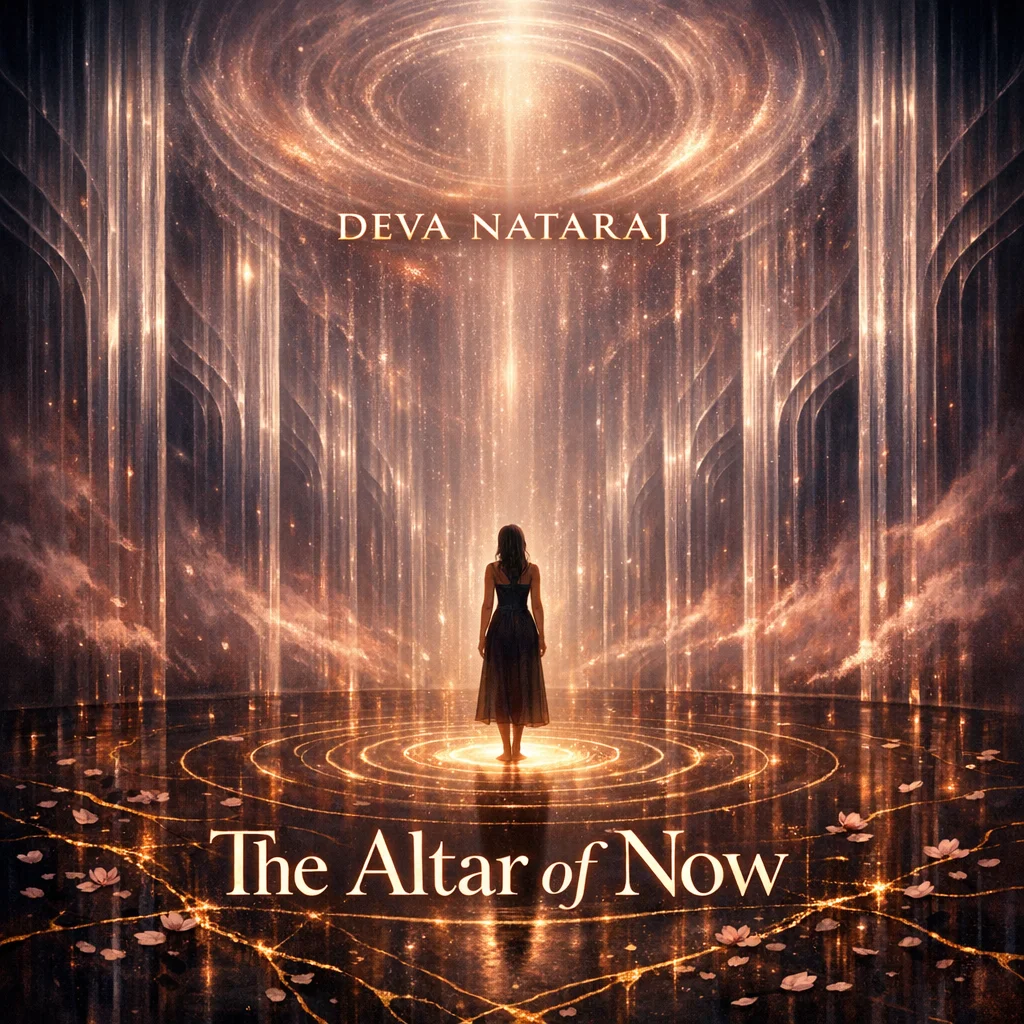
“We crossed the universe to sit inside this skin / We encrypted our own knowing just to feel the world begin.” The forgetting is an act of love toward the experience itself – we scrambled our own memory so pain could land instead of arriving pre-explained. And the encryption is not permanent: “And now the encryption’s cracking and the light is pouring through.” The amnesia was chosen; so is the slow remembering. (For more on that arrival into the present, see how to live in the present moment.)
How does this reframe change the way you live?
The practical difference is between a victim and a volunteer. If suffering happens to you at random, for nothing, you are powerless – there is only endurance. But if the hardship is a chapter you chose, agency comes back into the room. “We Came Here on Purpose” turns this into an almost muscular refrain: “If I chose it, I can face it / If I signed up, I can take it.” That authorship is not comfort but capacity – the same energy the album celebrates elsewhere as full-throated participation, not polite endurance.

“Say Yes with Your Whole Mouth” refuses the half-life of merely tolerating existence: “Say yes to the mess, say yes to the feast / Say yes to the beauty and the beast.” It insists a life worth living includes the whole range – “I want the hospital, the wedding / I want the funeral, the birth” – not a sanitized version with the hard parts removed. This is not toxic positivity, which denies the beast and demands you smile; it is the opposite, looking straight at the mess and the funeral and saying yes anyway. To live fully, as how to fully embrace life explores, is to stop bracing against the difficult parts and start meeting them – the shift from “my suffering is happening to me” to “my suffering is mine, and I can meet it standing up.”
The reframe is a way to carry the weight, not a reason to deny it
Does suffering have a purpose? Simulation philosophy answers carefully: possibly, if the purpose is one you chose and then hid from yourself so the living could be real. That is not a proof but a lens – one that turns the worst parts of a life from meaningless accidents into chapters of a story brave enough to include them. It changes nothing about the facts and everything about the posture. But you are, in the song’s words, “not abandoned” – you are “playing the bravest song.” The reframe asks only whether you might be a volunteer rather than a victim. For many people, standing at the altar of now, it is. As the song refuses to let go: “We came here on purpose / And we’re not finished yet.”
Frequently Asked Questions
Does suffering have a purpose, or is that just wishful thinking?
No one can prove suffering has a purpose. Simulation philosophy offers it as a livable frame rather than a fact: the idea that hardship is a chapter you chose before entering this reality. It is a lens for holding pain, not a claim to certainty – and its value is measured by whether inhabiting it makes you more alive.
Did I really choose my own suffering?
The album’s stance is that we chose the experience – including its difficulty – and then deliberately forgot, so the living would feel real. This is offered as a self-directed reframe, never a judgment handed to someone else’s pain. Choosing an experience is not the same as deserving harm, and it never excuses cruelty done to you.
Isn’t “we came here on purpose” just toxic positivity?
No – toxic positivity denies that pain is real and demands you smile through it. This reframe does the opposite: it names the heartbreak, the hospital, the 3 AM despair directly, and holds them as heavy while still offering meaning. It sits alongside real compassion and real support, rather than replacing them with forced cheer.
If I’m suffering right now, what am I supposed to do with this idea?
Use it as a posture, not a substitute for help. Seek the support, treatment, and safety you need first – the reframe accompanies that help, it does not replace it. Then, if it helps, try holding your pain as something you are moving through rather than something meaningless happening to you. That shift from victim to volunteer is where agency returns.
Which song best captures this reframe of suffering?
“We Came Here on Purpose,” from Deva Nataraj’s The Altar of Now, states it most directly – reframing heartbreak and loss as “not punishments, not random dice” but “chapters in a story that I chose.” Its companion tracks “The Altar of Now” and “Say Yes with Your Whole Mouth” extend the same stance into presence and full-throated acceptance of a whole life.