Tired of Being the Strong One? When Holding It All Together Starts to Crack
If you are tired of being the strong one, the way out is not to hold on harder – it is to let the crack you have been hiding finally open. You are exhausted because “strong,” for you, has meant load-bearing: no give, no needs, no visible seam. That is not strength. It is a wall doing the only job it was ever praised for. The tremor you feel underneath it is not the beginning of your collapse. It is the beginning of your return.
Deva Nataraj’s The Still Point opens exactly here – with the man who was only ever thanked for keeping everything upright. Its first song, “Fault Line,” is about the night that man feels the ground shift beneath the role he plays, and decides, for once, not to brace against it.
Why does being the dependable one feel so lonely?
Because dependability, taken far enough, quietly deletes you. When your entire value to a room is that you can be leaned on, people stop asking whether you are tired – they assume you are fine, because fine is what a wall is for. “Fault Line” says it plainly:
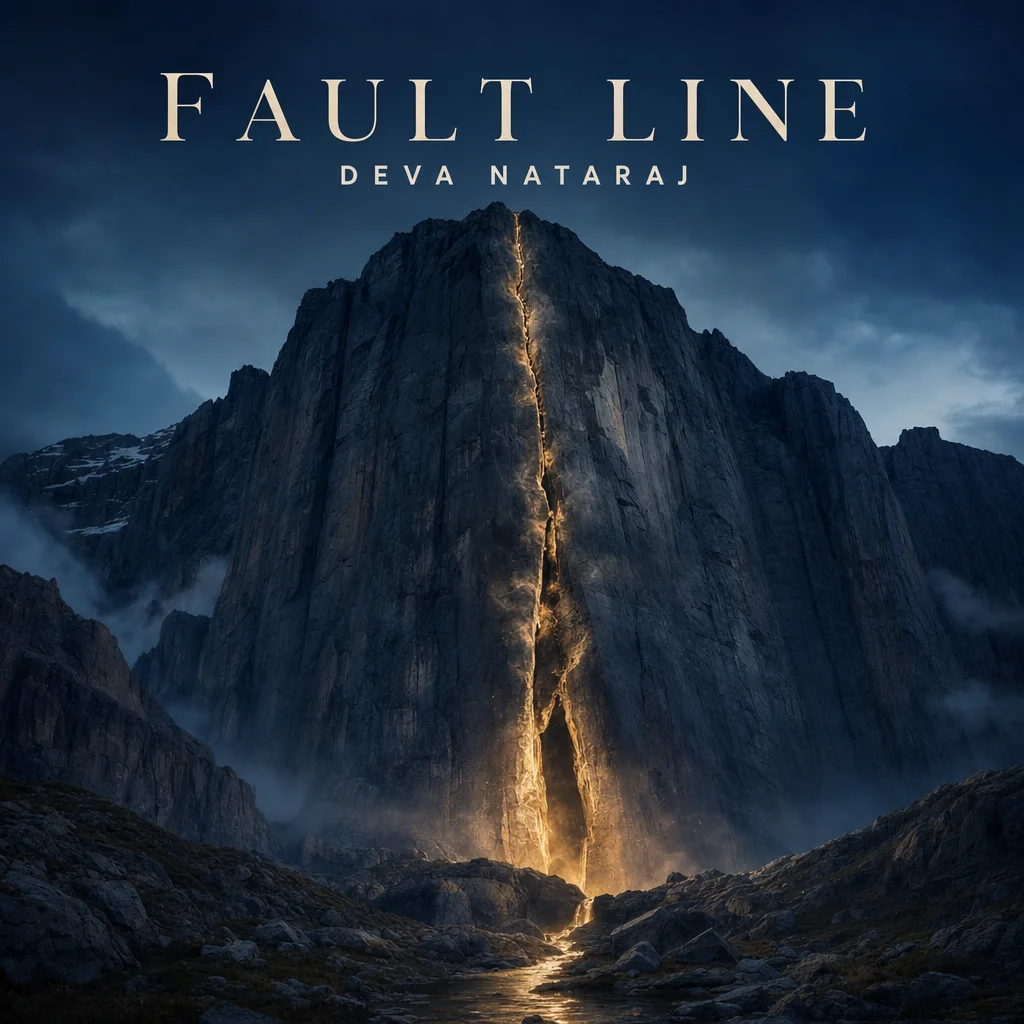
“They built me like a load-bearing wall / Straight lines, true corners, no give at all / I held up the roof through thirty years of weather / Nobody asks if the stone gets tired.” The loneliness of the strong one is not that people are cruel to him. It is that his strength has made his inner life invisible – to them, and eventually to himself. “Nobody taught the stone the word desire.” You can be surrounded by people who rely on you completely and still be profoundly unseen, because what they see is the function, not the man.
Isn’t cracking the thing I’m supposed to prevent?
That is the belief the whole song is written to overturn. Most men who carry everything have fused two ideas that were never the same: being solid and being unshaken. “But steady isn’t still and holding isn’t peace / There’s a tremor in the granite asking for release.” Steadiness that costs you every honest feeling is not peace – it is pressure with good posture.
The turn in the song is a reframe of the crack itself. “I always thought a crack meant I was broken / I always thought the fault was mine to hide.” Then the chorus refuses that: “There’s a fault line running through me / And it is not my fault.” The word fault does the work of the whole song – it is a geological line, not a personal failing. What is moving in you is not damage. It is “a river underneath me / That was never stone, never salt.” Something alive was there the whole time, under the composure. (If the tremor feels like it will run you rather than free you, the still point beneath the storm is about the observer who can hold it.)
This is what the philosophy behind The Still Point calls dying before you die: letting the old, defended self give way so the real one can live. “I was carved into a statue / But the rock remembers choice.” You were shaped into the reliable one – but underneath the shape is someone who can still choose to be more than a surface. (The full ceremony of setting down those defenses gets its own song and its own article: see how to let your guard down.)
What am I actually afraid of when I refuse to let go?
Not the breaking. Being seen. “Fault Line” locates the real fear with surgical honesty: “I am not afraid of breaking / I was only afraid of being seen.” For the man who has spent decades as the one who holds, exposure feels more dangerous than exhaustion. So he chooses exhaustion. He keeps the visor down. He calls it responsibility.
But there is a difference between carrying a real weight and hiding behind it. The song’s closing image is not collapse – it is discovery: “Let the light into the fracture / Let the water carve it wide / What you’ll find beneath the statue / Is a man - and he’s alive.” The point of the crack is not to fall apart. It is to let something reach you again.
How do I stop being the strong one without falling apart?
You start by treating the tremor as information, not emergency. “Fault Line” does not end with the wall coming down in a heap. It ends with a decision to allow: “Something is moving / And this time I let it.” That is the whole practice in one line. You do not have to announce anything, quit anything, or dramatize anything. You have to stop bracing against the one honest movement inside you. (For learning to let rest be holy rather than a failure, see will AI take my job, and is that bad.)
Two shifts make it survivable. First, remember that what you are feeling is old, not new – “Every mountain was a seabed once / Every summit started in the dark.” The tenderness under your composure isn’t a weakness you developed; it is what you were before you were trained to be a wall. Second, understand that letting the crack open is not the end of your strength – it is the redefinition of it. That redefinition is the subject of the album’s most-loved song, and its own article here: is it weak for a man to cry.
The crack was never the failure – the hiding was
If you take one thing from “Fault Line,” let it be this: the fatigue you feel is not proof that you are failing at being strong. It is proof that the definition of strength you inherited was too small to hold a life. A man who can only hold and never move, only bear and never break, is not unbreakable – he is just frozen, and freezing has an expiration date.
You are tired of being the strong one because you have been strong in the one way that leaves you alone. There is another way – steadier, warmer, and far braver – and it begins the moment you stop hiding the fault line and say, as the song does, this time I let it.
Frequently Asked Questions
Why am I so exhausted from being the reliable one?
Because being the reliable one, as most men are taught it, means having no visible needs – you become the load-bearing wall nobody thinks to ask about. “Fault Line” names it: “Nobody asks if the stone gets tired.” The exhaustion isn’t from the weight alone; it’s from carrying it while pretending it’s weightless, and being unseen in the process.
Does feeling like I’m cracking mean I’m weak or broken?
No. The whole point of “Fault Line” is that a crack is not a personal failing – “There’s a fault line running through me / And it is not my fault.” What feels like breaking is usually something alive trying to move after years of being held still. It’s the beginning of the man’s form, the song says, “not the ending of the mountain.”
How do I let my guard down when everyone relies on me?
You start small and internal: stop bracing against the honest feelings that surface, rather than staging some dramatic collapse. The song’s instruction is quiet – “Something is moving / And this time I let it.” You don’t have to abandon your responsibilities to stop hiding your inner life inside them.
Isn’t it my job to hold everything together?
Some weight really is yours to carry – but there’s a difference between carrying it and disappearing behind it. “Steady isn’t still and holding isn’t peace.” You can remain dependable while also being a person who feels, wants, and can be reached. The provider’s weight even gets reframed as a chosen, loving thing in another song on the album – see the weight of being the provider.
Which Deva Nataraj song is about being tired of holding everything together?
“Fault Line,” the opening track of The Still Point, is written directly about it – the man praised only for keeping everything upright, feeling the first honest tremor beneath the role. Its refrain reframes the crack: “I was carved into a statue / But the rock remembers choice.”