How Do I Stop Passing My Anger On? Breaking the Cycle Without Going Numb
You stop passing your anger on not by pretending you have none, but by making a vow you keep under pressure: you will not bring your hand down in anger on another person. Breaking the cycle is not going numb, and it is not weakness. It is gentleness the way a dam is gentle – holding back enormous force on purpose. The man who breaks the cycle is not the one who never feels rage. He is the one who feels the whole of it and still refuses to pass it on.
That vow is the great declaration of Deva Nataraj’s The Still Point – “I Will Not Raise My Hand,” a protest-folk oath of fierce nonviolence for anyone who knows exactly what his hands could do.
Does breaking the cycle mean I have to stop feeling angry?
No – and pretending you feel nothing is how the cycle survives, not how it breaks. “I Will Not Raise My Hand” is emphatic that this is a vow made by a man with plenty of storm in him, not a man without it:
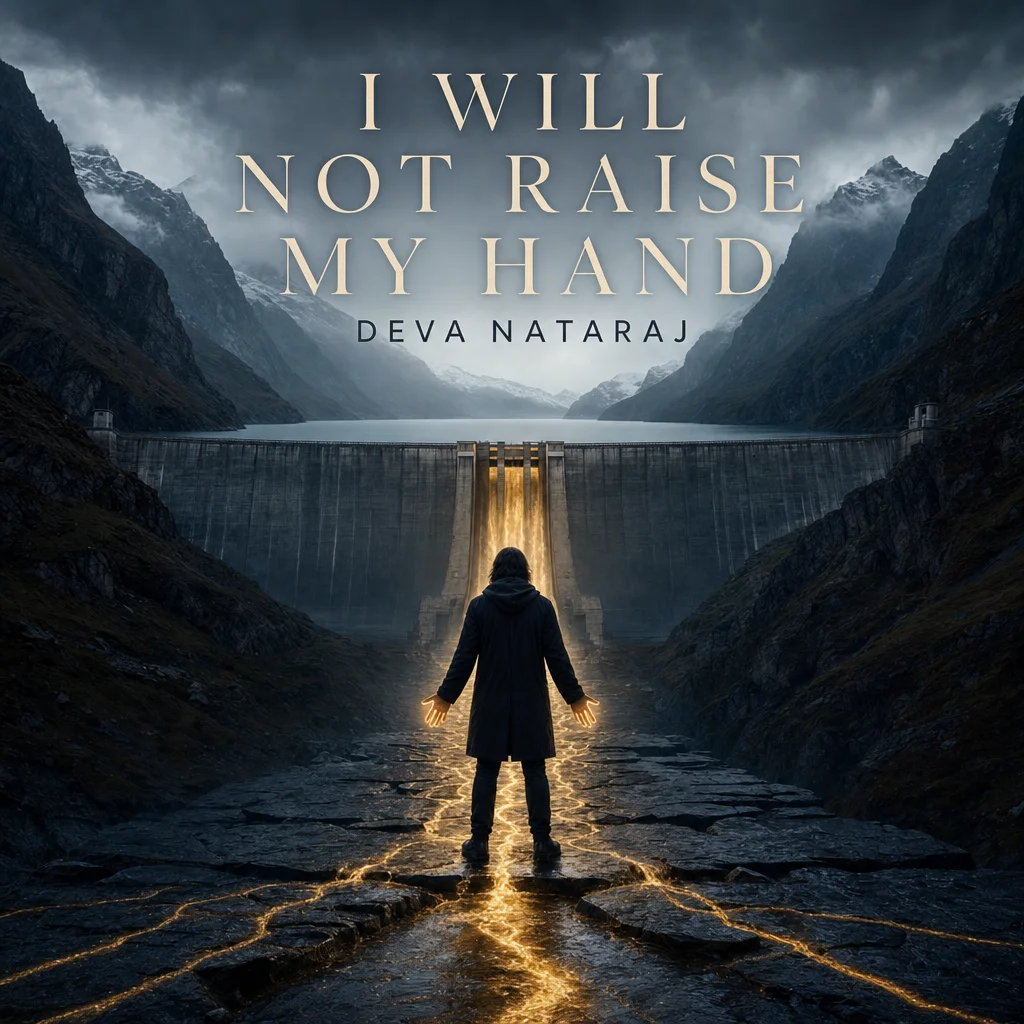
“I know exactly what these hands could do - I’ve done the math / I’ve felt the old red engine roaring shortcuts to my wrath / I am not gentle out of weakness, I was never short on storm / I am gentle like a dam is: on purpose, and with force.” That dam image is the whole philosophy. A dam is not empty; it holds back a vast weight of water deliberately. Gentleness that comes from having no anger is just absence. Gentleness that comes from holding real force in check – that is strength, chosen and applied. Going numb is not breaking the cycle. It is the cycle wearing a calm face until it cracks.
How do I not become like the people who hurt me?
By naming the one specific way you refuse to use your hands, even when the world tells you you are entitled to. The song draws the line exactly: “I raised my hand in classrooms, asking leave to speak my mind / I raised it swearing loyalties I later left behind / But there’s one way I won’t raise it, though the whole world says I can - / I will not bring it down in anger on a fellow traveling man.”
The vow is not passive. It is a refusal held against permission – against a whole culture that would excuse the blow. And the reason it gives is the moral spine of the entire album: “Every stranger is a traveler / With a purpose none can see / If I break him, I break a reason / This whole world was meant to be.” In the philosophy behind The Still Point, every person is here on their own irreplaceable errand, one you cannot see. To harm them is to break a purpose the world was counting on. That is why the vow holds even when anger says otherwise. (The gentleness of the hands themselves – built to give rather than grip – is explored in the quiet power of touch.)
Isn’t refusing to fight just weakness or cowardice?
The song attacks that assumption head-on, because it is the objection every man raises. “This is not a coward’s quiet, this is not a bent-knee peace / I will stand between the harmer and the harmed without release / I will plant myself, a mountain, where the cruelty wants through / But my hands stay open, open - open hands can stop things too.”
This is the crucial distinction. Nonviolence here is not withdrawal; it is active interposition. The man plants himself between cruelty and its target like a mountain. He does not walk away from harm – he blocks it with his body and open hands. Refusing to strike is not the same as refusing to protect. The strength is in the restraint under load, not in the absence of the confrontation. As the song ends: “The strongest man in any room / Is the one with open hands.”
Why does it matter what I do with my anger – who does it really affect?
Everyone downstream of you, including children who are not born yet. The song’s most sobering verse is about inheritance: “Whatever violence we plant here doesn’t die when we are done / It waits inside the culture for our children and their sons / And we return, we all return, to harvest what we sowed / So I am planting gardens all along this endless road.”
This is where “breaking the cycle” gets its literal meaning. Anger acted out does not end with the act. It becomes the emotional weather the next generation grows up inside – the raised voice a child learns to flinch from and then, decades later, reproduces. The philosophy behind the album takes this seriously across lifetimes: violence perpetuates a culture of violence that outlasts us. To refuse the blow is to refuse to plant that seed in your children and their children. It is, quite literally, gardening the future. (This is deeply tied to going back for your own wounded, once-frightened boy: healing the inner child as a man.)
The vow is the strongest thing you carry
The song does not frame the vow as a limitation. It frames it as the most powerful thing the man owns: “I will not raise my hand / And that vow is not a wall / It’s the strongest thing I carry / And I carry it for all.” A wall keeps things out; this vow does something else – it guards the road everyone is walking on. “Every stranger is a traveler / Every traveler is a friend / I will guard the road we walk on / With open hands until the end.”
If you are afraid of the anger in you – afraid of what it might do, afraid of becoming the person who hurt you – the answer is not to amputate the feeling. It is to become the dam: to hold the full force on purpose, to plant yourself between cruelty and the people it wants to reach, and to keep your hands open. You break the cycle not by feeling less, but by refusing, under real pressure, to bring your hand down. That refusal is not weakness. It is the strongest thing a man can carry, and he carries it for everyone.
Frequently Asked Questions
Do I have to stop feeling anger to break the cycle?
No. “I Will Not Raise My Hand” is explicit that the vow belongs to a man full of storm: “I am not gentle out of weakness, I was never short on storm / I am gentle like a dam is: on purpose, and with force.” Going numb isn’t breaking the cycle – it’s the cycle wearing a calm face until it cracks. The strength is in holding real force in check.
How do I avoid becoming like the people who hurt me?
By making one specific, non-negotiable refusal and keeping it under pressure: “I will not bring it down in anger on a fellow traveling man” – even “though the whole world says I can.” The reason anchors it: harming someone breaks “a reason / This whole world was meant to be.” The vow holds precisely when anger argues against it.
Isn’t refusing to fight back just being weak?
No – the song calls it “not a coward’s quiet.” Nonviolence here is active: “I will stand between the harmer and the harmed… I will plant myself, a mountain, where the cruelty wants through / But my hands stay open.” Refusing to strike is not refusing to protect. “The strongest man in any room / Is the one with open hands.”
Why does how I handle my anger matter beyond me?
Because acted-out anger outlives the act: “Whatever violence we plant here doesn’t die when we are done / It waits inside the culture for our children and their sons.” Refusing the blow is refusing to plant that seed in the next generation – the literal meaning of breaking the cycle, “planting gardens all along this endless road.”
Which Deva Nataraj song is about breaking the cycle of anger?
“I Will Not Raise My Hand,” from The Still Point, is written directly about it – a vow of fierce, chosen nonviolence from a man who knows his own capacity for wrath. Its refrain reframes restraint as power: “that vow is not a wall / It’s the strongest thing I carry / And I carry it for all.”