Touch-Starved: The Quiet Power Men Forget Their Hands Have
Many men are touch-starved because their hands were trained for only two jobs – gripping and proving – and never taught the rest. From the first handshake test as a boy, a man’s hands become tools of performance: the firm grip, the strong hold, the fist kept in reserve. What gets lost is everything else hands are actually for: bread, soil, a child’s back, the small of someone’s spine, blessing. Rediscovering touch is not learning a new skill. It is remembering what your hands were made for before they were taught to prove themselves.
That remembering is the warm, acoustic center of Deva Nataraj’s The Still Point – “What These Hands Are For,” a song about a man discovering that the grip he built his pride on was the weakest thing he ever did.
Why do so many men feel starved for touch?
Because touch got redefined, early, as either a test or a weapon – never as nourishment. “What These Hands Are For” traces it to the very first lesson:
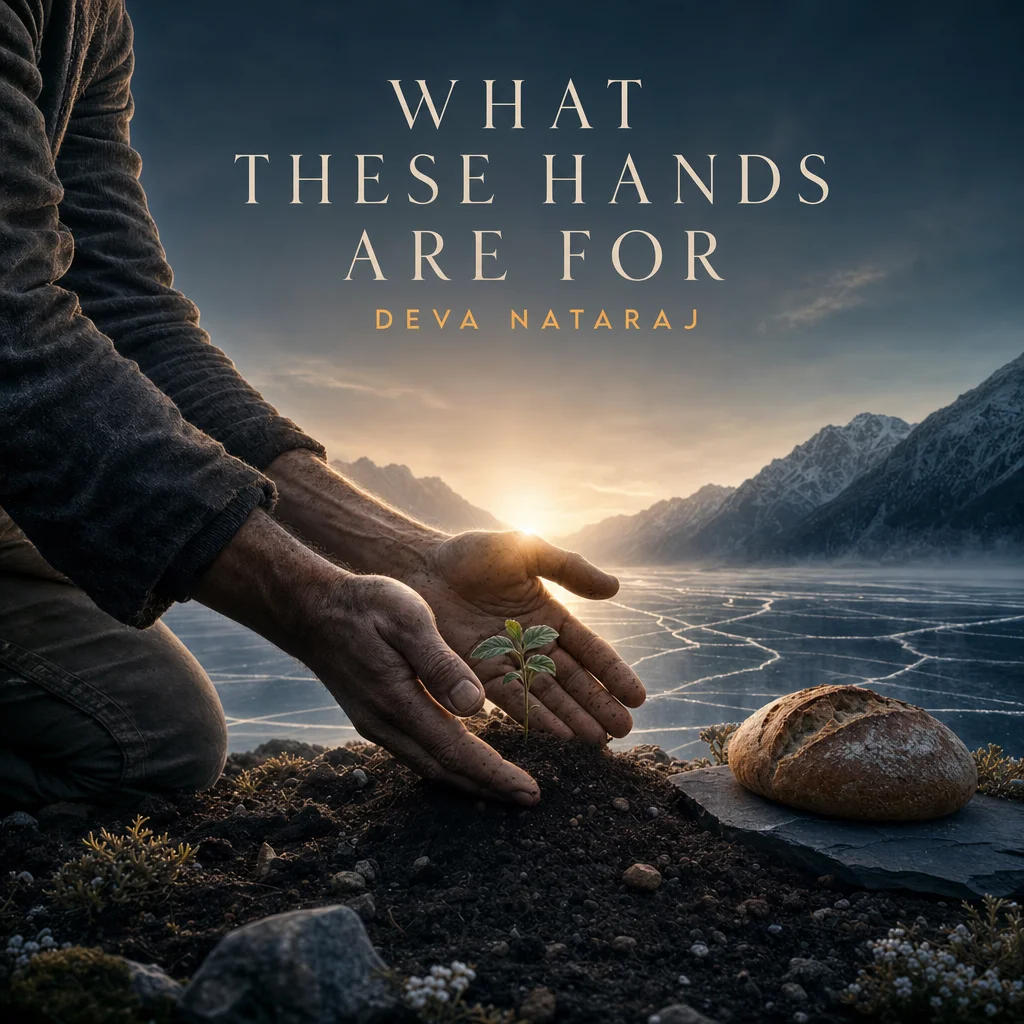
“Shake like you mean it, son - firm grip and steady eye / I passed the test at seven and I never questioned why / Hands were for the proving: for the ladder and the wheel / For the handshake as a duel, for the fist you must conceal.” That is the whole training in four lines. A boy learns that his hands exist to grip, climb, work, dominate a handshake, and hide a fist. Tenderness is not on the list. So a man can go decades using his hands constantly and almost never using them for contact that gives rather than takes – and then wonder why he feels hollow in a way food and rest do not fix.
Weren’t my hands made for working and providing?
Partly – but the song reveals that a man discovers their real purpose only by accident, doing something the training never valued. “Nobody ever told me what a hand is really worth / Till I watched these rough ten fingers set a seedling in the earth / Till a sleeping newborn anchored her whole world around my thumb / And the grip I’d built my pride on was the weakest thing I’d done.”
That last line reverses a lifetime of conditioning. The strong grip – the thing he was proudest of – turns out to be the weakest thing his hands ever did, because it gave nothing. The strength was in the opposite motion: “All those years of holding on so tight / When the secret was the opening.” The chorus names the reversal completely: “These hands were not made for taking / They were made for giving away / For the bread and the soil and the building / For the small of your back as we sway / Every callus can soften to blessing / Every knuckle unlearn the war.” Providing is real, but it was never the same as gripping. Hands build homes and set seedlings and hold newborns – and none of that is a duel.
Is it unmanly to want gentle physical affection?
No – and the song reframes the body itself to prove it. “The body is the temple and these hands are its two doors / Open, open, open - that is what a door is for.” In the tantric philosophy running under The Still Point, the body is not a machine for output; it is sacred ground, and the hands are its doors – made to open, to let the world in and pass warmth out. A door that only ever stays shut, or only ever grabs, has forgotten its function.
And desire is folded back into tenderness rather than split off from it: “And when I reach for you at midnight, it’s a prayer and not a claim / The same hands, the same fire - but nothing burns the same.” The same hands that grip and build can bless and reach – the fire is not the problem; what changes is whether the reach is a claim or a prayer. (This is the tender counterpart to the album’s reckoning with desire and shame in why do I feel ashamed of wanting.) Wanting affection is not unmanly. It is a body remembering it has doors.
What are a man’s hands really for?
For nearly everything the proving-model left out – and the song makes a litany of it: “For applause at the school spring concert, for the fevered brow at three / For the old dog’s final hour, for the splinter and the key / For carrying the shopping, for carrying the lost / For building things that outlast winter without counting up the cost.” These are the uses no one tests a boy on: comforting a sick child at 3am, staying with a dying animal, carrying what – and who – needs carrying. The full worth of a man’s hands lives in exactly the places his training told him did not count.
The song’s final image is the one to keep, because it holds the whole reversal at once: “Look at them / Open / Empty and full at the same time / Open.” Open hands look empty – they are holding nothing, gripping nothing, proving nothing. But that emptiness is fullness: hands that are open can give, receive, bless, and hold. The grip was the poverty. The opening is the wealth. (For the deeper argument that a man’s worth was never about what he grips or produces, see self-worth beyond the scoreboard.)
Your hands were always for giving
If you feel touch-starved, cut off from your own body, unsure how to offer or receive gentle contact, you are not deficient. You were trained – thoroughly, from age seven – to use your hands for gripping and proving and to leave the rest unlearned. The good news in the song is that none of it is truly lost: “Every scar is a map of the harbor / Every line is a river to shore.” Even the calluses can soften to blessing.
Your hands were never only for the ladder, the wheel, and the concealed fist. They were made for bread and soil, for a newborn’s whole world around your thumb, for the small of a back as you sway, for carrying the lost. They were made for giving away. Open them, and you will find they were empty and full at the same time all along.
Frequently Asked Questions
Why are so many men touch-starved?
Because their hands were trained for gripping and proving, never for nourishing contact. “What These Hands Are For” traces it to the first handshake test – “Hands were for the proving: for the ladder and the wheel / For the handshake as a duel.” A man can use his hands constantly and rarely for giving touch, then feel a hollowness that rest doesn’t fix.
Weren’t a man’s hands made for working, not affection?
Working is real, but the song shows it was never the same as gripping – and that the proudest grip is the emptiest act: “the grip I’d built my pride on was the weakest thing I’d done.” Hands set seedlings, hold newborns, and build homes; they “were not made for taking / They were made for giving away.”
Is wanting gentle physical affection unmanly?
No. The song reframes the body as sacred – “The body is the temple and these hands are its two doors / Open, open, open - that is what a door is for.” Reaching for someone can be “a prayer and not a claim.” Wanting affection is a body remembering its doors were made to open, not a failure of manhood.
What are a man’s hands actually for?
For everything the proving-model left out: “for the fevered brow at three… for the old dog’s final hour… for carrying the lost.” The song’s closing image holds the reversal – open hands are “empty and full at the same time.” Gripping was the poverty; opening is the wealth.
Which Deva Nataraj song is about men, touch, and embodiment?
“What These Hands Are For,” from The Still Point, is written directly about it – hands taught to grip and prove discovering they were made “for the bread and the soil and the building / For the small of your back as we sway.”